The Vision of Isaiah: God’s Eternal Authority

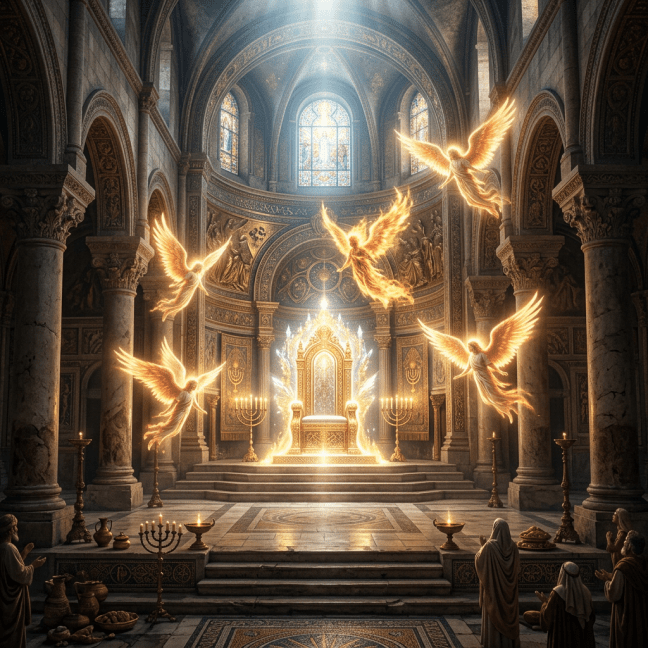
Glowing angels flying around a golden throne inside an ornate cathedral

It was in the year King Uzziah died that I saw the Lord. He was sitting on a lofty throne, and the train of his robe filled the Temple. Attending him were mighty seraphim, each having six wings. With two wings they covered their faces, with two they covered their feet, and with two they flew. They were calling out to each other, “Holy, holy, holy is the Lord of Heaven’s Armies! The whole earth is filled with his glory!” Their voices shook the Temple to its foundations, and the entire building was filled with smoke.”
Isaiah 6:1-4 NLT

Isaiah went to the Temple. Probably nothing unusual about that because I’m sure that he had been there many times before. But there were two things that were significant. King Uzziah had died, and Isaiah saw a vision of the Lord.

Who was King Uzziah? 2 Chronicles 26:3-5, “Uzziah was sixteen years old when he became king, and he reigned in Jerusalem fifty-two years. His mother was Jecoliah from Jerusalem. He did what was pleasing in the Lord’s sight, just as his father, Amaziah, had done. Uzziah sought God during the days of Zechariah, who taught him to fear God. And as long as the king sought guidance from the Lord, God gave him success”. Uzziah was one of the good kings of Judah, and his reign from 790 to 739 BC was long and successful. But on his death, Isaiah would not have been alone in feeling a bit wobbly after such a long time of political stability and prosperity. So what did he do? Isaiah went to the temple. 

In his Temple vision, the first thing that Isaiah saw was the Lord sitting on a throne. A “lofty throne”. A throne signifies a seat of power and authority, and the first message from his vision was that God was still in control. He was still the Creator of the Universe. He was still the God who had the world and its people in the palm of His hand. It was only through Him that world events could happen. In his vision, Isaiah saw that the Lord was wearing a robe, the “train” of which filled the entire space. God is complete and can fill every corner of our lives, should we let Him. The message to Isaiah was that although human beings, including kings, live and then die, God lives forever. He is eternal. He is the all-powerful Omnipresent, Omniscient and Omnipotent God. Three words that describe how complete God is. 

The vision continued with seraphim (literally “fiery ones”), each attending the Lord. They had six wings, two covering their faces (showing God the proper respect and awe), two covering their feet (signifying humility) and two with which to fly, enabling their work of service to the Lord. And they called out to each other, “Holy, holy, holy is the Lord of Heaven’s Armies! The whole earth is filled with his glory!” Why did they say “Holy” three times? To emphasise the absolute, supreme perfection of God’s character. Something perhaps to remember when we sing Heber’s hymn “Holy, Holy, Holy, Lord God Almighty”. Finally, and for good measure, the Temple shook and filled with smoke, signifying the awe-inspiring, unapproachable weight and power of God’s glory. What a vision! What an experience! Nothing man-made then or now could ever have replaced what Isaiah experienced that day. 

As we fast forward to the 21st Century, we consider our nation here in the UK and thank God that we have had a period of relative stability since the end of the Second World War, eighty years or so of living in a war-free society. But we live in a different age now. Technology has changed dramatically, impacting every aspect of our lives. Medical advances are now able to do amazing things in curing all sorts of conditions and diseases. But on the downside, modern weapons of war have the capability to destroy the whole world several times over, should they be used. Are we in an age of stability? Or should we be finding our equivalent of the Jerusalem Temple? 

As we will discover, the vision totally changed and supercharged Isaiah’s life and ministry. In the Bible, there are recorded occasional miraculous revelations that brought about a new move of God. Paul was another example, as the light of Jesus flooded around Him and a voice spoke out that day on the Damascus Road. Paul’s life was totally turned around, and he went from persecuting the early Christians to being their biggest proponent, establishing churches throughout the Middle East. 

Have we pilgrims had such a revelation as Isaiah’s? Do we have the faith to expect one? In years past, God has graciously revealed Himself to me, once through a vision and, on another occasion, through a voice, but nowhere near what Isaiah saw. But in these days of global insecurity, we should be praying for our nation, that God’s peace will prevail. That politicians will emerge with the vision to lead the nations God’s way and not the devil’s. That we will find opportunities to reach out to the people around us with God’s message of hope. And we must keep praying because God hears our prayers, and our fervour in their delivery. Age and health are no barrier to our service in prayer – after all, the Hebridean revival started with the prayers of two old ladies in their eighties, one blind and the other crippled with arthritis. And we never know – God may answer our prayers with a vision of Him so powerful that we will be, like Isaiah, changed forever. 

Dear Father God. In awe and worship, we bow before You today, putting aside our fears because we know that You are still on Your throne. Thank You. Amen. 

Exile and Captivity

“He will send a signal to distant nations far away and whistle to those at the ends of the earth. They will come racing toward Jerusalem. They will not get tired or stumble. They will not stop for rest or sleep. Not a belt will be loose, not a sandal strap broken. Their arrows will be sharp and their bows ready for battle. Sparks will fly from their horses’ hooves, and the wheels of their chariots will spin like a whirlwind. They will roar like lions, like the strongest of lions. Growling, they will pounce on their victims and carry them off, and no one will be there to rescue them. They will roar over their victims on that day of destruction like the roaring of the sea. If someone looks across the land, only darkness and distress will be seen; even the light will be darkened by clouds.”
Isaiah 5:26-30 NLT

A scene of devastation marks Isaiah’s vision, as God calls upon foreign nations to administer His judgment over Judah. Wonderfully poetic language graphically describes the invading forces and their motivation to complete the day of destruction, leaving the land full of darkness and distress. Miraculously, in a way, the invading army will not suffer the usual irritations, like breakdowns in military equipment. What a terrible day that would be for the Judaeans, but we know from our historians that the exile took place in 586 BC, because the people never turned from their sinful ways. 

Did the people of Judah, languishing in captivity, ever regret what happened to them? Did they remember their sinful ways once more and long again for their parties, their drunken orgies, and their idol worship? Or did they finally come to their senses and decide to turn back to God? Psalm 137 provides a partial answer: “Beside the rivers of Babylon, we sat and wept as we thought of Jerusalem. We put away our harps, hanging them on the branches of poplar trees. For our captors demanded a song from us. Our tormentors insisted on a joyful hymn: “Sing us one of those songs of Jerusalem!” But how can we sing the songs of the Lord while in a pagan land?” (Psalm 137:1-4). 

Jesus Himself could see what would happen to Jerusalem much later in history. He knew what was going to happen within a few years of His death, as recorded in Matthew 24:1-2, “As Jesus was leaving the Temple grounds, his disciples pointed out to him the various Temple buildings. But he responded, “Do you see all these buildings? I tell you the truth, they will be completely demolished. Not one stone will be left on top of another!”” Jesus entered Jerusalem on the day we now call Palm Sunday. In the Jewish calendar, this took place just before the Passover festival. He wept over Jerusalem, as we read in Luke 19:41-44, “But as he came closer to Jerusalem and saw the city ahead, he began to weep. “How I wish today that you of all people would understand the way to peace. But now it is too late, and peace is hidden from your eyes. Before long your enemies will build ramparts against your walls and encircle you and close in on you from every side. They will crush you into the ground, and your children with you. Your enemies will not leave a single stone in place, because you did not recognise it when God visited you””. Once again, the Jewish people had rejected God’s care and compassion, even to the extent, as we know, of killing His Son.

But God never gave up on His Covenant with His chosen people. There will be another day, yet to come, when an invading army will once again approach Jerusalem. In Revelation 19:19-21, we read, “Then I saw the beast and the kings of the world and their armies gathered together to fight against the one sitting on the horse and his army. And the beast was captured, and with him the false prophet who did mighty miracles on behalf of the beast—miracles that deceived all who had accepted the mark of the beast and who worshipped his statue. Both the beast and his false prophet were thrown alive into the fiery lake of burning sulphur. Their entire army was killed by the sharp sword that came from the mouth of the one riding the white horse. And the vultures all gorged themselves on the dead bodies”. 

We pilgrims worship a faithful God, who has throughout history always loved His people, first the Jews and now the Gentiles. We know that He sent His Son, Jesus, to be the One who saved us from our sins, an act of love that sets Christianity apart from any other religion. Jesus said He was “the way, the truth and the life” and still is today. We pilgrims have the opportunity to extend God’s love to those around us in this season of grace, secure in the knowledge that His mercies are new every morning to those who love him.

Dear Father God. We praise and worship You today, the God of love and grace. Amen.

Podcast Episode: Isaiah 5 Judgement And Woes

Pip: There is something quietly relentless about the book of Isaiah — it keeps finding us wherever we are, even in the twenty-first century, still doing roughly the same things the people of Judah were doing in 700 BC.

Mara: Adrian Clark has been working through Isaiah 5 this week, and the posts cover territory that stays uncomfortably relevant: divine justice and what it demands of us, and the specific catalogue of sins Isaiah names as woes against his own society.

Pip: Let's start with the justice side of things — what righteousness actually means, and what happens when it runs out.

Judgement and divine justice in Isaiah 5

Mara: The central question here is what God's justice looks like when it finally arrives — and what it requires of people in the meantime.

Pip: The post on Isaiah 5 opens with a passage that sets the stakes plainly. The verse reads: "Humanity will be destroyed, and people brought down; even the arrogant will lower their eyes in humiliation. But the Lord of Heaven's Armies will be exalted by his justice. The holiness of God will be displayed by his righteousness."

Mara: What that means in practice is that the wealth and revelry of Judah's ruling class had a shelf life. Historical record confirms it — foreign invaders entered, the land was emptied, and the partying stopped. Pride gave way to humility, not as a spiritual exercise but as a consequence.

Pip: And the post is careful to define what righteousness actually is, not just what it punishes. It draws in Micah 6:8 — "to do what is right, to love mercy, and to walk humbly with your God" — and Proverbs 21:3, which puts righteous action above religious ritual.

Mara: The follow-up post, "The Judgment to Come," extends the same argument into the present tense. It quotes Isaiah 5:24-25, with its images of fire consuming straw and mountains shaking, and connects that to Jesus's words in Matthew 24 — that no one knows the day or hour, but the call to keep watch stands.

Pip: The remnant thread is what gives it shape. Jeremiah, offered safe passage to Babylon, chose to stay with those left behind. That choice frames the question put to readers directly: are we warning our generation, or are we huddled quietly in the pews?

Mara: The post puts it this way — pilgrims today are effectively that remnant, the faithful lineage through which restoration moves forward. The responsibility that comes with that is not passive.

Pip: Which brings us neatly to what, exactly, the people of Judah were actually doing that warranted all this.

The six woes: a catalogue of sinful living

Mara: Isaiah 5 doesn't just pronounce judgment in the abstract — it names specific behaviours, and the post on the six woes works through each one.

Pip: The anchor passage covers several of them at once: "Woe to those who call evil good and good evil, who put darkness for light and light for darkness, who put bitter for sweet and sweet for bitter."

Mara: That inversion of moral categories is the one the post treats as most urgent for today — the point where a society stops being confused and starts actively recategorising what God condemns as acceptable, and what God approves as ridiculous.

Pip: The post on hedonism in Isaiah 5 fills in the social backdrop — wealthy people in Jerusalem who had turned drinking and pleasure into a full-time occupation, from early morning to late at night, to the point where they simply stopped noticing God at all.

Mara: And the six woes post ties the alcohol culture directly to injustice: those who are "champions at mixing drinks" end up acquitting the guilty for a bribe and denying justice to the innocent. Excess and corruption travel together.

Pip: Paul's line from Romans 12:2 gets the last word — don't let the world squeeze you into its mould. The J.B. Phillips version is the one quoted: "let God re-mould your minds from within."


Mara: Righteousness as a daily practice, judgment as a present reality, and a faithful remnant called to be visible — that's the thread running through all of it.

Pip: Isaiah was writing to people who couldn't see what was coming. The question for next time is whether we're any better at looking up.

The Judgment to Come

“Therefore, as tongues of fire lick up straw and as dry grass sinks down in the flames, so their roots will decay and their flowers blow away like dust; for they have rejected the law of the Lord Almighty and spurned the word of the Holy One of Israel. Therefore, the Lord’s anger burns against his people; his hand is raised, and he strikes them down. The mountains shake, and the dead bodies are like refuse in the streets. Yet for all this, his anger is not turned away, his hand is still upraised.”
Isaiah 5:24-25 NIVUK

If people reject God, there are dire consequences. Helped by Isaiah’s wonderfully poetic and descriptive language, we easily make the connection between the people’s sin, rebellion and idolatry, and their ultimate lot. Isaiah used graphic language with references to fire and decay, all in connection with judgement for the sins of the people in Judah. In the current dry weather, there are reports of wildfires here in the UK, and most people here are aware of the dangers and the horrors of what can happen when fires get out of control. And just after the local cherry blossom trees have shed their flowers, the petals are everywhere, turning brown and gradually disappearing as the winds blow them into corners and beyond. Decaying roots are a sign of a plant or tree’s demise; it will, sooner or later, die off or come crashing down, finally rotting and disappearing into the ground that once supported it. God’s judgment of the people who have “rejected the law of the Lord Almighty and spurned the word of the Holy One of Israel” is to be feared, and yet, as we have seen in the previous verses of Isaiah 5, the people were unrepentant and even defiant. God is angry with them and “His hand is raised, and He strikes them down”. But we read that even then, His anger is unabated, and “His hand is still upraised”. 

Isaiah’s description of what is going to happen to Judah is horrifying, and yet the people of his day couldn’t see what was coming, and, if they did, they chose to ignore it, such was the hold that their sinful lifestyles had over them. Were all people in Judah guilty of sinful behaviour, or was there a remnant of people who remained faithful to God? The historians think so, and it has always been the case that God has preserved a faithful lineage through which He would eventually bring restoration and fulfil His promises. The Babylonian judgment fell in 586 BC, and while the invading army exiled the royal family, the religious elite, and skilled craftsmen to Babylon, they left behind a portion of the poorer population to tend the vineyards and fields. Worthy of note was that the prophet Jeremiah chose to stay with the remnant: “When the commander of the guard found Jeremiah, he said to him, ‘The Lord your God decreed this disaster for this place. And now the Lord has brought it about; he has done just as he said he would. All this happened because you people sinned against the Lord and did not obey him. But today I am freeing you from the chains on your wrists. Come with me to Babylon, if you like, and I will look after you; but if you do not want to, then don’t come. Look, the whole country lies before you; go wherever you please.’ … So Jeremiah went to Gedaliah son of Ahikam at Mizpah and stayed with him among the people who were left behind in the land” (Jeremiah 40:2-4, 6). 

There is no difference between people’s attitudes in 586 BC and those of people today. Sin and evil abound everywhere but the difference is that God has not sent specific prophesies about an imminent judgment that is about to take place. Instead, we have the warnings for sinful behaviour well reported in the Biblical passages. Jesus was a prophet, and Matthew 24 recorded His words about what was going to happen in the run-up to the End of the Age. And then the end will come: “But about that day or hour no one knows, not even the angels in heaven, nor the Son, but only the Father. … Therefore keep watch, because you do not know on what day your Lord will come” (Matthew 24:36, 42). In the days before Christ in Judah, the people had enjoyed a long period of peace that, however, was marked by sinful behaviour, and they chose to ignore Isaiah’s warnings that there were going  to be consequences. Today, unbelievers everywhere choose to heed the Biblical warnings and carry on with their lives regardless. Yes, nothing bad may happen to them in this life (though we don’t know for sure, because the world could end at any time), but it surely will at the End of the Age.

We, pilgrims, are effectively part of the remnant of God’s people in our generation. It is through us that God has preserved “a faithful lineage through which He would eventually bring restoration and fulfil His promises”. In our secular nation, we are the people about whom Ezekiel wrote. “I will give you a new heart and put a new spirit in you; I will remove from you your heart of stone and give you a heart of flesh” (Ezekiel 36:26). That happened on that wonderful day when we were reborn through the Spirit of God. How are we pilgrims living out our responsibilities as God’s people, a faithful remnant in our generation? Are we like Isaiah, warning our generation about the judgment to come, or are we a passive minority huddled in our pews and afraid to put our heads above the parapets in case we are rejected and vilified? Jesus said, “In the same way, let your light shine before others, that they may see your good deeds and glorify your Father in heaven” (Matthew 5:16). And so we will, at every opportunity that comes our way.

Dear God. Thank You that You have entrusted to us the mission of being salt and light in our communities. Lead us we pray in Your ways and help us show others the path to everlasting life. In Jesus’ name. Amen.

Understanding the Six Woes of Isaiah 5

Antique brass balance scale on stone pedestal in old stone room with arched doorways and window

“Woe to those who draw sin along with cords of deceit, and wickedness as with cart ropes, to those who say, ‘Let God hurry; let him hasten his work so that we may see it. The plan of the Holy One of Israel – let it approach, let it come into view, so that we may know it.’ Woe to those who call evil good and good evil, who put darkness for light and light for darkness, who put bitter for sweet and sweet for bitter. Woe to those who are wise in their own eyes and clever in their own sight. Woe to those who are heroes at drinking wine and champions at mixing drinks, who acquit the guilty for a bribe, but deny justice to the innocent.”
Isaiah 5:18-23 NIVUK

There are six woes mentioned in Isaiah 5. These are declarations of God’s judgement for the sins of Judah. In verse 8, a woe was declared against those who were oppressing their neighbours and buying up their land and houses, thereby expanding their wealth and bringing them loneliness. Then in verse 11, we read about the judgement coming on those who pursue drunkenness, partying and sexual immorality. In verse 18, we read about those people who openly display their sins, even to the extent of dragging them behind them by the wagonload. In verse 20, we find people who are confused about the difference between good and evil, such is the decline in their morality. We all know people who are “wise in their own eyes”, I’m sure. People with an overconfident opinion of themselves and their capabilities. And, finally, there are those who boast about their prowess with alcoholic beverages. All these “woes” aptly describe the fallen state of society in Judah and, sadly, the state of our societies today. Some things never change and the devil never changes his tactics.

The third “woe” described a people who were not only displaying their sins very visibly, but they were defying God to do what He was threatening to do, obviously with no fear of our Heavenly Father at all. We know people like that today, and I have written before about my neighbour, who was not afraid of the prospect of hell, which he described as being “the big party downstairs”. Perhaps his attitude matched that of the sixth woe, of being ”wise in [his] own eyes”. People can become so accustomed to sinful behaviour that they no longer feel conviction. Instead of asking, “How can I please God?” they ask, “What’s the worst that can happen?” Sadly, that is something that they will find out one day, and it will be far beyond their biggest fears.

The next “woe” expressed moral confusion in a people who had rejected God’s standards and replaced them with their own. They redefined reality by saying that evil [is] good and good [is] evil, who put darkness for light and light for darkness, who put bitter for sweet and sweet for bitter”. This is a serious problem in our society today, because we have so many people who, for example, maintain that men can become women and vice versa. Such people not only ignore God’s truth, but they also seek to blatantly overturn it. This happens whenever society celebrates what God condemns or ridicules what God approves. We pilgrims are called to maintain biblical discernment even when cultural values move in the opposite direction. The Apostle John wrote, “The light shines in the darkness, and the darkness has not overcome it” (John 1:5). We are that light, shining like beacons of hope and countering the lies and deceit the devil has confused the minds of people with.

Isaiah continued with the next “woe”: “Woe to those who are wise in their own eyes and clever in their own sight”. This was the sin of pride and self-sufficiency. The people no longer sought God’s wisdom because they believed they knew better. Their confidence in themselves had replaced dependence on God. But we pilgrims know better, and we follow verses like Proverbs 3:5-6, “Trust in the Lord with all your heart and lean not on your own understanding; in all your ways submit to him, and he will make your paths straight”. We pilgrims know and understand that education, experience, and intelligence are gifts from God, but they become dangerous when they lead us to reject God’s authority. In the workplace, I remember some arrogant and proud managers with questionable morals, but who always seemed to know best; in the light of God’s truth, they fell woefully short. One of them came to a very sad end, sad particularly for his wife and young children as well, because his hobby of skydiving ended in tragedy with an unopened parachute. In those final moments, did God’s grace ever penetrate his personal cleverness and human wisdom? I wonder …

In the final “woe”, Isaiah was not simply condemning drinking; he was condemning a culture that admired drunkenness and excess as if they were achievements. Because of their sinful ways, we see what the outcome was in verse 23, speaking of those “who acquit the guilty for a bribe, but deny justice to the innocent”. Was this the Judaean equivalent of the “old boys” and “laddish” behaviour we sometimes see today? Possibly, but the outcome of the alcohol-focused culture was injustice. We find even today that when personal pleasure becomes the highest value, justice, integrity, and responsibility often suffer. A culture that celebrates moral decline and excess can lose its ability to distinguish right from wrong.

There is much that can be learned from our verses from Isaiah today. 21st-century society seems much the same as it was in 700 BC, with open and defiant sin, moral inversion and confusion over what is right and wrong, self-reliance instead of God-reliance, and self-indulgent corruption and injustice. It is significant that in all the words describing the sinful behaviour of the Judaean people, the word “self” often crops up. In Isaiah’s day, these traits showed a society drifting away from God. We believers are reminded that spiritual decline rarely begins with outward collapse; it begins when people stop taking sin seriously, reject God’s truth, trust their own wisdom, and pursue pleasure above righteousness. For Christians today, the passage is both a warning and a call to live by God’s standards rather than the changing values of the surrounding culture. Paul was very much aware of this, and he wrote, “Don’t copy the behaviour and customs of this world, but let God transform you into a new person by changing the way you think. Then you will learn to know God’s will for you, which is good and pleasing and perfect” (Romans 12:2). I love this verse in the J B Philips translation, “Don’t let the world around you squeeze you into its own mould, but let God re-mould your minds from within, so that you may prove in practice that the plan of God for you is good, meets all his demands and moves towards the goal of true maturity”.

Isaiah’s concern is not merely individual morality but the health of an entire community. When truth is reversed, pride is celebrated, justice is compromised, and society itself begins to unravel. God’s people are therefore called to be a faithful witness to His truth, wisdom, and righteousness. We pilgrims remember once again that we are beacons on a hill, proclaiming the light of Christ.

Dear Heavenly Father. We pray for our societies today that Your light will prevail over all the “dark paths of sin”. We also pray that Your grace will continue to give our friends and families time to find You amidst the noise and chaos of this sinful world. In Jesus’ name. Amen.

Understanding Righteousness in Isaiah 5

A large tree glowing with warm golden lights in a meadow at twilight with a crescent moon and starry sky

“Humanity will be destroyed, and people brought down; even the arrogant will lower their eyes in humiliation. But the Lord of Heaven’s Armies will be exalted by his justice. The holiness of God will be displayed by his righteousness. In that day lambs will find good pastures, and fattened sheep and young goats will feed among the ruins.”
Isaiah 5:15-17 NLT

Isaiah wrote about a time coming when “humanity will be destroyed”. Such an event must have seemed a long way off for the rich and partying people in Judah. People who were rich landowners were made richer by the misfortune of their poorer neighbours, who were forced to sell up in their poverty. People who had no concern for God and His ways, having abandoned their part of the Covenant God had made with them. So what was going to happen to them? We know from historical evidence that foreign invaders entered their land, and those who were not killed were taken away into exile. Their pride and arrogance were replaced by humility. What happened to their wealth and partying then, as they discovered that God was real and was seeking justice? Earlier in Isaiah 5 we read, “But I have heard the Lord of Heaven’s Armies swear a solemn oath: “Many houses will stand deserted; even beautiful mansions will be empty” (Isaiah 5:9). In those days, the sins of rebellion against God, idolatry, injustice, oppression of the poor, and so on were the signs of a ticking clock, counting down the time to when God would finally act, bringing justice, holiness and righteousness back to the land he had given His people. 

Righteousness is a character trait that reflects what God desires from His people. Righteousness is defined as being morally right, and synonyms include goodness, uprightness, morality, integrity and honesty. That is who God is, and He demands that everything we think or do is founded on righteousness. In Micah 6:8 we read, “No, O people, the Lord has told you what is good, and this is what he requires of you: to do what is right, to love mercy, and to walk humbly with your God”. Proverbs 21:3 reads, “The Lord is more pleased when we do what is right and just than when we offer him sacrifices”. And of course we mustn’t ignore the role the Bible has when we look for help about righteousness: 2 Timothy 3:16, “All Scripture is inspired by God and is useful to teach us what is true and to make us realise what is wrong in our lives. It corrects us when we are wrong and teaches us to do what is right”. 

Righteousness is something that we have to work at and apply in every part of our lives. When we do what is right, we are aligning ourselves to God’s way. 1 John 2:29, “Since we know that Christ is righteous, we also know that all who do what is right are God’s children”. Early on in the Beatitudes, Jesus said, “Blessed are those who hunger and thirst for righteousness, for they will be filled” (Matthew 5:6).Other translations use the word “justice” instead of “righteousness”, and the two meanings can be synonymous. And those who find a life filled and directed by the pursuit of righteousness will find a reward. Matthew 13:43, “Then the righteous will shine like the sun in the kingdom of their Father. Whoever has ears, let them hear”. 

Are we pilgrims “shining like the sun” in our families and communities? I’m sure we are, as we stand in our sinful world, displaying and upholding God’s righteousness and justice. Isaiah 5:17, the last of our three verses today, reads, “Then sheep will graze as in their own pasture; lambs will feed among the ruins of the rich”. After God’s justice was applied to Judah, the land quietened. No sounds of music and drunken partying. No revelry and debauchery. Just peace and tranquillity, as once again the land returned to God’s ways. I’m sure there were a few righteous people left in the land to tend the sheep and set the scene for a future, aligned to God and His ways.

Dear Heavenly Father. You require Your people to seek righteousness and justice. We commit ourselves to that today and look to You as the Source of all we are. Amen.

Examining Hedonism in Isaiah 5: The Perils of Excessive Drinking

Four empty wine bottles standing on stone steps along a cobblestone street at dusk

“What sorrow for those who get up early in the morning looking for a drink of alcohol and spend long evenings drinking wine to make themselves flaming drunk. They furnish wine and lovely music at their grand parties— lyre and harp, tambourine and flute— but they never think about the Lord or notice what he is doing. So my people will go into exile far away because they do not know me. Those who are great and honoured will starve, and the common people will die of thirst. The grave is licking its lips in anticipation, opening its mouth wide. The great and the lowly and all the drunken mob will be swallowed up.”
Isaiah 5:11-14 NLT

“Flaming drunk”? Surely a strange adjective to find describing inebriation from the New Living Translation. The words are more genteel in the NIV with “inflamed with wine” or “… Who stay up late in the night till wine inflames them!” from the Amplified. But the versions all agree, describing an occasion marked with debauchery and partying, with probably more going on than can be found in these verses today. In the ancient world, only the wealthy could afford to spend all day, every day, from early in the morning until late at night, getting drunk. These people turned pleasure and drinking into a full-time pursuit. Drunkenness and debauchery were the reasons why these wealthy people got out of bed in the morning. The constant drunkenness brought with it nightly rounds of being “inflamed,” likely indicating participation in sexual immorality.

We notice that the Bible does not condemn the drinking of alcohol, and table wine was a part of Jewish life, with their wines having a lower alcoholic content than would be expected today. In an age with uncertain water purity, wine was sometimes considered a safer option. But drunkenness was frowned upon. Paul, in his letter to the Ephesians, wrote, “Don’t be drunk with wine, because that will ruin your life. Instead, be filled with the Holy Spirit,” (Ephesians 5:18). There are other Bible verses, notably Proverbs 31:4-7, “It is not for kings, O Lemuel, to guzzle wine. Rulers should not crave alcohol. For if they drink, they may forget the law and not give justice to the oppressed. Alcohol is for the dying, and wine for those in bitter distress. Let them drink to forget their poverty and remember their troubles no more”. In these verses, we find that those in leadership should show restraint when alcohol is around, because the effect of the drug on a person’s thinking could lead to situations where an injustice could occur. But it is interesting to note that alcohol was suggested as an analgesic for those in distress as a form of end-of-life care, or a remedy for mental health issues. 

But the problem is that the wealthy people of Jerusalem and Judah made pleasure a way of life. They lived to feel good, which is the definition of hedonism. Because of this, they stopped recognising God for His power or what He had provided for them. They served only themselves. Does any of this sound familiar in societies on twenty-first-century Planet Earth? The way of life in Judah was less demanding than it is today. But in my lifetime, I have met people in high-powered jobs, with consequent generous monetary rewards, but with the cost of experiencing high stress levels that have impacted their mental health. Where have these people turned? To the consumption of alcohol, attempting to drown the pain of having to carry on with long, stressful working hours. But even less demanding jobs still have an element of stress, as any bus driver will testify. 

But living life God’s way avoids such debilitating problems, and rather than apply a “sticking plaster” of alcohol, masking the symptoms of stress and anxiety, it is far better to deal with the root causes, turning to God in the process. About the rich people with all their partying, Isaiah pointed out, “they never think about the Lord or notice what he is doing”. This is a poignant moment in Judah’s history because God made a covenant with these people, yet they turned their backs on Him to pursue hedonistic lifestyles. As Isaiah had previously written, Isaiah 5:11 starts with the word “Woe”. What does that mean? Well, one day will come the time when the partygoers will have to face the consequences of their actions. Verse 13 describes their fate: “So my people will go into exile far away because they do not know me. Those who are great and honoured will starve, and the common people will die of thirst”. 

If the people of Judah had repented of their sins and turned to the Lord, then I’m sure that the judgment of exile would have been averted. Their punishment would have been replaced by blessings once more. In our societies today, God is still being spurned and ignored by most. But judgment in their lifetimes is being held back by God’s grace, giving everyone time to repent. Such grace is available right up to a person’s dying moments, but, sadly, after this, God’s grace is no longer available. All that remains is the terrible time before the Great White Throne. 

So we pilgrims reach out to those around us with our testimonies at the ready. God wants everyone to be saved, and He is graciously giving everyone the opportunity to reach out to Jesus who died in their place for their sins. 

Dear Heavenly Father. We thank You that we can access the wine of the Holy Spirit in our lives, and through You, we will live in Your Kingdom forever. Amen.

Lessons from the Rich Landowner: A Cautionary Tale

Sun rising over mist-covered fields and hills with scattered trees and a farmhouse

“What sorrow for you who buy up house after house and field after field, until everyone is evicted and you live alone in the land. But I have heard the Lord of Heaven’s Armies swear a solemn oath: “Many houses will stand deserted; even beautiful mansions will be empty. Ten acres of vineyard will not produce even six gallons of wine. Ten baskets of seed will yield only one basket of grain.””
Isaiah 5:8-10 NLT

A strange picture emerges of a land with empty houses, surrounded by empty fields. A landowner has bought up farms and houses because their owners could no longer afford to live in them. Yes, the landowner lived in great splendour, but many poor people were forced into unsuitable accommodation because their family home, sometimes there in their family for several generations, had been sold. And we end up with the landowner living isolated from his immediate neighbours. A lonely existence that was never in God’s plan for the communities of Israel and Judah. 

God foresaw such an eventuality when he gave Moses relevant instructions. The Year of Jubilee was instituted, as we read in Leviticus 25:13, “In the Year of Jubilee each of you may return to the land that belonged to your ancestors”. The Lord continued, “The land must never be sold on a permanent basis, for the land belongs to me. You are only foreigners and tenant farmers working for me” (Leviticus 25:23). The rest of the Leviticus chapter provides some detailed instructions regarding property, but for the farms and houses out in the countryside, the price of any purchases were calculated with an eye on the remaining years before Jubilee, at which point the property had to be returned to the original owner.

Reading on in today’s verses, we see what will become of the beautiful mansions of the wealthy landowners. Not only will the farmhouses stand empty and neglected, but, for one reason or another, so will the mansions. Such is reality for people who think they will live forever. There have been many building projects over the years that have ended up unfinished because of the owners’ premature deaths. Also, perhaps the Lord’s judgements in those unstable times created situations in which wealthy people were removed, went to live elsewhere, or faced other family calamities. God never intended that such a dysfunctional society would exist. Greed replaced the fruit that God demanded from His people. 

The final verse from our verses from Isaiah 5 today describes how, all of a sudden, the yield from the farms the wealthy have acquired plummets, with insufficient crops being harvested even to replace what had been planted. What could have caused that? Well, as any farmer knows, climate problems such as drought can decimate their crops. Blight or disease was not unknown in those days either. Sadly, the Jewish people had forgotten the instructions given through Moses in Leviticus 25:18,-19, “If you want to live securely in the land, follow my decrees and obey my regulations. Then the land will yield large crops, and you will eat your fill and live securely in it”. Simple, really, I think we agree, but so often the Jews rebelled against God and abandoned His ways.

What about these verses today? Are they relevant to us pilgrims? Jesus told the story of the Rich Landowner, which we can find in Luke 12. He had a “fertile farm that produced fine crops”, and he decided to tear down all his barns, build bigger ones, and store enough crops to keep him going for many years. Then he could “take it easy [and] eat, drink and be merry”. Such a worldly perspective is common today, with certain people working hard to accumulate riches and possessions, all with a view to early retirement and a life of pleasure to follow. In the UK today, the state retirement age is 67, but many save for retirement through shrewd investments, hoping to have sufficient resources at 55 or 60. But none of us knows the time or place when we will leave this world, and all that they have accumulated will be left to someone else. We read further in the story of the Rich Landowner, “But God said to him, ‘You fool! You will die this very night. Then who will get everything you worked for?’” (Luke 12:20). Jesus was quite forthright when He said in the next verse, “Yes, a person is a fool to store up earthly wealth but not have a rich relationship with God”. I remember a man I worked with who was approaching the company retirement age, and he spent a significant amount of time planning for the day he would stop working for a living. He lived in a large house in an expensive part of Edinburgh, which he and his wife sold before buying a more modest dwelling in a more rural part of Scotland. He added equity release to his already substantial savings, and then planned his first retirement project in meticulous detail: a walking tour around Norway. So his retirement day arrived in the middle of January the following year, and he left to complete the final arrangements for the house and his project. However, we, his workmates whom he had left behind, were shocked to hear that he had suddenly experienced a massive heart attack just a few weeks later, from which he never recovered.

We never know when God will call us home. Blaise Pascal, the French philosopher and mathematician, decided that it would be better to live his life God’s way, setting aside the sinful and hedonistic lifestyles of his society, because otherwise he would have too much to lose after death. Jesus said, “Don’t store up treasures here on earth, where moths eat them and rust destroys them, and where thieves break in and steal. Store your treasures in heaven, where moths and rust cannot destroy, and thieves do not break in and steal. Wherever your treasure is, there the desires of your heart will also be” (Matthew 6:19-21). Sound advice.

Dear Father God. Sometimes we weary of the world in which we live, a world with all its evil and difficulties. We look forward to the increasing glow of Glory, appearing over the horizons of our lives, and pray that we will be ready for the day when it comes. In Jesus’ name. Amen.


‭‭

The Son of God Rejected

“Now I will sing for the one I love a song about his vineyard: My beloved had a vineyard on a rich and fertile hill. He ploughed the land, cleared its stones, and planted it with the best vines. In the middle, he built a watchtower and carved a winepress in the nearby rocks. Then he waited for a harvest of sweet grapes, but the grapes that grew were bitter.”
Isaiah 5:1-2 NLT
“Now listen to another story. A certain landowner planted a vineyard, built a wall around it, dug a pit for pressing out the grape juice, and built a lookout tower. Then he leased the vineyard to tenant farmers and moved to another country. At the time of the grape harvest, he sent his servants to collect his share of the crop.”
Matthew 21:33-34 NLT

In this, another parable from Jesus, using a vineyard to illustrate His point, he told the story of a landowner who planted a vineyard, equipped it with a hedge, a winepress, and a tower, and leased it to tenants before going to a distant country. When harvest time came, he sent servants to collect his share of the fruit, but the tenants abused and stoned them. After sending more servants, who ended up with the same fate, the householder finally sent his son, thinking they will respect him. Instead, the tenants conspired to kill the son to seize his inheritance, and they subsequently did so. The owner then punished the tenants and leased the vineyard to others who produced its fruit in due season. The landowner represented God and the vineyard symbolised Israel, the people of God. The tenants who had leased the vineyard, and agreed to pay the rent through providing a share of the crops, were the religious leaders in Israel at that time, and they treated the servants sent by the landowner very badly, servants who represented the prophets who were often rejected and even killed by the people they shared God’s message with. The son represented Jesus Christ, whose rejection and subsequent crucifixion fulfilled the central message of the parable.

So, what do we learn from this parable? The story builds the picture that God is patient, and is prepared to send multiple messages to people in the land of Israel, as well as to everyone in the ages and generations since. But there comes a time when judgment replaces grace. Jesus asked the religious leaders who listened to His parable what they made of it. ““When the owner of the vineyard returns,” Jesus asked, “what do you think he will do to those farmers?”” (Matthew 21:40). The next verse provided their response, “The religious leaders replied, “He will put the wicked men to a horrible death and lease the vineyard to others who will give him his share of the crop after each harvest””. An interesting response because they damned themselves in their reply. Finally, the penny dropped and we read, “When the leading priests and Pharisees heard this parable, they realised he was telling the story against them—they were the wicked farmers” (Matthew 21:45).

So, is there anything here that is of help to us pilgrims? I cannot think of any situation where a Christian would reject and even abuse someone sent from God. The problem for the religious leaders in Jesus’ day was that they failed to recognise Him as the Messiah. In fact, it went further than that, because Jesus challenged their cosy little world, with its financial benefits and their favour with the Roman authorities. So it was quite likely that even if they did accept Jesus as the Messiah, the consequences for their lives was something that they could not accept.

So it is with people today. Quite often when we share the Gospel with someone we find that, after initial interest, a rejection follows because the person realises that there is a cost to following Jesus. “Then Jesus said to his disciples, “If any of you wants to be my follower, you must give up your own way, take up your cross, and follow me. If you try to hang on to your life, you will lose it. But if you give up your life for my sake, you will save it” (Matthew 16:24-25). Jesus also said the following, a scripture that has been much misinterpreted, “If you want to be my disciple, you must, by comparison, hate everyone else—your father and mother, wife and children, brothers and sisters—yes, even your own life. Otherwise, you cannot be my disciple. And if you do not carry your own cross and follow me, you cannot be my disciple” (Luke 14:26-27). There is indeed a cost when we turn from our natural, sinful lives, and instead repent of our sins and follow Jesus and His ways. Too often, a different Gospel has been preached with words that emphasise God’s love and grace, perhaps majoring on prosperity or healing, but one that minimises or ignores His righteousness and judgment, and people entering the Kingdom of God through that route often find that they are not prepared for what is to follow.

We pilgrims are a people who are true believers of Jesus, and we know the cost. We have experienced God’s blessings and, for us, there is no turning back.

Dear Heavenly Father. Thank You for Your grace and love. For just a little while on this earth we suffer and put aside the desires of our flesh. We thank You for all You have done for us. Amen.


‭‭


‭‭


‭‭


Vineyard Parables: Lessons on Grace and Generosity

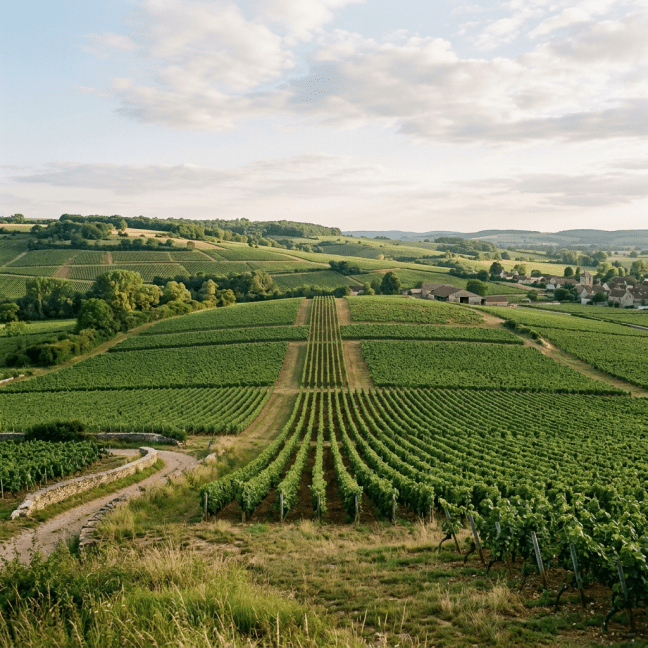
Vineyard rows on rolling green hills with a village and farm buildings in the distance

“Now I will sing for the one I love a song about his vineyard: My beloved had a vineyard on a rich and fertile hill. He ploughed the land, cleared its stones, and planted it with the best vines. In the middle, he built a watchtower and carved a winepress in the nearby rocks. Then he waited for a harvest of sweet grapes, but the grapes that grew were bitter.”
Isaiah 5:1-2 NLT
“For the kingdom of heaven is like a landowner who went out early in the morning to hire workers for his vineyard. He agreed to pay them a denarius for the day and sent them into his vineyard.”
Matthew 20:1-2 NIVUK

Here is another parable about a vineyard, this time from Jesus, our Master, who taught about Kingdom truths in the form of parables. We know the story. The owner of the vineyard hired some workers early one morning, and he sent them to work tending the vines. He agreed to give them the standard manual rate for a day’s work in those days – a denarius. But, deciding that he needed more labour, he returned to the marketplace several times during the day to hire more workers. He agreed to pay each of them the standard day’s rate, even though they were starting to work later in the day. Finally, at the end of the day, the owner instructed his foreman to give each worker a denarius, starting with those who had joined the workplace most recently. What followed was much grumbling from the workforce, particularly from those who had worked from early in the morning. We read, “When they received it, they began to grumble against the landowner. “Those who were hired last worked only one hour,” they said, “and you have made them equal to us who have borne the burden of the work and the heat of the day”” (Matthew 20:11-12). This is a wonderful picture of God’s grace, so freely given. If we equate the denarius to the gift of salvation, we see that no matter when we receive the gift, we will be accepted into His Kingdom. Jesus finished this parable with the words, “‘But [the vineyard owner] answered one of them, “I am not being unfair to you, friend. Didn’t you agree to work for a denarius? Take your pay and go. I want to give the one who was hired last the same as I gave you. Don’t I have the right to do what I want with my own money? Or are you envious because I am generous?” ‘So the last will be first, and the first will be last’” (Matthew 20:13-16). Whether or not we have been a Christian for 50 years or 50 minutes, the outcome is the same. God’s generosity and grace know no bounds.

The vineyard in this parable represents the Kingdom of God, and the vineyard owner is God Himself. In the vineyard, the workers are God’s people, but we should note that they are not just standing around, doing nothing. They are working at tending the vines. They will be removing weeds that spring up around the roots. They will pick off harmful insects that might be sapping the strength of the vines. And when harvest time arrives, they will collect the grapes and take them to the winepress to be pressed into wine. A vineyard is a wonderful analogy for God’s Kingdom and the people we find there.

But there are some significant points that apply to us pilgrims. We have work to do in the Kingdom of God, and, incidentally, beyond. On earth, we are part of the Great Commission, working to introduce people to Jesus, and, for ourselves, we have fruit, spiritual fruit, to produce. Galatians 5:22-23, “But the Holy Spirit produces this kind of fruit in our lives: love, joy, peace, patience, kindness, goodness, faithfulness, gentleness, and self-control. There is no law against these things!” And instead of grumbling when we see people we feel don’t deserve it receiving God’s grace, we must rejoice along with the angels in Heaven.

Heavenly Father. Thank You for Your grace and patience. You lovingly accepted even sinners like us into Your Kingdom, something for which we will be eternally grateful. Amen.