
Isaiah’s Vision: A Future of Peace and Justice

Old metal spearheads and plow blades laid out on grass with stone walls and houses in the background

“People from many nations will come and say, “Come, let us go up to the mountain of the Lord, to the house of Jacob’s God. There he will teach us his ways, and we will walk in his paths.” For the Lord’s teaching will go out from Zion; his word will go out from Jerusalem. The Lord will mediate between nations and will settle international disputes. They will hammer their swords into ploughshares and their spears into pruning hooks. Nation will no longer fight against nation, nor train for war anymore.”
Isaiah 2:3-4 NLT

As most people will know, there is a prominent inscription on a wall directly opposite the United Nations building in New York City, which is a quotation from Isaiah 2:4. It reads, “They shall beat their swords into plowshares, and their spears into pruning hooks; nation shall not lift up sword against nation, neither shall they learn war anymore”. The wall was erected out of granite in 1948, and the inscription was added in September 1975. Finally, the name “Isaiah” was added in 1985, giving the massive block of granite the name “The Isaiah Wall”. There is also a statue close by called the “Ploughshares Statue”, with the inscription “let us beat our swords into ploughshares”, which was a gift to the UN from the Soviet Union in 1959. Sadly, as we all know, we are a long way from such a noble aim, with Europe rearming at an alarming rate, and wars going on in various parts of the world.

But there is a time coming when there will be no more wars. We read about that time in Isaiah 11:6-9, “In that day the wolf and the lamb will live together; the leopard will lie down with the baby goat. The calf and the yearling will be safe with the lion, and a little child will lead them all. The cow will graze near the bear. The cub and the calf will lie down together. The lion will eat hay like a cow. The baby will play safely near the hole of a cobra. Yes, a little child will put its hand in a nest of deadly snakes without harm. Nothing will hurt or destroy in all my holy mountain, for as the waters fill the sea, so the earth will be filled with people who know the Lord”

This Utopian vision will come to pass one day, when Jesus comes to rule and reign for a thousand years in a kingdom of righteousness, justice and peace. With satan chained and incarcerated in a bottomless pit (Revelation 20:1-2), his influence over mankind no longer present, there will be peace, and in the next chapter in Revelation, we read about the new Jerusalem where God will dwell with His people. A wonderful time, and Jesus said its coming will be “soon”. 

In Isaiah 2, we see that the Lord will mediate between nations and settle international disputes. He will have the power to do this through His Word going out from Jerusalem. The nations of the world will desire to go to Jerusalem to hear the Lord’s teaching and learn how to walk in His ways. What is that other than a worldly spiritual revival centred on Jerusalem? No more wars. No more evil leaders. Peace prevails everywhere.

But we pilgrims must do more than sit in our homes waiting for the day when we pass into God’s presence. There is much work to do, as we prepare the way of the Lord. Mark wrote,  “ … Look, I am sending my messenger ahead of you, and he will prepare your way. He is a voice shouting in the wilderness, ‘Prepare the way for the Lord’s coming! Clear the road for him!’” (Mark 1:2-3). This verse refers to the coming of John the Baptist, who prepared the way for Jesus, who burst onto the religious scene in Palestine with His message of hope for a people lost in their sins. We pilgrims have the same commission as we prepare for Jesus’ return, His second coming. There are lost people around us who need to hear that Jesus is their only hope for salvation. John relayed the same message of repentance to the people of Judah, and we have the same message for the people around us today.

So, what steps are we taking to reach out to people? It may be only one or two, but we must be prepared to share our testimonies of God’s saving grace. He loves us so much, so how can we not tell others about that love while we still have the opportunity? I met a man a few days ago who asked me how I became a Christian. It didn’t happen overnight, but it was the culmination of a series of contacts over a period of months as we occasionally met at random in the local park. He now knows about God and what He has done for me, and I pray that my friend will come to make the decision to turn to Christ. We too must grab every opportunity while there is still time. 

Dear Heavenly Father. Your saving grace is alive and well in this age. Please help us to share Your message of hope to anyone who will listen. In Jesus’ name. Amen.

Oak Trees and Idolatry: A Biblical Perspective

Two mature oak trees in a grassy rural landscape with a winding dirt path under a colorful sunset sky

“You will be ashamed of your idol worship in groves of sacred oaks. You will blush because you worshipped in gardens dedicated to idols. You will be like a great tree with withered leaves, like a garden without water. The strongest among you will disappear like straw; their evil deeds will be the spark that sets it on fire. They and their evil works will burn up together, and no one will be able to put out the fire.”
Isaiah 1:29-31 NLT

Oaks are wonderful examples of trees in our deciduous woods because they are slow-growing and can live for centuries if conditions are right. They were commonly used as a source of timber in any application requiring a hard and durable wood, but in the UK today, they are treated with more respect and are even protected in some cases. I came across several wonderful and very old examples at the West end of Loch Tay in Scotland, oaks gnarled and twisted into almost grotesque shapes, yet with a longevity that seemed to have a determined, almost aggressive personality all of their own. In Israel, oaks were not a common tree, and when one was found, they could find themselves involved in idolatrous worship practices that even included sexual immorality. In the UK, oak trees held a central, sacred position in pre-Christian pagan worship, serving as focal points for rituals, gatherings, and spiritual veneration. Primarily associated with the Druids—whose name may derive from a Celtic word for “knowing the oak”—these trees were revered as “kings of the forest,” symbolising strength, endurance, and wisdom.

Isaiah’s vision warned those in Israel who practised idol worship that before oak trees, they would become like one of them, only with their source of water cut off. Trees in such an environment don’t die straight away, but instead take steps to contain the water loss from the leaves so that they wither and die, falling from the branches, and presenting an autumnal appearance. The saddest thing was that the idolatrous Jews also went through the motions of worshipping God with their sacrifices and offerings, not making the connection that such behaviour would not end well. In Isaiah’s vision, the Lord called them prostitutes and likened their behaviour to those in Sodom and Gomorrah, so many years before. 

Isaiah continued to warn the Israelites with an analogy involving straw, the dried stalks that remain after grain harvesting. It is highly flammable and only needs a spark to ignite, leaving very little behind but fine ash. This was what was going to happen to the idolatrous people, and Isaiah warned that they, “and their evil works,” would burn up together in a fire that could not be extinguished. A picture of hell if ever there was one.

Jesus taught us much about hell, and in one passage, his words are recorded as, “If your hand causes you to sin, cut it off. It’s better to enter eternal life with only one hand than to go into the unquenchable fires of hell with two hands. If your foot causes you to sin, cut it off. It’s better to enter eternal life with only one foot than to be thrown into hell with two feet. And if your eye causes you to sin, gouge it out. It’s better to enter the Kingdom of God with only one eye than to have two eyes and be thrown into hell, ‘where the maggots never die and the fire never goes out.’ “For everyone will be tested with fire.” (Mark 9:43f). 

We pilgrims perhaps read these verses in Isaiah and wonder how the Jews could have got things so wrong. But before we start climbing onto the moral high ground, claiming we would never do such a thing, and behave in such an idolatrous way, we must pause and consider that idols are not just something like an oak tree, or perhaps a statue made of wood, but can be anything that takes the place of worship to God alone. Are we involved in anything that takes priority over God? Yes, we have to work for a living, and we have families to look after, but where are they in our lives compared to God? Many years ago, I was taught that the order of priorities in life was God first, our work and families second, and anything else last. It has remained with me ever since. 

Paul wrote about fire in 1 Corinthians 3:12-15, “Anyone who builds on that foundation may use a variety of materials—gold, silver, jewels, wood, hay, or straw. But on the judgment day, fire will reveal what kind of work each builder has done. The fire will show if a person’s work has any value. If the work survives, that builder will receive a reward. But if the work is burned up, the builder will suffer great loss. The builder will be saved, but like someone barely escaping through a wall of flames”. The foundation is Christ, so what are we building on Him? In the context of 1 Corinthians 3, the verses mostly apply to leaders and teachers; if their teaching is of poor quality, it will not survive the fire to come. But for those Christians who aren’t leaders and teachers, what are they building? Each believer is given a gift from the Holy Spirit – how is it being used? In our families. In the church we attend. In our community. Paul wrote in Romans 14:10b, “… Remember, we will all stand before the judgment seat of God”. In 1 Corinthians 5:10, we read, “For we must all stand before Christ to be judged. We will each receive whatever we deserve for the good or evil we have done in this earthly body”. 

So, Isaiah’s warning to the Jews in 740 BC still has an application today for us pilgrims. A solemn warning about idolatry and the works we do. But before we go down the tubes, we remember that God hasn’t just left us to get on with our lives, parentless like orphans. We have a loving Heavenly Father who delights in us and who is more than willing to answer our prayers for help. He will show us the way and will help us in the works that He has asked us to do.

Dear God. We pray with David, “Search me, O God, and know my heart; test me and know my anxious thoughts. Point out anything in me that offends you, and lead me along the path of everlasting life”. Thank You. Amen.

The Prophecy of Zion: A Vision of Justice and Renewal

Ancient fortified hilltop city with stone walls and domed roofs at sunset

“Zion will be restored by justice; those who repent will be revived by righteousness. But rebels and sinners will be completely destroyed, and those who desert the Lord will be consumed.”
Isaiah 1:27-28 NLT

In our journey through the first chapter of Isaiah, we should perhaps pause and consider the use of the word “Zion”. Today, some anti-semites refer to “Zion” as a descriptor and focus of their hate and anger against the Jews, and some nations and people groups want nothing more than to eliminate “Zionists” wherever they are. In the context of Isaiah 1:27, Zion and Jerusalem are synonyms, but originally, Zion was the Jebusite fortress captured by King David, and Mount Zion is a hill located within Jerusalem. Zion often serves as a synonym for Jerusalem, the Land of Israel, or the Jewish people, appearing 158 times in the Old Testament as a reference to the city.

Jerusalem was in a sorry state, being compared in Isaiah’s prophetic vision to a prostitute and being a city full of murderers, thieves, rebels, and corruption of every kind. God promised to refine it like silver, removing the dross slowly but completely, to restore Jerusalem as a city of justice and righteousness.

In his vision, Isaiah prophesied that “Zion will be restored by justice”. Note the future tense. This was something that was not going to happen quickly, and even today, we see a modern Jerusalem that still fails to meet God’s expectations. So, when would God bring about the restoration of Jerusalem in the future? In this context, perhaps Isaiah’s vision foresaw the restored Jerusalem after the exile, and as we read the book of Nehemiah, we can see that the rebuilding of Jerusalem began well. But was that God’s view?

Before we consider that question, a process of refinement and restoration had to take place. To restore justice, it was necessary to remove corrupt judges and leaders and to install in their place righteous judges, leaders, and counsellors. That was going to take time. In addition, the restoration of Jerusalem would require religious and spiritual refinement through repentance and a turning back to God. And the result? Zion will be transformed from a desolate “lean-to in a cucumber field” (Isaiah 1:8) into a secure, flourishing city that will serve as a beacon of truth and a joy to all nations. Has that yet happened?

Some theologians think that Jerusalem will not be a true city of justice and righteousness until Jesus returns, bringing the rule and reign of the Kingdom of God. Others look to Revelation 21:2, “And I saw the holy city, the new Jerusalem, coming down from God out of heaven like a bride beautifully dressed for her husband”. What a wonderful day that will be, with God living on the new earth in the new Jerusalem. 

In Isaiah 1:28, the prophet wrote, “But rebels and sinners will be completely destroyed, and those who desert the Lord will be consumed.” In the new Jerusalem, there will be no such people. Revelation 21:8, “But cowards, unbelievers, the corrupt, murderers, the immoral, those who practice witchcraft, idol worshipers, and all liars—their fate is in the fiery lake of burning sulphur. This is the second death”. Complete destruction for the rebels and sinners will not be a pretty sight and will take place in an eternity accompanied by the devil and his minions. 

We pilgrims can perhaps consider the reformed and refined Jerusalem as a spiritual state for ourselves. A place of holiness where we become the Temple of the Holy Spirit. Paul wrote in 1 Corinthians 6:19-20, “Don’t you realise that your body is the temple of the Holy Spirit, who lives in you and was given to you by God? You do not belong to yourself, for God bought you with a high price. So you must honour God with your body”. Peter wrote, “And you are living stones that God is building into his spiritual temple. What’s more, you are his holy priests. Through the mediation of Jesus Christ, you offer spiritual sacrifices that please God. As the Scriptures say, “I am placing a cornerstone in Jerusalem, chosen for great honour, and anyone who trusts in him will never be disgraced” (1 Peter 2:5-6). 

The picture emerges that we pilgrims are perhaps becoming the spiritual Jerusalem that Isaiah prophesied in Isaiah 1:27, a Jerusalem refined, reformed and restored, with Jesus as the Cornerstone for the focus of God within it, the Temple. A place of true justice and righteousness once again.

Heavenly Father. We look forward to being a part of the Jerusalem You desire with Jesus present there with us. What a wonderful place that will be! Thank You. Amen.

The Refining Process: Purity Through Pain

“Therefore, the Lord, the Lord of Heaven’s Armies, the Mighty One of Israel, says, “I will take revenge on my enemies and pay back my foes! I will raise my fist against you. I will melt you down and skim off your slag. I will remove all your impurities. Then I will give you good judges again and wise counsellors like you used to have. Then Jerusalem will again be called the Home of Justice and the Faithful City.”
Isaiah 1:24-26 NLT

The previous verses in Isaiah 1 paint a picture of a corrupt Jerusalem. In the prophecy, Isaiah wrote of a series of comparisons between the Jerusalem of old, “Once the home of righteousness and justice” and now instead being “filled with murderers”. The Lord said that Jerusalem was “Once like pure silver, [but had now] become like worthless slag”. It wasn’t, of course, the bricks and mortar of Jerusalem that had become corrupt, but it was the people who lived within its walls. They “loved bribes and demanded payoffs” and refused “to defend the cause of orphans or fight for the rights of widows”. The leaders were a morally flawed people who selfishly lined their own pockets and neglected the social needs of the people. But that didn’t let the ordinary inhabitants of Jerusalem off the hook because they were all pursuing an agenda that was in conflict with God’s and found themselves vulnerable to judgement and punishment.

So with that background, the “Lord of Heaven’s Armies, the Mighty One of Israel” was warning then that a time was coming when He would take revenge on these corrupt and Godless people so that Jerusalem could be restored to what it should have been, “the Home of Justice and the Faithful City”. The process would involve much pain, the Lord said, with the inhabitants going through a refining process and all the dross, the useless rubbish, being removed. And the corrupt leaders would be replaced by honest judges and wise and capable leaders, all of them God-fearing and tasked with restoring Jerusalem’s reputation.

When was this going to happen? That was up to the people. If they repented of their sin and returned to the Lord, then God would not have needed to take any action at all. That was why He chose Isaiah to be His messenger to the people. It was always better for people to change themselves rather than force God’s hand.

A prophet called Zechariah emerged in Jerusalem about 200 years after Isaiah, and he spoke the Lord’s message to the people in Jerusalem, which had been rebuilt after the exile. He had a similar warning to the people as Isaiah’s, and in Zechariah 13, he warned the people that a time was coming when two-thirds of the people would perish. Of the remaining third, the Lord said, “I will bring that group through the fire and make them pure. I will refine them like silver and purify them like gold. They will call on my name, and I will answer them. I will say, ‘These are my people,’ and they will say, ‘The Lord is our God’” (Zechariah 13:9). The refining process was something that was going to happen under God’s control. A skilled silversmith will carefully refine the silver, watching what is happening closely. The purpose of the process is to remove all the impurities so that the silver becomes pure, and when the silver has been fully refined, the silversmith can see his reflection in the surface of the silver. If we spiritualise that we can see that “silver” is the people, and the impurities are the sins and evil they committed. Once refined, God can see His reflection in the people, meaning that all their sins have been dealt with, and they reflect God to the people around them.

So for us pilgrims today, God’s refining process continues. Through life’s journeys, God carefully and gently deals with our sin. The Holy Spirit within us brings to the surface situations and behaviours that need to be dealt with and cleansed. Sins are skimmed off one by one as we clean up our lives under God’s gaze, until our lives truly reflect the One we love and worship. It can be a painful process, particularly for those stubbornly entrenched in a life of sin and who are reluctant to let go. But God loves us too much to allow us to continue in a life of sin. 

When we find ourselves going through the “crucible of silver”, we need to allow the Master Silversmith His way, no matter how painful that might be, so that one day we will be in His presence, pure and holy, the people that He created us to be.

Dear Heavenly Silversmith. Thank You that You care for us so much that You don’t want us to languish in our sins. Through Jesus, You supplied a remedy for our iniquities, and we come before Him today with deeply grateful hearts, responding to Him in worship. Amen.

From Righteousness to Ruin: Jerusalem’s Spiritual Crisis

“See how Jerusalem, once so faithful, has become a prostitute. Once the home of justice and righteousness, she is now filled with murderers. Once like pure silver, you have become like worthless slag. Once so pure, you are now like watered-down wine. Your leaders are rebels, the companions of thieves. All of them love bribes and demand payoffs, but they refuse to defend the cause of orphans or fight for the rights of widows.”
Isaiah 1:21-23 NLT

Having provided a remedy for the Israelites’ sin and idolatry, in which God offered to make their crimson sins as white as snow “if you will only obey Me”, God directs His complaint against the inhabitants of Jerusalem. Isaiah lived in the Southern Kingdom, Judah, and probably lived in Jerusalem, so he was well placed to observe what was going on, and he was appalled by what he saw. Jerusalem, once the City of God, “Once the home of justice and righteousness”, had lapsed into sin and evil, so bad that Isaiah likened their situation there to the actions of a prostitute. Jerusalem, once a city of people faithful to God, was now filled with murderers. 

After building the Temple, around 959 BC, Solomon dedicated it to the Lord, with a prayer full of prophetic warnings about what would happen to Israel should they sin against the Lord. Verses such as “If your people Israel are defeated by their enemies because they have sinned against you, and if they turn back and acknowledge your name and pray to you here in this Temple, then hear from heaven and forgive the sin of your people Israel and return them to this land you gave to them and to their ancestors” I2 Chronicles 6:24-25). Further on in his prayer, we read, “If they sin against you—and who has never sinned?—you might become angry with them and let their enemies conquer them and take them captive to a foreign land far away or near”. And we know that this was something that really came to pass around 250 years later. The Temple provided a focal point where the Jews could confess their sins before God and receive His forgiveness, but here we are in a situation where Jerusalem has become a place of iniquity.

The worship going on in the Temple had become an empty caricature of what God desired, and He was sick of their burnt offerings and all the other rituals that had become meaningless because they no longer connected with Him. The hands raised in prayer were stained with “the blood of innocent victims” offered by “rebels, the companions of thieves”. And so, Isaiah’s vision was a timely warning to a people whose behaviour and unfaithfulness to God were compared to sexual immorality and “worthless slag”

So what do we pilgrims make of all this? Perhaps the people in Jerusalem had become complacent with character traits we can still observe today. They were behaving in ways that were sinful, and yet they thought they were getting away with it. How many people today think the same? They discover that their sins are not found out, and so they decide to continue with them. Our politicians make decisions that are against God’s decrees, such as legalising abortion, but because they are never held to account, they think that their evil decisions don’t matter. No lightning bolt from Heaven stopped them, so they think that God doesn’t care, even if they believe He exists in the first place.

But we live in a moral universe, and one day the scales of justice will be balanced, and punishment dispensed. In Isaiah’s time, the people were punished for their sins, resulting in captivity and exile. But in our season of God’s grace, He is being very patient. Peter wrote, “But you must not forget this one thing, dear friends: A day is like a thousand years to the Lord, and a thousand years is like a day. The Lord isn’t really being slow about his promise, as some people think. No, he is being patient for your sake. He does not want anyone to be destroyed, but wants everyone to repent. But the day of the Lord will come as unexpectedly as a thief. Then the heavens will pass away with a terrible noise, and the very elements themselves will disappear in fire, and the earth and everything on it will be found to deserve judgment” (2 Peter 3:8-10). 

Jerusalem was a city in which the people were behaving badly. Our local cities and towns are no different. But God had a plan and He sent His Son, Jesus, to take the punishment we deserved for our sins. We pilgrims have a mission to tell our fellow citizens of the love and grace of God wrapped up in the ultimate message of Good News. In a nutshell, we have a simple statement that says, “Hell is hot, Heaven is real, and Jesus saves”. Let us put it out there wherever we live, and whenever we can, at every opportunity. 

Heavenly Father. Thank You for Jesus, and His willing sacrifice at Calvary. Please be with us as we share You with anyone who will listen. In Jesus’ name. Amen.

Finding Redemption: The Message of Isaiah 1:18-20

““Come now, let’s settle this,” says the Lord. “Though your sins are like scarlet, I will make them as white as snow. Though they are red like crimson, I will make them as white as wool. If you will only obey me, you will have plenty to eat. But if you turn away and refuse to listen, you will be devoured by the sword of your enemies. I, the Lord, have spoken!””
Isaiah 1:18-20 NLT

After a hard-hitting message that included a comparison between the Israelites and the inhabitants of Sodom and Gomorrah, God offered the Israelites a way out from the impending destruction that was getting closer and closer. The problem, though, was that the people didn’t recognise God for who He is anymore. Isaiah 1:3, “Even an ox knows its owner, and a donkey recognises its master’s care— but Israel doesn’t know its master. My people don’t recognise my care for them”.  So what was the point of all the burnt offerings, the blood of bulls, the ceremonies and meaningless gifts that we read about earlier? The Israelites were just going through the religious motions without any understanding of what they were really doing or why they were doing it. They were even praying, but to no avail, “When you lift up your hands in prayer, I will not look. Though you offer many prayers, I will not listen, for your hands are covered with the blood of innocent victims” (Isaiah 1:15). 

But God is always merciful, and He offered a way out for the Israelites. Our verses today start with “Come now, let’s settle this”. Other translations read, “Come now, let us reason together”, but the meaning is the same. The human race has always had the capacity and mental ability to look at the facts and draw a conclusion. And the facts for the Israelites were stark. In Isaiah’s day, the political situation in Israel, the Northern Kingdom, was one of instability, and the Assyrian empire was expanding its horizons, starting to encroach on its borders. It wouldn’t be long before Samaria would fall, and many Israelites would be deported to a foreign land. But they had, as a people, one last chance to avoid a fate that otherwise seemed inevitable. Isaiah’s vision was directed at Judah in the South with the warning that unless they changed their ways, they too would follow into captivity.

The Lord effectively said to them, “Look at your circumstances, look at what is about to happen, and turn to Me so that you can be saved”. And He then said, “But if you turn away and refuse to listen, you will be devoured by the sword of your enemies”. The problem for the Israelites was that they didn’t want to change their sinful and idolatrous practices. There is something seductive about sin, that makes repentance so very hard. The deeper the Israelites were engulfed in their evil ways, the harder it was for them to turn their backs on all that they were doing and instead turn to God. God told them they must use their rational minds and consider their future. It seems simple to us, looking on with the benefit of hindsight, but, sadly, as events turned out, they failed to make the right choices. God had the power and mercy to forgive them for their sins, and if only they had made the right choice, for Him rather than against Him, they would have been returned to His protection, and world events would have been different. 

Sins like scarlet and red like crimson. Colours that had stained their hands and hearts, leaving the people indelibly inked with sin for which there was only one solution. God offered to make their hands and hearts white like snow or as white as wool. There was no human solution. No chemical in a bottle on the shelf with the power to bleach out the redness. No other god or idol was available to forgive their sins. They had only one solution, and God was holding out His hands, pleading with them to turn from their wicked ways and return to Him. 

We pilgrims made the right choice when we turned to God from our lives of sin. We came to the Cross at Calvary, and bowed before the Man crucified, believing Him and His message of salvation. That was the moment when our crimson-red hearts were made as white as snow. King David made the right choice after his affair with Bathsheba when he wrote, “Purify me from my sins, and I will be clean; wash me, and I will be whiter than snow” (Psalm 51:7). He then wrote, “Don’t keep looking at my sins. Remove the stain of my guilt. Create in me a clean heart, O God. Renew a loyal spirit within me”. David could see the same choice before him three hundred years before that of the Israelites. He wrote, “You do not desire a sacrifice, or I would offer one. You do not want a burnt offering. The sacrifice you desire is a broken spirit. You will not reject a broken and repentant heart, O God” (Psalm 51:16-19).

There are many people around us who are heading toward destruction and a lost eternity. The same choice that Godless people face today is the same as the one before the Israelites in the 7th Century BC. We pilgrims must be diligent in telling them about the consequences of a life spent in sin. God is holding out His loving arms to them, just as He did to us, and we are His messengers responsible for dispensing His message of love and hope.

Dear God. Only You have the remedy for sin and guilt. Please help us, we pray, to be diligent in telling others of Your love and grace at every opportunity. In Jesus’ name. Amen.

Embracing Justice: A Biblical Call to Action

“Wash yourselves and be clean! Get your sins out of my sight. Give up your evil ways. Learn to do good. Seek justice. Help the oppressed. Defend the cause of orphans. Fight for the rights of widows.”Isaiah 1:16-17 NLT

Isaiah next comes up with a feature-rich remedy for the Israelites’ apostasy and idolatry. It’s all very well pointing out to a person what they are doing wrong, but without offering a way out, the negative perception just becomes unhelpful criticism. Thankfully, the God we worship always has an answer to our sins, and to fulfil His remedy, He sent His Son, Jesus. God was the same in Isaiah’s day, expressing His love and care for His guilt-ridden people.

“Wash yourselves and be clean!” He said. This didn’t mean go and have a bath, because no amount of water will wash away our guilt and sins. It is only by repentance and ceasing to be involved in evil that a person will become clean and holy before God. The Israelites’ problem was sinfulness with a capital “S”, so great that God pointed out how burdensome and wearisome their religious acts had become to Him. It is the same today because will God listen to the prayers of a sinful person, someone who is living a life of evil? Which is why God’s next instruction was “Get your sins out of my sight”. Nothing can be hidden from God, of course. Psalm 139:1-2, “O Lord, you have examined my heart and know everything about me. You know when I sit down or stand up. You know my thoughts even when I’m far away”. So, on the basis that nothing we think or do remains hidden from God, there is only one solution – stop doing things that offend Him. Stop sinning, as Jesus said to the healed man by the Pool, “But afterward Jesus found him in the Temple and told him, “Now you are well; so stop sinning, or something even worse may happen to you”” (John 5:14). Jesus also compassionately said the same to the woman caught in adultery. John 8:10-11, “Then Jesus stood up again and said to the woman, “Where are your accusers? Didn’t even one of them condemn you?” “No, Lord,” she said. And Jesus said, “Neither do I. Go and sin no more””. 

Next, the Lord said to the Israelites, “Learn to do good”, and He proceeded to point out four things that we pilgrims would do well to follow. “Seek justice. Help the oppressed. Defend the cause of orphans. Fight for the rights of widows”. Injustices have always been prevalent in human societies. There are always people who are unable to help themselves, whatever the age. The pattern of injustice is wearyingly familiar, and it usually starts with the rich oppressing the poor, or the powerful lording it over the powerless. Even in so-called enlightened societies, injustice still occurs. There will always be people who need help and who are unable to help themselves. Specifically, in the days of the Israelites, the problem was the injustice suffered by orphans and widows. There was no social security safety net, and such people would suffer greatly, unless someone came to their rescue. The Jewish Law put in place safeguards, as seen in the Book of Ruth. “One day Ruth the Moabite said to Naomi, “Let me go out into the harvest fields to pick up the stalks of grain left behind by anyone who is kind enough to let me do it.” Naomi replied, “All right, my daughter, go ahead”” (Ruth 2:2). The custom that encouraged the harvesters to leave some crops behind was recorded in Leviticus 19:9-10,  “When you harvest the crops of your land, do not harvest the grain along the edges of your fields, and do not pick up what the harvesters drop. It is the same with your grape crop—do not strip every last bunch of grapes from the vines, and do not pick up the grapes that fall to the ground. Leave them for the poor and the foreigners living among you. I am the Lord your God”. The problem was still around in the first century, and James wrote, “Pure and genuine religion in the sight of God the Father means caring for orphans and widows in their distress and refusing to let the world corrupt you” (James 1:27). 

We pilgrims today will encounter injustices in our societies, perhaps from evil men and women who find ways to line their own pockets at others’ expense. Perhaps also due to discrimination because of a lack of technological skills (for example, I read the other day that many GP surgeries are forcing older people without the technology or IT skills to fill in an online triage form). Perhaps the discrimination exists because of race, beliefs or sexuality. There will always be injustices in our societies, but we pilgrims are encouraged to look out for them and do good by providing a remedy. 

Heavenly Father. Please help us look out for people in distress, people who are needy and unable to help themselves. We want to do Your will, and we know that You always see the unfortunate people around us. In Jesus’ name. Amen.

Religious Flummery

““What makes you think I want all your sacrifices?” says the Lord. “I am sick of your burnt offerings of rams and the fat of fattened cattle. I get no pleasure from the blood of bulls and lambs and goats. When you come to worship me, who asked you to parade through my courts with all your ceremony? Stop bringing me your meaningless gifts; the incense of your offerings disgusts me! As for your celebrations of the new moon and the Sabbath and your special days for fasting — they are all sinful and false. I want no more of your pious meetings. I hate your new moon celebrations and your annual festivals. They are a burden to me. I cannot stand them! When you lift up your hands in prayer, I will not look. Though you offer many prayers, I will not listen, for your hands are covered with the blood of innocent victims.”
Isaiah 1:11-15 NLT

The Israelite sacrifices that were made initially in the Tabernacle and later in the Temple in Jerusalem were a central feature of Jewish religious life.  God commanded the nation of Israel to perform numerous sacrifices according to certain procedures prescribed by God. First, the animal had to be spotless. Second, the person offering the sacrifice had to identify with the animal. Third, the person offering the animal had to inflict death upon it. When done in faith, this sacrifice provided a temporary covering of sins. Another sacrifice called for on the Day of Atonement demonstrated forgiveness and the removal of sin. The high priest was to take two male goats for a sin offering. One of the goats was sacrificed as a sin offering for the people of Israel, while the other goat was released into the wilderness. The sin offering provided forgiveness, while the other goat provided the removal of sin. 

All this was going on in the Temple at the time of Isaiah’s vision, but the Temple was located in Jerusalem, which was in Judah, whereas Israel had no God-ordained place for sacrifices. Although Isaiah’s vision was directed against the inhabitants of Judah, the Israelites were not innocent because they continued the practice of animal sacrifice in the Northern Kingdom in Dan and Bethel, although prophets such as Hosea and Amos were scathing in their criticism of what was going on, particularly because the rituals often involved the worship of Baal. 

So, having considered the background to Isaiah’s vision, we see that God was not at all happy with how the sacrifices and ceremonies were conducted. Yes, the Israelites were doing what was required, following the correct processes. They practised parades and ceremonies, the burning of incense, fasting and prayers, New Moon celebrations, in fact, all the things the Jews would have done in those days, but God was sick of them. Why was that? Because God provided a sacrificial system based on animal sacrifice that enabled the people to connect with God through the sacrifice being made. In Hebrews 9:22, we read, “In fact, according to the law of Moses, nearly everything was purified with blood. For without the shedding of blood, there is no forgiveness”. The animal sacrifice system was a temporary arrangement put in place until the coming of Christ and His sacrifice for all time on the cross at Calvary. 

Today, we pilgrims can look back at the history and how the early Jews messed up. They were doing all the right things, but something was lacking. They were going through the process without connecting what they were doing to the forgiveness of sins and their relationship with God, which was the whole point of it all. But before we start climbing up onto the moral high ground, perhaps we pilgrims go to a church which follows some form of liturgy, perhaps quite complicated to an outside observer, with processions, canticles, prayer books, incense, hymns, gowns and funny-shaped hats, and so on, but it is always good to stop and think why we are following the script. What is the point of it? Others of us go to more fundamental churches with no set liturgy and few religious distractions. But again, the question is, what is the point of it? 

We pilgrims go to church to meet with other Christians, and there we worship God through our songs and hymns. We receive teaching. We read the Bible and pray. We serve one another. We celebrate the Lord’s Supper on occasion. And we follow the instruction from Hebrews 10:25, “And let us not neglect our meeting together, as some people do, but encourage one another, especially now that the day of his return is drawing near”. In Acts 2 and 4, we see how the common purpose amongst the early believers developed into the early church, with them being “united in heart and mind” (Acts 4:32). So we pilgrims go to church to primarily worship God, and we do that as God’s people have been doing for centuries, even millennia. David wrote, “Who may climb the mountain of the Lord? Who may stand in his holy place? Only those whose hands and hearts are pure, who do not worship idols and never tell lies. They will receive the Lord’s blessing and have a right relationship with God, their saviour” (Psalm 24:3-5).

Do we pilgrims have a pure heart and clean hands? We make sure we do by kneeling at the Cross, repenting of our sins, and once again coming into God’s presence, holy before Him. If there is anything to put right with another person, we do so. If we are guilty of going through a mindless ritual in the church service, we pray for God’s help in reconnecting with Him. If we have stopped attending church, we return there and recommit to being with God’s people. If the church we normally attend is no longer one that preaches the whole Gospel, without human additions, we find one that does. But in it all, we do what God really desired the Jews to do. If necessary, we change our ways to return to the One who loves us so much.

Dear Father God. We come before You today, feeling Your gaze penetrate our hearts. We ask that You point out anything within us that causes You offence so that we too can worship You in a place of holiness. In Jesus’ name we ask. Amen.

Israel and Sodom

“If the Lord of Heaven’s Armies had not spared a few of us, we would have been wiped out like Sodom, destroyed like Gomorrah. Listen to the Lord, you leaders of “Sodom.” Listen to the law of our God, people of “Gomorrah.” “What makes you think I want all your sacrifices?” says the Lord. “I am sick of your burnt offerings of rams and the fat of fattened cattle. I get no pleasure from the blood of bulls and lambs and goats.”
Isaiah 1:9-11 NLT

Sodom and Gomorrah were two towns in the region around the Dead Sea, but because no conclusive evidence of their existence has been found, their exact locations are unknown. In Genesis 18, we read how Abraham interceded for Sodom, but not just because his nephew, Lot, lived there with his family. We read about the problem in Genesis 18:20, “So the Lord told Abraham, “I have heard a great outcry from Sodom and Gomorrah, because their sin is so flagrant”. What was their sin? As we see in subsequent verses, it was sexual immorality, particularly of a homosexual nature, and a word in the English language is “sodomy”, describing such evil behaviour. But the Lord was not specific about the type of sin in His conversation with Abraham, and there could have been more. Faced with the prospect of Sodom’s destruction, “Abraham approached [the Lord] and said, “Will you sweep away both the righteous and the wicked? Suppose you find fifty righteous people living there in the city—will you still sweep it away and not spare it for their sakes? Surely you wouldn’t do such a thing, destroying the righteous along with the wicked. Why, you would be treating the righteous and the wicked exactly the same! Surely you wouldn’t do that! Should not the Judge of all the earth do what is right?”” (Genesis 18:23-25). The two angels, now in Sodom, were going to spend a night in the city square, but Lot persuaded them to be his guests for the night, and then we read, “But before they retired for the night, all the men of Sodom, young and old, came from all over the city and surrounded the house. They shouted to Lot, “Where are the men who came to spend the night with you? Bring them out to us so we can have sex with them!”” (Genesis 19:4-5). Lot subsequently escaped the destruction with his daughters, thanks to the angels, and we then read, “Then the Lord rained down fire and burning sulphur from the sky on Sodom and Gomorrah. He utterly destroyed them, along with the other cities and villages of the plain, wiping out all the people and every bit of vegetation” (Genesis 19:24-25).

But back to our verses today from Isaiah, where we see that the Lord could see a link between the sin of the Israelites and the sin of Sodom and Gomorrah. This was really serious stuff, and Isaiah recorded in his vision that the Lord would only spare a few of the Israelites, wiping out the rest like Sodom and Gomorrah. Were the Israelites guilty of the same sins as Sodom? This vision of Isaiah’s came at a time when the Israelites in the Northern Kingdom were increasingly being harassed by the Assyrians, who were taxing them heavily. In Israel, there was political instability and religious corruption, and, worse, idolatry was common. Over the next few years, the situation worsened, and Assyria utilised a policy of mass deportation to break the spirit of the people, with many inhabitants from the northern territories of Israel (east of the Jordan) captured and deported to Assyria, effectively stripping the country of its population and resources. Isaiah’s vision probably immediately preceded this situation and was an effective warning of what could be about to happen in Judah, the Southern Kingdom. By 722 BC, Israel in the North had effectively been destroyed. 

So what do we pilgrims learn from these verses today? One message for us is to emphasise the destructive nature of sin and how it can lead to the destruction of a nation. In Abraham’s intercession for Sodom, he asked the Lord if He would destroy the city if there were 50 righteous people inside, pleading “Surely You wouldn’t do such a thing …”. Abraham then worked his way down the numbers, 50, 45, 40, 30, 20 and then we read, “Finally, Abraham said, “Lord, please don’t be angry with me if I speak one more time. Suppose only ten are found there?” And the Lord replied, “Then I will not destroy it for the sake of the ten”” (Genesis 18:32).  

We pilgrims are the “salt and light” in our communities, and we are holding back the forces of darkness and the judgement of the Lord through our prayers and witness. Jesus said early on in His Sermon on the Mount, “You are the salt of the earth. But what good is salt if it has lost its flavour? Can you make it salty again? It will be thrown out and trampled underfoot as worthless. “You are the light of the world—like a city on a hilltop that cannot be hidden. No one lights a lamp and then puts it under a basket. Instead, a lamp is placed on a stand, where it gives light to everyone in the house. In the same way, let your good deeds shine out for all to see, so that everyone will praise your heavenly Father” (Matthew 5:13-16). Jesus didn’t just say that because the message sounded good or because it fitted an evangelistic agenda. We are perhaps the fifty or the ten who are protecting our communities from judgement. 

God is gracious and merciful, and He will do as Abraham pleaded, “Should not the Judge of all the earth do what is right?” God is righteous as well as loving, but He is comfortable waiting for the time when He can judge each person for how they have lived their lives here on Planet Earth. So we pilgrims must be diligent in doing our righteous deeds before men and women everywhere. Do our neighbours know about our faith? Do we care for them in the way that Jesus ordained? I’m sure that we do, and we thank God for His patience and mercy, giving us the time we need to follow the Lord and pass on our faith to the next generation.

Dear Father God. We thank You for Your grace and love, but knowing that one day Your righteousness will be seen. Please help us to be diligent in doing the things You have asked of us as we continue to be “salt and light” in our communities and families. In Jesus’ name. Amen.

God’s Remnant.

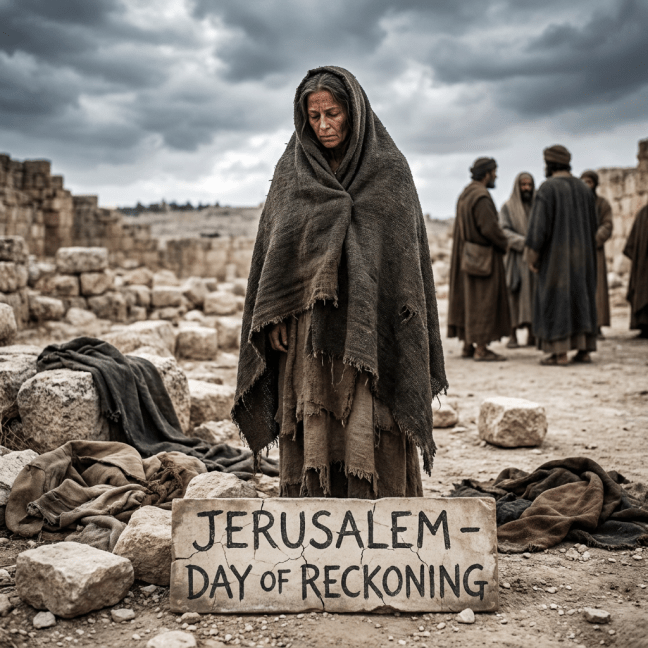
“Your country lies in ruins, and your towns are burned. Foreigners plunder your fields before your eyes and destroy everything they see. Beautiful Jerusalem stands abandoned like a watchman’s shelter in a vineyard, like a lean-to in a cucumber field after the harvest, like a helpless city under siege. If the Lord of Heaven’s Armies had not spared a few of us, we would have been wiped out like Sodom, destroyed like Gomorrah. Listen to the Lord, you leaders of “Sodom.” Listen to the law of our God, people of “Gomorrah.””
Isaiah 1:7-10 NLT

The existence of the nation of Judah, yo-yoing between God’s blessings and curses of their own making, was the result of the Jews’ relationship, or lack of, with God. In times of national rebellion against God, with sin, evil and neglect of Him predominating, it was a rampant disease everywhere, and one that He warned them about in Deuteronomy 28:15, 20, “But if you refuse to listen to the Lord your God and do not obey all the commands and decrees I am giving you today, all these curses will come and overwhelm you … The Lord himself will send on you curses, confusion, and frustration in everything you do, until at last you are completely destroyed for doing evil and abandoning me”. But in times of obedience in keeping God’s commands, blessings abounded. Deuteronomy 28:1-3, “If you fully obey the Lord your God and carefully keep all his commands that I am giving you today, the Lord your God will set you high above all the nations of the world. You will experience all these blessings if you obey the Lord your God: Your towns and your fields will be blessed”. 

Was God a petulant, capricious Being who took the huff when His people rejected Him? Not at all, because the commands the Israelites so often failed to keep were designed for their present and future well-being, but if they went their own way and ignored them, then it was no wonder they experienced problems. It’s a bit like today, with a burglar caught house-breaking, stealing the contents of the owner’s jewellery box. God’s command was “do not steal”, but breaking that commandment had consequences for the burglar, who subsequently found himself behind bars. For our modern-day command-breaker, Paul had a word of advice detailing a better way, God’s way, “If you are a thief, quit stealing. Instead, use your hands for good hard work, and then give generously to others in need” (Ephesians 4:28). 

The landscape described by Isaiah in his vision must have been much like parts of the Middle East today, or the Donbas in Ukraine, with missiles and bombs causing destruction. Towns and villages reduced to heaps of rubble. People displaced, with their countryside overrun by foreigners. Did that mean that the people living in these places had disobeyed God? Not necessarily, because in the 21st Century evil extends far beyond its natural borders. Jesus warned about such times coming today when He told His disciples, “And you will hear of wars and threats of wars, but don’t panic. Yes, these things must take place, but the end won’t follow immediately. Nation will go to war against nation, and kingdom against kingdom. There will be famines and earthquakes in many parts of the world” (Matthew 24:6-7). But in 740 BC, there was a people, God’s people, who were His special nation, and they had a choice to follow Him or not, the same choice that mankind has had ever since Jesus was crucified at Calvary.

Isaiah recorded God’s mercy, when he wrote, “If the Lord of Heaven’s Armies had not spared a few of us, we would have been wiped out like Sodom”. There was always a remnant of God’s people in Israel and Judah. There was the time when Elijah ran from Jezebel, depressed with the thought that he was the only prophet left, “Elijah replied, “I have zealously served the Lord God Almighty. But the people of Israel have broken their covenant with you, torn down your altars, and killed every one of your prophets. I am the only one left, and now they are trying to kill me, too”” (1 Kings 19:10). But further down the page in verse 18, we read God’s response, “Yet I will preserve 7,000 others in Israel who have never bowed down to Baal or kissed him!”

Psalm 91 provides a wonderful picture of a mother hen protecting her chicks, a picture of how God looks after His children. “Those who live in the shelter of the Most High will find rest in the shadow of the Almighty. This I declare about the Lord: He alone is my refuge, my place of safety; he is my God, and I trust him. For he will rescue you from every trap and protect you from deadly disease. He will cover you with his feathers. He will shelter you with his wings. His faithful promises are your armour and protection” (Psalm 91:1-4). But the protection for the chicks disappears once they decide to go their own way and relocate somewhere where the mother hen cannot protect them. 

We pilgrims are God’s children, and we have God’s protection with a promise that one day we will be in His presence. Yes, the evil in our sad and bad world will affect us in this life, just as in Isaiah’s day, where many good people suffered because of the sins of their fellow countrymen. In Elijah’s day, the nation of Israel was riven by Baal worship under the jurisdiction of an evil king, Ahab. But God still had a remnant of faithful people who worshipped only Him, even through their suffering. 

So we continue to look upwards to Heavenly places, with faith that God will do what He has promised. One day there will be no more sickness, dying and pain – “He will wipe every tear from their eyes, and there will be no more death or sorrow or crying or pain. All these things are gone forever” (Revelation 21:4). 

Dear Heavenly Father. Thank You for Your promises that prevail even though we live in an evil world. Please help us to stand firm on Your Word, as we look forward to the wonder of Glory. Amen.