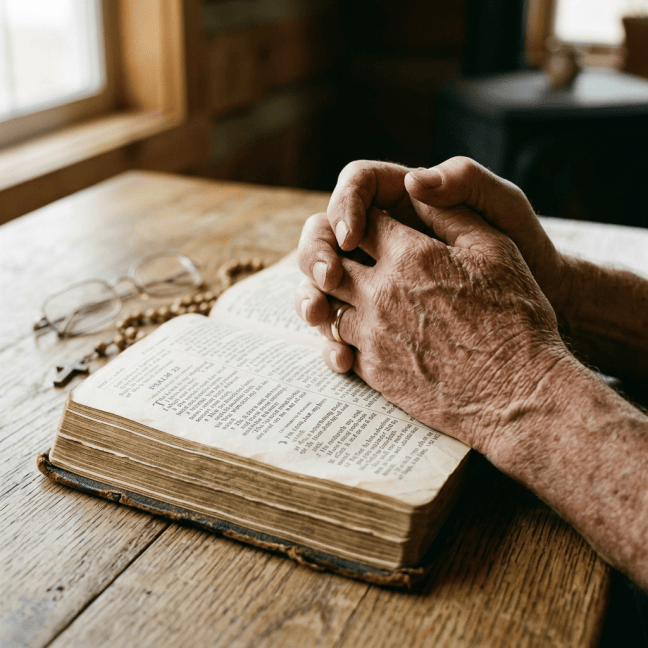
Divine Banquet on Mount Zion: A Biblical Vision

“On this mountain the Lord of hosts will make for all peoples a feast of rich food, a feast of well-aged wine, of rich food full of marrow, of aged wine well refined. And he will swallow up on this mountain the covering that is cast over all peoples, the veil that is spread over all nations. He will swallow up death forever; and the Lord God will wipe away tears from all faces, and the reproach of his people he will take away from all the earth, for the Lord has spoken.”
Isaiah 25:6-8 ESV

There is a mountain involved in Isaiah’s vision, where God will prepare and serve “a feast of rich food” with all the trimmings. What a wonderful banquet that will be, particularly for the poor and needy people in their distress. And even for those who are accustomed to enjoying their food with a variety of possibilities, the divine banquet will be literally out of this world.  However, this event will be held on the mountain, assumed to be Mount Zion, where God will be a stronghold and refuge for those in need. 

There is much significance to this mountain. In the Bible, Mount Zion was first described as a specific hilltop fortress in Jerusalem captured by King David. Over time, the name expanded in scripture to mean the Temple Mount, the entire city of Jerusalem, the people of Israel, and finally a symbol for God’s Heavenly kingdom. In Hebrews 12:18, we read, “You have not come to a physical mountain, to a place of flaming fire, darkness, gloom, and whirlwind, as the Israelites did at Mount Sinai”. This was the mountain we find in Exodus 19:12, “Mark off a boundary all around the mountain. Warn the people, ‘Be careful! Do not go up on the mountain or even touch its boundaries. Anyone who touches the mountain will certainly be put to death”. The Hebrews epistle was addressed to the Jewish people, so they would have known the significance of any reference to Sinai. But back in Hebrews 12:22-24, we read about the “Heavenly Jerusalem”, where God will be found. “No, you have come to Mount Zion, to the city of the living God, the heavenly Jerusalem, and to countless thousands of angels in a joyful gathering. You have come to the assembly of God’s firstborn children, whose names are written in heaven. You have come to God himself, who is the judge over all things. You have come to the spirits of the righteous ones in heaven who have now been made perfect. You have come to Jesus, the one who mediates the new covenant between God and people, and to the sprinkled blood, which speaks of forgiveness instead of crying out for vengeance like the blood of Abel”. Will we pilgrims be there? Of course we will. Where else will we be able to enjoy “a feast of rich food”? A banquet like no other.

There is something else significant about that mountain. In our verses today, we read, “There he will remove the cloud of gloom, the shadow of death that hangs over the earth”. What is this “shadow of death”? It is sin. Some translations refer to a veil hanging over humanity, so that they cannot see God, just as Moses wore a veil to prevent the Israelites from seeing his glowing face. The curse of sin and death hangs over every life, but God promises to remove that covering forever. Paul describes unbelievers as spiritually veiled, as we read in 2 Corinthians 3:14, “But the people’s minds were hardened, and to this day whenever the old covenant is being read, the same veil covers their minds so they cannot understand the truth. And this veil can be removed only by believing in Christ”. Two verses on, “But whenever someone turns to the Lord, the veil is taken away”. We pilgrims have had our eyes opened to God and His Kingdom, through Jesus and all He did for us at Calvary. We have access to God beyond the veil that stops all unbelievers from seeing Him. Paul wrote, “Now we see things imperfectly, like puzzling reflections in a mirror, but then we will see everything with perfect clarity. All that I know now is partial and incomplete, but then I will know everything completely, just as God now knows me completely” (1 Corinthians 13:12). For us pilgrims, the veil has been removed, but one day we will see God clearly, without any spiritual myopia at all. Will that be on Mount Zion, on that day when we will be enjoying the banquet of delicious food? That is our hope, our faith, in the promise of God.

There on Mount Zion, “[God] will swallow up death forever”. Revelation 21:4, “He will wipe every tear from their eyes, and there will be no more death or sorrow or crying or pain. All these things are gone forever”. Back to Paul again in 1 Corinthians 15:54, “Then, when our dying bodies have been transformed into bodies that will never die, this Scripture will be fulfilled: “Death is swallowed up in victory”. On the Cross, Jesus defeated death forever, and He confirmed that through the empty tomb. Jesus is still alive today, sitting at God’s right hand, where He is interceding for us. One day, we will be alive with Him for eternity. But notice what this means. Death is humanity’s greatest enemy. Medical science may delay it, and philosophies may explain it, but only Christ defeated it. And the enormous truth is that death itself will one day die.

Dear Father God. We pilgrims will one day come to Mount Zion, the New Jerusalem, Your dwelling. You are preparing a place for us there, something for which we are very grateful. Amen.

God: Our Ultimate Refuge in Times of Distress

“But you are a tower of refuge to the poor, O Lord, a tower of refuge to the needy in distress. You are a refuge from the storm and a shelter from the heat. For the oppressive acts of ruthless people are like a storm beating against a wall, or like the relentless heat of the desert. But you silence the roar of foreign nations. As the shade of a cloud cools relentless heat, so the boastful songs of ruthless people are stilled. In Jerusalem, the Lord of Heaven’s Armies will spread a wonderful feast for all the people of the world. It will be a delicious banquet with clear, well-aged wine and choice meat.”
Isaiah 25:4-6 NLT

What a wonderful picture of a secure and invincible fortress, established by God because He is the “tower of refuge to the needy in distress”. Isaiah builds on the picture with thoughts about storms beating against its walls, or shelter against the “relentless heat of the desert”. And he then compares the storms and heat with the “roar of foreign nations” and “the boastful songs of ruthless people”. But whatever the analogies, anything arraigned against God, the “tower of refuge”, would come to nothing. The “tower of refuge” is compared to Jerusalem, where “the Lord of Heaven’s Armies will spread a wonderful feast for all the people of the world”

The “poor” and “needy in distress” describe people who are not just financially deprived, but also those who are very much aware that they cannot save themselves. God identifies with such people, and He has provided the answer to all their needs. He gives them protection from those who would exploit and terrorise them, and he feeds them with the richest of foods in a place of security. Throughout the Bible, there are verses that confirm who God is to His people. In Psalm 46:1, we read, “God is our refuge and strength, always ready to help in times of trouble.” The psalmist continues with a reference to Jerusalem, the City of God, with, “A river brings joy to the city of our God, the sacred home of the Most High. God dwells in that city; it cannot be destroyed. From the very break of day, God will protect it”. And then we read, “The Lord of Heaven’s Armies is here among us; the God of Israel is our fortress”. 

Once again, Isaiah points out the futility of national pride and arrogance. Human pride always appears impressive, that is, until God speaks. We see in our history books the accounts of the rise and fall of empires and cultures, with nations ruled by men who think that they can change events for the future, even change the very stories in the history books yet to be written. Yet God can silence the loudest voices with a single word. In Acts 12, we read of the death of Herod Agrippa. A grovelling delegation of people from Tyre and Sidon came to plead with Herod for favour in the supply of food, and they were treated to a speech from Herod, dressed as he was in his royal clothes. In the account we then read, “The people gave him a great ovation, shouting, “It’s the voice of a god, not of a man!”” (Acts 12:22). But because of his pride, things didn’t end well for Herod, and we read in the next verse, “Instantly, an angel of the Lord struck Herod with a sickness, because he accepted the people’s worship instead of giving the glory to God. So he was consumed with worms and died”. For us pilgrims, it doesn’t matter what world leaders say or claim. One day, such words will disappear and never be heard again, no matter how terrifying or loud they are. It is only God’s Word that is true and eternal, and we can read God’s perspective in Psalm 2:4-5, “But the one who rules in heaven laughs. The Lord scoffs at them. Then in anger he rebukes them, terrifying them with his fierce fury”

In the New Testament, we read what Jesus said to the people around Him. “ … Come to me, all of you who are weary and carry heavy burdens, and I will give you rest” (Matthew 11:28). And then we have the parable about the Wedding Banquet, in Matthew 22. It started with Jesus saying, “The Kingdom of Heaven can be illustrated by the story of a king who prepared a great wedding feast for his son”. A common enough event in those days, so the people would have been familiar with the scenario. But Jesus related it to His teaching about the Kingdom of Heaven, and the importance of being ready and willing for the ultimate Heavenly celebration. In a country where finding sufficient food to live on was difficult at best, the vision of a feast, “a delicious banquet with clear, well-aged wine and choice meat”, would have immediately grabbed people’s attention. One of Scripture’s most beautiful pictures of heaven is a banquet. Throughout Scripture, meals represent fellowship, with the most famous one being the Lord’s Supper, where we see Jesus celebrating the Passover with His disciples over a shared meal. And the meal ends with Jesus saying, “Mark my words—I will not drink wine again until the day I drink it new with you in my Father’s Kingdom” (Matthew 26:29).  God is not merely preparing a place for us; He is also preparing a celebration.

We pilgrims stand strong because God is our security. Yes, we will experience trials and challenges, but God is always there for us,. Jesus said, “I have told you all this so that you may have peace in me. Here on earth you will have many trials and sorrows. But take heart, because I have overcome the world” (John 16:33). He didn’t just say that just because He wanted to give His disciples some encouragment at that moment. He said that as encouragement for all believers throughout history, even pilgrims such as us. So when we face situations in this life that are testing us, we turn to Philippians 4:6-7, “Don’t worry about anything; instead, pray about everything. Tell God what you need, and thank him for all he has done. Then you will experience God’s peace, which exceeds anything we can understand. His peace will guard your hearts and minds as you live in Christ Jesus“.

Dear Heavenly Tower of Refuge, our Father God. Thank You for Your Word from Psalm 91 that says, “[You] will cover [us] with [Your] feathers. [You] will shelter [us] with [Your] wings. [Your] faithful promises are [our] armour and protection”. Amen.

Finding Hope in Isaiah 25: Praise Amidst Chaos

Person in a cloak kneeling and praying on a rocky peak above a sea of clouds at sunrise

“O Lord, I will honour and praise your name, for you are my God. You do such wonderful things! You planned them long ago, and now you have accomplished them. You turn mighty cities into heaps of ruins. Cities with strong walls are turned to rubble. Beautiful palaces in distant lands disappear and will never be rebuilt. Therefore, strong nations will declare your glory; ruthless nations will fear you.”
Isaiah 25:1-3 NLT

We leave the devastation of God’s judgments in Isaiah 24, and move on to the next chapter. Isaiah 25 is one of the most hope-filled chapters in Isaiah’s writings, and here the prophet suddenly turns to praise. The chapter looks beyond immediate historical events to God’s ultimate victory, the salvation of His people, and the coming Messianic kingdom. It also contains one of the clearest Old Testament prophecies of the resurrection. But in many ways this chapter follows on from the previous verse at the end of chapter 24, which ended on a note of hope, “for the Lord of Heaven’s Armies will rule on Mount Zion. He will rule in great glory in Jerusalem, in the sight of all the leaders of His people”. It is almost as though Isaiah turns in a different direction, away from looking at the destruction of the earth, to God Himself, the One who destroyed all because of the “sins of the people, for they have twisted [His] instructions, violated His laws, and broken His everlasting covenant … its people must pay the price for their sin”. Isaiah understood well the consequences of sin.

So, Isaiah turned to God Himself, bursting into a personal outpouring of his praise. You see, God’s purposes had been completed in the previous chapter, the end of the story leaving Isaiah free to look at what God means to Him. Today, we pilgrims look on as life around us seems to reflect a maelstrom of chaos, both near and afar, but Isaiah knew that nothing was going to happen that God had not already planned. World events, on the one hand, and even personal happenings when we walk out of our front doors, all fit in with God’s plans for mankind. This is a hard statement to believe, because we have to face into the reality that sooner or later God will have to act because of mankind’s sin. Many people today are very worried and concerned that someone will push the nuclear button and the world will self-destruct, but we can be assured that nothing like this will happen unless God allows it. For other people, there is a huge cry of “why!” when a baby dies, or a plane crash kills all on board. They shake their fists in God’s face in anger and frustration, that is, if they ever believe He exists in the first place. Could God stop such occurrences? Of course, He could, and one day God will judge the world and its sin, bringing righteousness to bear when there is now only evil and sin. In the perfect to come, we read that there will be no more crying and no more death. Revelation 21:4, “He will wipe every tear from their eyes, and there will be no more death or sorrow or crying or pain. All these things are gone forever”. Through the resurrection of Jesus, we received a message of hope, because He was the first to defeat death. And this one event sealed our faith in God and His plan for the future, a future to be enjoyed by us pilgrims as we live with God forever.

Isaiah saw in his vision what the judgment would look like, but we never find him remonstrating with God with a “why”. Instead, he said, “O Lord, I will honour and praise your name, for you are my God”. Isaiah referred to what had happened as “wonderful things … planned … long ago”. Isaiah praises God for dealing with Israel’s enemies, and those nations that stand against God will one day have to praise Him. But we know that from Paul’s writings in Philippians 2:10-11, “that at the name of Jesus every knee should bow, in heaven and on earth and under the earth, and every tongue declare that Jesus Christ is Lord, to the glory of God the Father”. That’s a very complete count of everyone who has, or will, ever live. No exceptions at all. Paul echoes the same confidence as Isaiah. He wrote, “And we know that God causes everything to work together for the good of those who love God and are called according to His purpose for them“.

For us pilgrims, there is a principle we do well to follow. When life makes little sense, then we look upwards into the Heavenly realms, where we find the One who has all under control. We may not understand what is going on, but we do know the One who does. So, when life makes little sense, and we are tempted to look at the circumstances around us, it is more profitable instead to get on our knees in praise and worship. Faith trusts God’s plan before seeing God’s purpose.

Dear Heavenly Father. When all around us is descending into ever deepening depths of evil and sin, we instead look to You, the Rock upon whom we stand. Amen.

What Comes After the Earth’s Collapse?

Earth with bright glowing cracks showing tectonic plate boundaries and ruptures.

But my heart is heavy with grief. Weep for me, for I wither away. Deceit still prevails, and treachery is everywhere. Terror and traps and snares will be your lot, you people of the earth. Those who flee in terror will fall into a trap, and those who escape the trap will be caught in a snare. Destruction falls like rain from the heavens; the foundations of the earth shake. The earth has broken up. It has utterly collapsed; it is violently shaken. The earth staggers like a drunk. It trembles like a tent in a storm. It falls and will not rise again, for the guilt of its rebellion is very heavy. In that day the Lord will punish the gods in the heavens and the proud rulers of the nations on earth. They will be rounded up and put in prison. They will be shut up in prison and will finally be punished. Then the glory of the moon will wane, and the brightness of the sun will fade, for the Lord of Heaven’s Armies will rule on Mount Zion. He will rule in great glory in Jerusalem, in the sight of all the leaders of his people.”
Isaiah 24:16-23 NLT

I can remember finding a snare in a wood in Argyll, on the West coast of Scotland. Someone had made a wire loop and fixed the other end to a stout wooden peg firmly driven into the ground. It was obviously installed by someone knowledgeable of the wildlife, particularly deer, in that part of the world, and the intention was that an animal’s leg would become trapped by the loop, rendering it unable to escape. Traps are also commonplace, with a variety of designs that can lure an animal into a place where it cannot escape. But in our verses today, Isaiah is distressed by the deceit and treachery everywhere. The people remaining on the earth, those who have not returned to God, will be filled with terror, and they will try to run from God’s judgment, but end up being caught in traps and snares. But are these traps and snares real or a metaphor for something else?

Imagine the scene. God’s judgment is being poured out on the people of the earth. We read earlier in this chapter, “even the greatest people on earth waste away”, and “its people must pay the price for their sin. They are destroyed by fire”. Faced with such terror, the people remaining are fleeing away from it, but it is not possible to flee away from God’s judgment. Those who managed to outrun one disaster fell into a “trap” or “pit”, and if they escaped that, then there was a “snare” waiting for them. No one could escape from God. No one could hide from God’s global reckoning.

Reading on in our verses today, we find that the earth will experience a massive global earthquake, shaken to its foundations. We read, “The earth has broken up. It has utterly collapsed; it is violently shaken”. And this is to be final, because the earth “falls and will not rise again”. How do we pilgrims consider the world in which we live? It is an amazing, creative work of God, because its design is such that life can thrive, and has done so for millennia. And in our world, God has provided all the resources we need to sustain the life he has designed for us. Unfortunately, we take so much for granted: the air we breathe, the gravity that keeps our feet on the ground, the food supply, and so on. But one day it will all disappear.  Revelation 21 commences, “Then I saw a new heaven and a new earth, for the old heaven and the old earth had disappeared. And the sea was also gone”. The good news is that God will create a new earth, but the news gets better. Revelation 21:3-4, “I heard a loud shout from the throne, saying, “Look, God’s home is now among his people! He will live with them, and they will be his people. God himself will be with them. He will wipe every tear from their eyes, and there will be no more death or sorrow or crying or pain. All these things are gone forever””. God’s new earth will be so wonderful that He will come to live with us, His redeemed people. So, for all those people who think that they will die and go to spend eternity in Heaven, there will come a time when they will return to the new earth to be with God. 

The writer to the Hebrews wrote, “When God spoke from Mount Sinai his voice shook the earth, but now he makes another promise: “Once again I will shake not only the earth but the heavens also.” This means that all of creation will be shaken and removed, so that only unshakable things will remain” (Hebrews 12:26-27). We have to realise that all we see around us is temporary and can be removed at God’s command. Most people build their lives upon their careers, wealth, reputation, health and possessions, but all can and probably will disappear one day. At the point of crossing the Great Divide, all possessions and everything else will have to be left behind. As a thought, are we pilgrims hanging tightly onto something that is precious to us? Well, don’t hang on too tightly, because one day it will be left behind. And on that day, when the massive earthquake destroys the earth, no possessions will remain. 

The last part of the earth’s demise concerns the rulers and other ”gods”. We read from today’s verses, “In that day the Lord will punish the gods in the heavens and the proud rulers of the nations on earth. They will be rounded up and put in prison. They will be shut up in prison and will finally be punished”. Paul reminded believers that Christ has triumphed over all rulers and those in authority. “In this way, he disarmed the spiritual rulers and authorities. He shamed them publicly by his victory over them on the cross” (Colossians 2:15). It will not matter how powerful the leaders claim to be, because evil and its apparent victory are only temporary. As we know, God’s victory is eternal. 

Isaiah 24 is a chapter of apocalyptic visions. Not easy reading, but a message that needs to fill us with a sense of urgency to tell those who otherwise will be caught up in the eternal destruction. 

Dear Heavenly Father. Please lead us to those with open ears, those ready to hear and act upon Your wonderful message of hope through Jesus. There is no other way to escape the judgment to come. Amen.

A Remnant of God’s People

Silhouetted group of people standing on a hilltop watching sunset over distant hills

“Throughout the earth the story is the same— only a remnant is left, like the stray olives left on the tree or the few grapes left on the vine after harvest. But all who are left shout and sing for joy. Those in the west praise the Lord’s majesty. In eastern lands, give glory to the Lord. In the lands beyond the sea, praise the name of the Lord, the God of Israel. We hear songs of praise from the ends of the earth, songs that give glory to the Righteous One! But my heart is heavy with grief. Weep for me, for I wither away. Deceit still prevails, and treachery is everywhere.”
Isaiah 24:13-16 NLT

A remnant of God’s people. This is a familiar theme throughout the Bible: God’s judgment leaves a group of faithful people who remain true to Him and His covenant, regardless of their circumstances. We remember the story of Noah, where, in Genesis 6, “The Lord observed the extent of human wickedness on the earth, and he saw that everything they thought or imagined was consistently and totally evil”. We then read that the Lord decided to “wipe this human race I have created from the face of the earth”, a statement of judgment followed by a “But”: “But Noah found favour with the Lord”. Who was Noah? “… Noah was a righteous man, the only blameless person living on earth at the time, and he walked in close fellowship with God”. Noah and his family were the remnant on which the Lord rebuilt His people, and He was so pleased with them that He vowed never again to do such a thing as “wipe this human race … from the face of the earth”, a covenant He has never broken.

We also read in the story of Elijah about another remnant of God’s people. Elijah had run away from Jezebel after the Mount Carmel event, where he killed all the prophets of Baal. In the wilderness, he prayed that he might die, saying, “I have had enough, Lord … take my life…”. But after an angel had fed him, he travelled through the wilderness to Mount Sinai, where he heard the gentle whisper of God’s voice. God asked him, “What are you doing here, Elijah?” He replied, “I have zealously served the Lord God Almighty. But the people of Israel have broken their covenant with you, torn down your altars, and killed every one of your prophets. I am the only one left, and now they are trying to kill me, too” (1 Kings 19:14). After being told what to do next, God said, “Yet I will preserve 7,000 others in Israel who have never bowed down to Baal or kissed him!” Another remnant of faithful people.

God’s remnant is a small, faithful group of believers who survive divine judgment or widespread apostasy and remain loyal to God’s covenant. This recurring theme spans both the Old and New Testaments, representing the true spiritual core of God’s people across history. We have looked at two Old Testament examples, but the same principle is also presented in the New Testament. In Romans 11:5, and after referencing the Elijah remnant, Paul wrote, “It is the same today, for a few of the people of Israel have remained faithful because of God’s grace—his undeserved kindness in choosing them”. How do the remnant become set apart from their peers? Well, they faithfully keep God’s commandments and hold to their testimony of belief and trust in their salvation through grace alone. Through the remnant, God’s redemptive work moves forward from generation to generation, as we pilgrims know. Personally, through my parents’ faithfulness in following God, they sowed the seeds that have formed a foundation for my faith today. And I hope I am doing the same for my own family and their descendants. 

But note the behaviour of the remnant in our verses from Isaiah today. We read, “all who are left shout and sing for joy”. Those in the West “praise the Lord’s majesty”. Those in the East “give glory to God”. And just in case any were missed out, those living “in the lands beyond the sea” (probably a reference to the Mediterranean), “praise the name of the Lord, the God of Israel”. And the section ends with “We hear songs of praise from the ends of the earth, songs that give glory to the Righteous One!”. Have we ever noticed in the Bible that the greatest worship often comes from suffering saints? In Acts 16 we read the story of Paul and Silas in Philippi. They were arrested and beaten with rods because there was an accusation that they were “teaching customs that are illegal for us Romans to practice”. Then in Acts 16:23-24 we read, “They were severely beaten, and then they were thrown into prison. The jailer was ordered to make sure they didn’t escape. So the jailer put them into the inner dungeon and clamped their feet in the stocks.” But then, amazingly, we read in the next verse, “Around midnight Paul and Silas were praying and singing hymns to God, and the other prisoners were listening“. In Habakkuk 3:18-19, we read, “Even though the fig trees have no blossoms, and there are no grapes on the vines; even though the olive crop fails, and the fields lie empty and barren; even though the flocks die in the fields, and the cattle barns are empty, yet I will rejoice in the Lord! I will be joyful in the God of my salvation!

Perhaps the lesson for us pilgrims today is that if we are going through a difficult and challenging time, then perhaps we should set the issues aside and praise God. Habakkuk declared that even if he lost everything he would still be joyful in God. An amazing lesson in faith, don’t we think?

Dear Father God. Along with Habakkuk we declare our faith and trust in You. There is no other God like You, One day, we will be with You in Heaven, where we will praise and worship You together with all the saints who have preceded us. No more, the hassles of human life. Thank You. Amen.


Finding Lasting Joy Beyond Worldly Pleasures

“The grapevines waste away, and there is no new wine. All the merrymakers sigh and mourn. The cheerful sound of tambourines is stilled; the happy cries of celebration are heard no more. The melodious chords of the harp are silent. Gone are the joys of wine and song; alcoholic drink turns bitter in the mouth. The city writhes in chaos; every home is locked to keep out intruders. Mobs gather in the streets, crying out for wine. Joy has turned to gloom. Gladness has been banished from the land. The city is left in ruins, its gates battered down.”
Isaiah 24:7-12 NLT

Joy has turned to gloom”. But the preceding verses seem to indicate that the “joy” that had been lost was largely due to alcoholic beverages. No new wine is produced because the grapevines have wasted away. And without wine, there is no celebration, no “melodious chords of the harp” and the “cheerful sound of tambourines is stilled” (not sure about that one – when has such an instrument sounded cheerful? But then, each to their own). And it looks as though anarchy has become represented by mobs plundering the city, looking for any remaining wine supplies, forcing the inhabitants to keep their doors locked.

But the problem is that sinful and evil behaviour eventually steals away joy. All the celebrations, underpinned by the world’s pleasures, sooner or later, collapse into gloom and doom. Too much wine in the evening leads to a hangover the next day. Pleasure seeking may satisfy briefly, but the effects never last. The world seeks happiness but reaps a harvest of regrets and a lack of joy. Many people around the world spend their lives and resources searching for happiness, only to find nothing that lasts. It is only the joy that comes from a relationship with Jesus that has any lasting effects. You see, there is a huge difference between joy and happiness, as any believer will find. Psalm 16:11, “You make known to me the path of life; in your presence there is fullness of joy; at your right hand are pleasures forevermore”. Jesus said, “As the Father has loved me, so have I loved you. Abide in my love. If you keep my commandments, you will abide in my love, just as I have kept my Father’s commandments and abide in his love. These things I have spoken to you, that my joy may be in you, and that your joy may be full” (John 15:9-11). Full joy? Is this something we pilgrims experience, or is it wishful thinking as the dawn emerges after another sleepless night? 

So, we have contrasting pictures, one of the devastated city, with nothing left of any worth, once the hedonistic pleasure seekers have no foundation for their happiness. And the other is the world of joy that is experienced by believers in God, those who have trusted Him for their future and who are totally unfazed by the collapse of the city. Joy is independent of circumstances, and although hardship caused by the world’s problems doesn’t go away, joy remains for God’s children. We pilgrims have found that our joy is a deep, supernatural sense of peace and satisfaction. It comes from God through the Holy Spirit, and unlike normal happiness, which depends on good life events, spiritual joy stays strong even during hard times and suffering. Joy is a manifestation of the Holy Spirit’s fruit, as we read in Galatians 5:22-23, “But the fruit of the Spirit is love, joy, peace, patience, kindness, goodness, faithfulness, gentleness, self-control; against such things there is no law”. We cannot manufacture joy on our own because the joy that is rooted in God can only come from Him. 

So, dear fellow pilgrims, are we full of joy this morning? Or are we struggling with our circumstances, emotionally drained and tired of battling life’s challenges? At such a time, we fellowship with those imprisoned in a foreign land for their faith, or wondering where their next meal will come from in a land of devastation like our city in today’s verses. At such a time as this, we get down on our knees and call out to God, and we feel His peace flooding into our souls. Philippians 4:7, “Then you will experience God’s peace, which exceeds anything we can understand. His peace will guard your hearts and minds as you live in Christ Jesus”. God knows our difficulties, but He has the answer for each and every one of them, as we stay close to Him. And with His peace, we feel the joy of knowing the Lord start to bubble up inside of us. 

Paul wrote, “Can anything ever separate us from Christ’s love? Does it mean he no longer loves us if we have trouble or calamity, or are persecuted, or hungry, or destitute, or in danger, or threatened with death? No, despite all these things, overwhelming victory is ours through Christ, who loved us. And I am convinced that nothing can ever separate us from God’s love. Neither death nor life, neither angels nor demons, neither our fears for today nor our worries about tomorrow—not even the powers of hell can separate us from God’s love. No power in the sky above or in the earth below—indeed, nothing in all creation will ever be able to separate us from the love of God that is revealed in Christ Jesus our Lord” (Romans 8:35, 37-39). As we live our lives connected to Jesus, we can look up and beyond the circumstances that are holding us down. There is a two-line poem that goes, “Two prisoners looking through the bars; one saw mud, but the other saw stars”. We pilgrims are star gazers looking up into Heavenly places, assured of our salvation and because of that, we have within us an inexpressible joy.

A final word from Peter, “You love him even though you have never seen him. Though you do not see him now, you trust him; and you rejoice with a glorious, inexpressible joy. The reward for trusting him will be the salvation of your souls” (1 Peter 1:8-9). So, let’s rejoice together today, trusting in God’s love and the “salvation of our souls”. 

Dear Heavenly Father. You are the only Source of true joy. The happiness that belongs to the world will never last, and instead, we trust You for Your provision and promises. Amen.

The Consequences of Sin: Lessons from Isaiah 24

“Look! The Lord is about to destroy the earth and make it a vast wasteland. He devastates the surface of the earth and scatters the people. Priests and laypeople, servants and masters, maids and mistresses, buyers and sellers, lenders and borrowers, bankers and debtors—none will be spared. The earth will be completely emptied and looted. The Lord has spoken! The earth mourns and dries up, and the land wastes away and withers. Even the greatest people on earth waste away. The earth suffers for the sins of its people, for they have twisted God’s instructions, violated his laws, and broken his everlasting covenant. Therefore, a curse consumes the earth. Its people must pay the price for their sin. They are destroyed by fire, and only a few are left alive.”
Isaiah 24:1-6 NLT

Isaiah 24 is sometimes called “Isaiah’s Little Apocalypse”, because it moves beyond the judgment of individual nations (chapters 13–23) to a vision of God’s judgment on the whole earth, something thankfully followed by the hope of His glorious reign. It is both sobering and encouraging, reminding believers that while this world is passing away, God’s kingdom is eternal. The chapter starts with “the Lord is about to destroy the earth” but it doesn’t say when. Those impacted by this event are listed, but there are no exceptions. Everyone alive on Earth at the prophesied time will be affected. It is significant that social standing, career, or even religious affiliations will make no difference to those caught up in the catastrophe that will occur on the appointed day. As Paul wrote in Romans 3:23, “For everyone has sinned; we all fall short of God’s glorious standard”. And as is often said, the ground before the Cross of Christ is level; we all approach with repentant hearts, able and willing to receive forgiveness for all our sins, or we don’t approach at all and accept the consequences. 

Isaiah continued his prophecy, explaining why all this would happen, and it is a damning indictment that only has one remedy. In today’s verses, we read, “The earth suffers for the sins of its people, for they have twisted God’s instructions, violated his laws, and broken his everlasting covenant”. And it concludes that “Its people must pay the price for their sin. They are destroyed by fire, and only a few are left alive”. Quite how they would survive after such devastation isn’t clear until we read Isaiah 24:13, “Throughout the earth the story is the same— only a remnant is left, like the stray olives left on the tree or the few grapes left on the vine after harvest”

The world will be broken not because God failed, but because mankind rebelled. Isaiah painted a picture of creation itself mourning under the weight of human sin. The earth “dries up,” and “withers”, because we find that “the sins of its people” affect far more than individual lives; it damages families, societies, and even creation itself. Paul wrote, “Against its will, all creation was subjected to God’s curse. But with eager hope, the creation looks forward to the day when it will join God’s children in glorious freedom from death and decay. For we know that all creation has been groaning as in the pains of childbirth right up to the present time” (Romans 8:20-22). Think about the impact sin can have. A lie destroys trust. Greed ruins communities. Sexual sin damages families. Pride destroys churches. Violence scars nations. Selfishness causes wars. We may think that our sins are private and don’t affect anyone else, but nothing can be further from the truth. We read in Numbers 32:23, “But if you fail to keep your word, then you will have sinned against the Lord, and you may be sure that your sin will find you out”. In the news recently, there has been the story of a Cambridge professor who has been forced to resign following revelations about claims that he has made, revelations that boil down to a series of lies or “half-truths”. Several things about his life have come to light, including his academic qualifications, his authorship, his charitable work and his athletic prowess. The poor man is finding out the reality of the Scripture in Numbers 32. But we pilgrims cannot take the moral high ground because we ourselves will at one time or another have stretched the truth to bolster our credentials, and we need to look on with compassion rather than condemnation. Jesus said, and as recorded in John 8:32, “And you will know the truth, and the truth will set you free”. Perhaps we can ask what the truth will set us free from, but we intuitively know that we tend to live deceitful lives, riven by sin, populated by lies, and that it is only by believing in Jesus that we can be set free to live a life God designed us for. 

Sin has devastated God’s perfect creation through Adam, but it didn’t stay with him and Eve. It spread throughout the world just as an oil slick will keep spreading and spreading across the surface of a lake, destroying or covering everything that gets in its path. But God has a remedy. He didn’t create the earth with a view to walking away from it when mankind screwed up. He had a plan. Revelation 20:11, “And I saw a great white throne and the one sitting on it. The earth and sky fled from his presence, but they found no place to hide”. Up to now, a series of woes had brought disasters upon the earth and its people (see the Trumpet woes in Revelation 8-11), but finally, the earth had to go, fleeing from His presence. And then we read the glorious event that John saw in Revelation 21:1, “Then I saw a new heaven and a new earth, for the old heaven and the old earth had disappeared. And the sea was also gone”. God always makes all things new. As a prophetic demonstration of this, we know that each Spring, after the winter when trees are bare, and vegetation has died away, new shoots appear, and once again we share in the excitement of God’s provision. Jesus makes all things new, in creation as well as the lives of new believers.

We pilgrims are the fruit of God’s plan, brought through Jesus and His willingness to die in our place as punishment for our sins. It is as though we are a prophetic statement of God’s provision and plan for dealing with the curse of sin that has blighted the world in which we live. But the question is, are we revealing this prophecy to those around us? Paul wrote, “Once you were dead because of your disobedience and your many sins” (Ephesians 2:1). And I don’t think any of us pilgrims can dispute the truth in that verse. Two verses on in Ephesians 2, we read, “All of us used to live that way, following the passionate desires and inclinations of our sinful nature. By our very nature we were subject to God’s anger, just like everyone else”. But here’s the truth that the world needs to hear: “But God is so rich in mercy, and he loved us so much, that even though we were dead because of our sins, he gave us life when he raised Christ from the dead. (It is only by God’s grace that you have been saved!)” (Ephesians 2:4-5). You see, the Cross is empty. The Tomb is empty. All because Jesus is now in Heaven, mission accomplished, the price for mankind’s sin paid for all who believe in Him. Jesus said, “That is why I said that you will die in your sins; for unless you believe that I Am who I claim to be, you will die in your sins” (John 8:24). 

Paul wrote, “But Christ has rescued us from the curse pronounced by the law. When he was hung on the cross, he took upon himself the curse for our wrongdoing. For it is written in the Scriptures, “Cursed is everyone who is hung on a tree”” (Galatians 3:13). In Revelation 22:3, following the establishment of the New Heavens and the New Earth, we find, “No longer will there be a curse upon anything. For the throne of God and of the Lamb will be there, and his servants will worship him”. The curse has gone. Dealt with through God and His plan for eliminating sin. We pilgrims cannot walk away from the amazing love and grace that God has poured out on His creation. 

Dear Father God. We are so sorry for our sins, and we confess them before You today, believing that through Your Son Jesus, they are dealt with once and for all. Please help us, through the power of the Holy Spirit who lives within us, to live our lives Your way, and we pray, as David wrote, search our hearts for anything that offends You. We ask all this in Your precious name. Amen.

Lessons from Tyre: God’s Redemption and Purpose

Two shipwrecked wooden boats on rocky coast near medieval castle ruins under cloudy sky with sunrays

“For seventy years, the length of a king’s life, Tyre will be forgotten. But then the city will come back to life as in the song about the prostitute: Take a harp and walk the streets, you forgotten harlot. Make sweet melody and sing your songs so you will be remembered again. Yes, after seventy years the Lord will revive Tyre. But she will be no different than she was before. She will again be a prostitute to all kingdoms around the world. But in the end her profits will be given to the Lord. Her wealth will not be hoarded but will provide good food and fine clothing for the Lord’s priests.”
Isaiah 23:15-18 NLT

Something strange happened, as the Lord revived Tyre after 70 years of forgotten neglect. Isaiah’s prophecy stated that Tyre would be laid low and forgotten (punished or sidelined by dominant empires like Babylon or Assyria) for 70 years—symbolising the lifespan of a king or a complete cycle of judgment. After this period, Tyre would be revived and return to its old ways. The “song about the prostitute” (playing a harp and singing in the streets to attract attention) describes an ageing harlot trying to lure customers back. It symbolises Tyre going right back to its aggressive, opportunistic trading habits. Surprisingly, the passage notes that Tyre’s eventual commercial profits would not be hoarded for selfish pride, but would instead end up consecrated to support those who dwell before the Lord, something that was historically fulfilled in part when Phoenician merchants supplied materials to rebuild the temple in Jerusalem.

But all this is remarkable until we understand that God’s goal was never merely destruction. His purpose was consecration. There is a parallel here for us, pilgrims and believers everywhere, when we consider how God deals with us when we get things wrong. We read in Hebrews 12:10-11, “For our earthly fathers disciplined us for a few years, doing the best they knew how. But God’s discipline is always good for us, so that we might share in his holiness. No discipline is enjoyable while it is happening—it’s painful! But afterwards there will be a peaceful harvest of right living for those who are trained in this way”. We need to realise that God is in the recycling business. He takes imperfect and sinful human beings who are useless to Him, but, through Jesus, He makes them useful to Himself once again. 

We read in the last verse of Isaiah 23, “But in the end her profits will be given to the Lord. Her wealth will not be hoarded but will provide good food and fine clothing for the Lord’s priests”.  Tyre’s wealth once fuelled pride, but one day that same wealth would honour God. This anticipates a biblical principle seen repeatedly, that God often takes what once served sin and redirects it for His glory. I once knew a man who was a successful entrepreneur, and he established an IT business. But part of his testimony was that he heard the Gospel and encountered a crossroads in his life. Before that, his life could have gone one of two ways: a life of crime or a life dedicated to God. Thankfully, he chose the right way. We pilgrims all have natural gifts that can be used for sinful purposes as well as for God’s glory. We remember the Bible stories of people like Moses. He had a classical Egyptian education as a prince in Pharaoh’s court, which stood him in good stead when he was negotiating with Pharaoh for the release of the Israelite slaves. Of course, when a young man, he nearly screwed up, forcing him to run for his life, but God is patient and brought Moses back again at the right time. Another example was in the case of Zacchaeus, who was, according to the people, “a notorious sinner”. But we read what happened in Luke 19:8-10, “Meanwhile, Zacchaeus stood before the Lord and said, “I will give half my wealth to the poor, Lord, and if I have cheated people on their taxes, I will give them back four times as much!” Jesus responded, “Salvation has come to this home today, for this man has shown himself to be a true son of Abraham. For the Son of Man came to seek and save those who are lost””. God doesn’t merely forgive people for their sins: He transforms and restores them. 

Tyre thought that their trading would continue forever, invincible as they thought they were. But God had other plans because their wealth was being used for corrupt purposes, fueling their pride and arrogance. There was a time when Tyre supplied what was required to build the Temple in the days of David and Solomon, but later Tyre opposed God’s purposes and paid the price. But if we extend the message and lesson about Tyre to global proportions, we see that there will come a day when the world’s wealth will be devoted to the glory of God. Referring to the new Jerusalem, we read in Revelation 21:24-26, “The nations will walk in its light, and the kings of the world will enter the city in all their glory. Its gates will never be closed at the end of day because there is no night there. And all the nations will bring their glory and honour into the city”. Commerce by itself is not necessarily evil, and it becomes holy when it is surrendered to God. 

But none of this was a surprise to God, and Jesus taught similar principles. Tyre’s wealth faded and eventually disappeared, but Jesus warned against using our earthly treasures for the wrong purposes in Matthew 6:19-20, “Don’t store up treasures here on earth, where moths eat them and rust destroys them, and where thieves break in and steal. Store your treasures in heaven, where moths and rust cannot destroy, and thieves do not break in and steal”. I suppose we pilgrims need to ask ourselves what sort of wealth we are building. Many a person has come to grief making unwise investments, but there is nothing unwise about investing in the Kingdom of God. Those who do will hear one day, “Well done, …” 

Another lesson from Tyre is that earthly kingdoms will come and go, but God’s Kingdom lasts forever. Tyre is now just a pile of ruins, a monument to a kingdom long gone. But we read in Psalm 145:13, “For your kingdom is an everlasting kingdom. You rule throughout all generations. The Lord always keeps his promises; he is gracious in all he does”. In Daniel 2:44, we read, “During the reigns of those kings, the God of heaven will set up a kingdom that will never be destroyed or conquered. It will crush all these kingdoms into nothingness, and it will stand forever”. But one day God will renew this earth, destroying all the remaining earthly kingdoms in the process. Revelation 21:1-2, “Then I saw a new heaven and a new earth, for the old heaven and the old earth had disappeared. And the sea was also gone. And I saw the holy city, the new Jerusalem, coming down from God out of heaven like a bride beautifully dressed for her husband”. One day that will be our dwelling place, you and I, and we read the next two verses, “I heard a loud shout from the throne, saying, “Look, God’s home is now among his people! He will live with them, and they will be his people. God himself will be with them. He will wipe every tear from their eyes, and there will be no more death or sorrow or crying or pain. All these things are gone forever””. 

We pilgrims are a truly favoured people because we are God’s people. Before Him today, we repent of our pride, and in all humility, we kneel before Him, giving Him all the praise and all the glory. In awe, we look into the face of Jesus, with inexpressible gratitude rising up within us. Thank You, Lord.

Dear awesome Heavenly Father. Thank You for Your Word, that teaches us so much. And even more, we thank You that You never give up on us, patiently leading and guiding us in Your ways. Thank You, Jesus, for coming to this world, bringing a touch of Heaven with You. And thank You, Holy Spirit, for living within me, empowering me for all that I face in the day ahead. Amen.

God’s Sovereignty: Understanding Tyre’s Judgment in History

“This message came to me concerning Tyre: Wail, you trading ships of Tarshish, for the harbour and houses of Tyre are gone! The rumours you heard in Cyprus are all true. … The Lord held out his hand over the sea and shook the kingdoms of the earth. He has spoken out against Phoenicia, ordering that her fortresses be destroyed. He says, “Never again will you rejoice, O daughter of Sidon, for you have been crushed. Even if you flee to Cyprus, you will find no rest.” Look at the land of Babylonia— the people of that land are gone! The Assyrians have handed Babylon over to the wild animals of the desert. They have built siege ramps against its walls, torn down its palaces, and turned it to a heap of rubble. Wail, you ships of Tarshish, for your harbour is destroyed!
Isaiah 23:1, 11-14 NLT

In this oracle written against Tyre, the ancient Phoenician trading port located just South of Beirut, God’s presence was clear. In the natural, and without any sort of divine intervention, they would probably have continued to trade for many years, sinfully plying their maritime businesses from a city that was nearly impregnable, located as it was partially on an offshore island. But their pride was their downfall, and eventually God had to act in judgment, as we read in Isaiah 23:8-9, “Who has brought this disaster on Tyre, that great creator of kingdoms? Her traders were all princes, her merchants were nobles. The Lord of Heaven’s Armies has done it to destroy your pride and bring low all earth’s nobility”. But did God’s intervention apply in all the wars and skirmishes that took place in Old Testament times? The Israelites entered the Promised Land of Canaan, driving out the people who lived there, but they found no peace, as one nation after another fought them for land or plain hatred. But God couldn’t allow Tyre to continue because it was starting to use its economic strength to plunder the nations around it, and particularly God’s people. 

Ancient Tyre experienced something like the Wall Street crash of 1929, when the market collapsed almost overnight, leading to the Great Depression of the 1930s. In 1929, the stock market collapsed due to poor financial decisions and over-inflated share prices. Tyre experienced something similar with the collapse of its commerce. It relied on its immense economic power, its status as a maritime superpower, and its mighty sea fortresses to act with pride and arrogance, treating its renowned merchants like princes and forgetting God’s ultimate sovereignty.

We pilgrims live in a world driven and underpinned by capitalism. Nations trade with one another. Businesses buy and sell. But the message from Tyre is that capitalism on its own is a poor foundation for mankind’s future. The stock market can crash, and businesses can crash with it. Currencies can collapse, destroying buying power and bringing hardship over which ordinary people have no influence or control. Closer to home, we occasionally see houses lose value, putting the owners into what we call negative equity, where they are unable to realise sufficient value from their investments to repay the loans taken out to purchase the property in the first place. And then to compound the problems, health can be impacted, bringing uncertainty and misery in more extreme cases. But in all of this, we have a God who is unchangeable and who is immune to human systems and market crashes. Paul gave Timothy some great advice: “Teach those who are rich in this world not to be proud and not to trust in their money, which is so unreliable. Their trust should be in God, who richly gives us all we need for our enjoyment. Tell them to use their money to do good. They should be rich in good works and generous to those in need, always being ready to share with others. By doing this they will be storing up their treasure as a good foundation for the future so that they may experience true life” (1 Timothy 6:17-19). Regarding the future, the only sure and solid foundation is Jesus Himself. He never changes and is “… the same yesterday, today, and forever” (Hebrews 13:8). 

One repeated emphasis throughout Isaiah is God’s rule over history. To their merchants, Tyre looked untouchable, but God simply announced its fall. And we know from history, and the ruins that we can see today, that what He said happened. The time we live in today is politically uncertain, with a war going on between the US, Israel, and Iran and its proxies in Lebanon and Yemen. Ever since it was established in 1948, Israel has been under attack from one source or another. Anti-Semitism is an ongoing problem in many nations. And then we have the war going on in the Eastern borders of Europe, and now in its fifth year. But these are just the headline conflicts. There are many other skirmishes going on as nations rise and fall, and leaders come and go. We could be tempted to think that God doesn’t care, but the story of Tyre says otherwise. God is always active in world events, and He will act when necessary because he is sovereign. For us pilgrims, we trust in Him, and we agree with Paul about what he wrote to Timothy in 2 Timothy 4:18, “Yes, and the Lord will deliver me from every evil attack and will bring me safely into his heavenly Kingdom. All glory to God forever and ever! Amen”. The Psalmist wrote, “The Lord keeps you from all harm and watches over your life. The Lord keeps watch over you as you come and go, both now and forever” (Psalm 121:7-8). And of immense comfort to believers everywhere is Psalm 46:8-10, “Come, see the glorious works of the Lord: See how he brings destruction upon the world. He causes wars to end throughout the earth. He breaks the bow and snaps the spear; he burns the shields with fire. “Be still, and know that I am God! I will be honoured by every nation. I will be honoured throughout the world””. There will come a time when all wars will end, and many believers, looking at today’s world events, feel that this won’t be far off. 

We pilgrims rest in God’s loving arms, secure and trusting that He will bring us safely home. Isaiah 26:4-5, “Trust in the Lord always, for the Lord God is the eternal Rock. He humbles the proud and brings down the arrogant city. He brings it down to the dust”. There may be much dust in the world around us, but we stand firm on the solid Rock, God Himself. No dust there.

Dear Father God. Thank You for Your presence in our lives. In these uncertain times, we look to You as the Source of all that we need, confident in our salvation, and sure that one day You will welcome us home. Thank You. Amen.

Isaiah’s Warning: Tyre’s Pride and Its Consequences

Jeweled crown on stone pedestal with wooden scepter in ruined stone building

“This message came to me concerning Tyre: Wail, you trading ships of Tarshish, for the harbour and houses of Tyre are gone! The rumours you heard in Cyprus are all true. Who has brought this disaster on Tyre, that great creator of kingdoms? Her traders were all princes, her merchants were nobles. The Lord of Heaven’s Armies has done it to destroy your pride and bring low all earth’s nobility. Come, people of Tarshish, sweep over the land like the flooding Nile, for Tyre is defenceless.”
Isaiah 23:1, 8-10 NLT

Isaiah 23 is an oracle against Tyre, the great Phoenician trading city. Tyre was the wealthiest commercial city of the ancient world and was built partly on an offshore island, making it almost impregnable. It was famous for shipping, trade, cedar wood, purple dye, and international commerce, and was closely linked with Israel during the reigns of David and Solomon (1 Kings 5). It later became proud, wealthy and spiritually corrupt. It is believed that Isaiah wrote this prophecy about 700 BC, and it was fulfilled during several sieges, the first when Shalmaneser V and Sargon II pressured Tyre in the 8th century BC. Then Nebuchadnezzar came along and besieged Tyre for thirteen years (586–573 BC), as we can read in Ezekiel 26, but it was Alexander the Great who finally conquered the island city in 332 BC by building a causeway to it. But why did such a magnificent city, the focus of Isaiah’s oracle, fall? Today, the ancient city of Tyre lies in ruins in Sour, Lebanon, about 83 kilometres south of Beirut. It is still accessible by the causeway built by Alexander.

The downfall of Tyre was due to God’s judgment for its pride, a theme common to these early chapters of Isaiah. There is something about the sin of pride that God detests, and we can see His judgment in Isaiah 23:9, “The Lord of Heaven’s Armies has done it to destroy your pride and bring low all earth’s nobility”. In its pride, Tyre believed that wealth guaranteed security, influence guaranteed permanence, and success guaranteed significance, but the Lord declared otherwise. In Proverbs 16:5, we read, “The Lord detests the proud; they will surely be punished”. Further down the page, we read the proverb, “Pride goes before destruction, and haughtiness before a fall. Better to live humbly with the poor than to share plunder with the proud” (Proverbs 16:18-19). James quotes another proverb in James 4:6, “And he gives grace generously. As the Scriptures say, ‘God opposes the proud but gives grace to the humble’”. 

In Luke 18, we read the parable of the Pharisee and the tax collector. Jesus addressed this parable to “some who had great confidence in their own righteousness and scorned everyone else” (Luke 18:9). Who were these people? The description fits the Pharisees very well and the parable commences, “Two men went to the Temple to pray. One was a Pharisee, and the other was a despised tax collector” (Luke 18:10). We can read the arrogance in the Pharisee’s prayer, as he thanked God that he was not like other people, especially the tax collector who was praying “at a distance” and not even daring to lift his eyes to Heaven. But Jesus concluded His parable with, “I tell you, this sinner, not the Pharisee, returned home justified before God. For those who exalt themselves will be humbled, and those who humble themselves will be exalted” (Luke 18:14). 

In Matthew 23:12, Jesus said, “But those who exalt themselves will be humbled, and those who humble themselves will be exalted”, and this principle is clearly demonstrated by the life of Belshazzar, which we can read about in Daniel 5. We all know the story, I’m sure, of when King Belshazzar was giving a great feast for 1000 of his nobles, and to accommodate the wine, he used the gold and silver goblets that had been taken from the Temple in Jerusalem by Nebuchadnezzar. But then we read, “Suddenly, they saw the fingers of a human hand writing on the plaster wall of the king’s palace, near the lampstand. The king himself saw the hand as it wrote,” (Daniel 5:5). With his knees knocking together in fear, the king called for his motley crew of astrologers to interpret what the writing said. They failed, and eventually, at his mother’s prompting, the king called for Daniel, who began by reminding Belshazzar of what happened to his predecessor, Nebuchadnezzar. Daniel 5:20, “But when his heart and mind were puffed up with arrogance, he was brought down from his royal throne and stripped of his glory”. Then Daniel delivered the coup de grace, with “You are his successor, O Belshazzar, and you knew all this, yet you have not humbled yourself. For you have proudly defied the Lord of heaven and have had these cups from his Temple brought before you. You and your nobles and your wives and concubines have been drinking wine from them while praising gods of silver, gold, bronze, iron, wood, and stone—gods that neither see nor hear nor know anything at all. But you have not honoured the God who gives you the breath of life and controls your destiny!” (Daniel 5:22-23). It didn’t end well for Belshazzar, as the story ends in Daniel 5:30, “That very night Belshazzar, the Babylonian king, was killed”. 

We should note that God is not opposed to success, but He is opposed to pride and self-sufficiency. Pride slowly engulfs us with attitudes such as “I built this”, or “I earned this”, things that can develop into the person thinking that they don’t need God at all. The inhabitants of Tyre eventually considered their city a monument to human achievement, which made it the focus of divine humbling. People throughout history, and even today, have found that God often removes the things they trust in, often bringing them down to earth with quite a bump. 

Pride is quite a common attribute among people in our societies today. In a culture focused on achievement, God has been forgotten, and people have generally become puffed up with pride and arrogance. Perhaps a person happened to meet a film star or another prominent person and bragged about it, full of pride. Perhaps a person achieved a degree at University and put their success down to their hard work. But God’s gift of intelligence never figures in their boasting. Even we pilgrims can fall into the trap of bragging about our prowess in our gardens or kitchens, our jobs or qualifications, our abilities in fishing or on the golf course, or even our ability to write blogs and books. We constantly need to humble ourselves before God, pointing to Him as the Author and Finisher of our faith, and the One who has given us so many good gifts. So perhaps a little self-examination is appropriate today, as we thank God for His grace and favour, giving Him all the praise and all the glory.

Dear Father God. Our success in life is all down to You and Your grace working out in our lives. There is nothing we can claim to be able to do or achieve without You being there behind it. Thank You. Amen.