God’s Remnant.

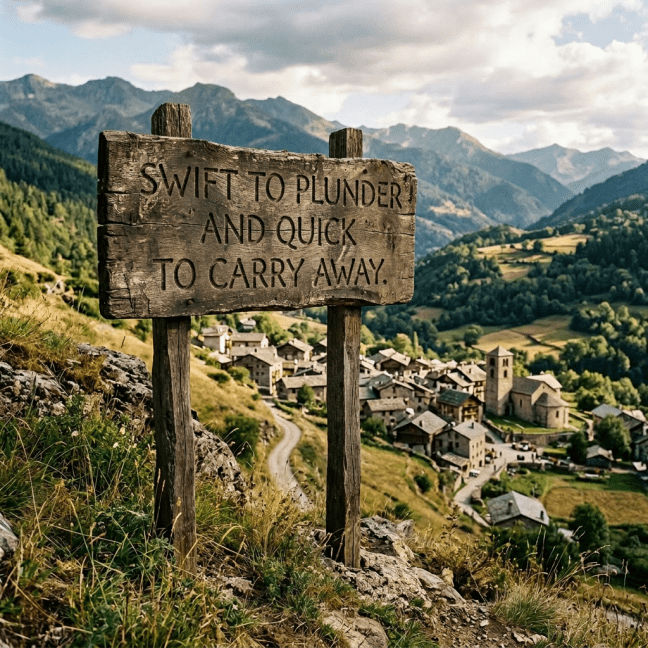
“Your country lies in ruins, and your towns are burned. Foreigners plunder your fields before your eyes and destroy everything they see. Beautiful Jerusalem stands abandoned like a watchman’s shelter in a vineyard, like a lean-to in a cucumber field after the harvest, like a helpless city under siege. If the Lord of Heaven’s Armies had not spared a few of us, we would have been wiped out like Sodom, destroyed like Gomorrah. Listen to the Lord, you leaders of “Sodom.” Listen to the law of our God, people of “Gomorrah.””
Isaiah 1:7-10 NLT

The existence of the nation of Judah, yo-yoing between God’s blessings and curses of their own making, was the result of the Jews’ relationship, or lack of, with God. In times of national rebellion against God, with sin, evil and neglect of Him predominating, it was a rampant disease everywhere, and one that He warned them about in Deuteronomy 28:15, 20, “But if you refuse to listen to the Lord your God and do not obey all the commands and decrees I am giving you today, all these curses will come and overwhelm you … The Lord himself will send on you curses, confusion, and frustration in everything you do, until at last you are completely destroyed for doing evil and abandoning me”. But in times of obedience in keeping God’s commands, blessings abounded. Deuteronomy 28:1-3, “If you fully obey the Lord your God and carefully keep all his commands that I am giving you today, the Lord your God will set you high above all the nations of the world. You will experience all these blessings if you obey the Lord your God: Your towns and your fields will be blessed”. 

Was God a petulant, capricious Being who took the huff when His people rejected Him? Not at all, because the commands the Israelites so often failed to keep were designed for their present and future well-being, but if they went their own way and ignored them, then it was no wonder they experienced problems. It’s a bit like today, with a burglar caught house-breaking, stealing the contents of the owner’s jewellery box. God’s command was “do not steal”, but breaking that commandment had consequences for the burglar, who subsequently found himself behind bars. For our modern-day command-breaker, Paul had a word of advice detailing a better way, God’s way, “If you are a thief, quit stealing. Instead, use your hands for good hard work, and then give generously to others in need” (Ephesians 4:28). 

The landscape described by Isaiah in his vision must have been much like parts of the Middle East today, or the Donbas in Ukraine, with missiles and bombs causing destruction. Towns and villages reduced to heaps of rubble. People displaced, with their countryside overrun by foreigners. Did that mean that the people living in these places had disobeyed God? Not necessarily, because in the 21st Century evil extends far beyond its natural borders. Jesus warned about such times coming today when He told His disciples, “And you will hear of wars and threats of wars, but don’t panic. Yes, these things must take place, but the end won’t follow immediately. Nation will go to war against nation, and kingdom against kingdom. There will be famines and earthquakes in many parts of the world” (Matthew 24:6-7). But in 740 BC, there was a people, God’s people, who were His special nation, and they had a choice to follow Him or not, the same choice that mankind has had ever since Jesus was crucified at Calvary.

Isaiah recorded God’s mercy, when he wrote, “If the Lord of Heaven’s Armies had not spared a few of us, we would have been wiped out like Sodom”. There was always a remnant of God’s people in Israel and Judah. There was the time when Elijah ran from Jezebel, depressed with the thought that he was the only prophet left, “Elijah replied, “I have zealously served the Lord God Almighty. But the people of Israel have broken their covenant with you, torn down your altars, and killed every one of your prophets. I am the only one left, and now they are trying to kill me, too”” (1 Kings 19:10). But further down the page in verse 18, we read God’s response, “Yet I will preserve 7,000 others in Israel who have never bowed down to Baal or kissed him!”

Psalm 91 provides a wonderful picture of a mother hen protecting her chicks, a picture of how God looks after His children. “Those who live in the shelter of the Most High will find rest in the shadow of the Almighty. This I declare about the Lord: He alone is my refuge, my place of safety; he is my God, and I trust him. For he will rescue you from every trap and protect you from deadly disease. He will cover you with his feathers. He will shelter you with his wings. His faithful promises are your armour and protection” (Psalm 91:1-4). But the protection for the chicks disappears once they decide to go their own way and relocate somewhere where the mother hen cannot protect them. 

We pilgrims are God’s children, and we have God’s protection with a promise that one day we will be in His presence. Yes, the evil in our sad and bad world will affect us in this life, just as in Isaiah’s day, where many good people suffered because of the sins of their fellow countrymen. In Elijah’s day, the nation of Israel was riven by Baal worship under the jurisdiction of an evil king, Ahab. But God still had a remnant of faithful people who worshipped only Him, even through their suffering. 

So we continue to look upwards to Heavenly places, with faith that God will do what He has promised. One day there will be no more sickness, dying and pain – “He will wipe every tear from their eyes, and there will be no more death or sorrow or crying or pain. All these things are gone forever” (Revelation 21:4). 

Dear Heavenly Father. Thank You for Your promises that prevail even though we live in an evil world. Please help us to stand firm on Your Word, as we look forward to the wonder of Glory. Amen.

The Faithful Few

“It is the same today, for a few of the people of Israel have remained faithful because of God’s grace—his undeserved kindness in choosing them. And since it is through God’s kindness, then it is not by their good works. For in that case, God’s grace would not be what it really is—free and undeserved.”
Romans 11:5-6 NLT

Paul concludes that in his day there were still a remnant of the “people of Israel” who were faithful to God. And this because they had accepted God’s grace and kindness, and not because of the “good works” that they might have been doing. Once again Paul reminded his readers that God’s grace was “free and undeserved”. 

But there is a contentious thought embedded within Paul’s writings – that the faithful few had been chosen by God. Once again we come into contact with the doctrine of predestination. We read Romans 8:29 and perhaps draw the conclusion that God selects certain people, not all, to join His family. We read, “For those God foreknew he also predestined to be conformed to the image of his Son, that he might be the firstborn among many brothers and sisters”. But we balance this verse with another from 2 Peter 3:9, “The Lord isn’t really being slow about his promise, as some people think. No, he is being patient for your sake. He does not want anyone to be destroyed, but wants everyone to repent”. So from a backdrop of Romans 3:23 – “For everyone has sinned; we all fall short of God’s glorious standard” – we find that God’s invitation has to be responded to. God choosing any one of us matters little unless that person repents and turns to Him. And anyone who becomes a Christian will join the family of God. Another son or daughter. 

But regarding the thought that God chooses some people rather than others, we have to accept that there are verses in the Bible that support this doctrine. Because He knows the end from the beginning, perhaps God knows who will accept His kindness and grace and who won’t. Of course, He never gives up on people. And He is always fair. Perhaps someone who responds to Him has, in effect, proved that God’s universal invitation of grace means that they were chosen. 

Some people were, and are, obviously chosen by God in a high profile way. The writer of this epistle, Paul, once called Saul of Tarsus, knew that God had chosen him. We read in Galatians 1:15-16, “But even before I was born, God chose me and called me by his marvellous grace. Then it pleased him to reveal his Son to me so that I would proclaim the Good News about Jesus to the Gentiles. When this happened, I did not rush out to consult with any human being”. Many faithful people in his generation were also chosen by God, some like Paul to undertake a high profile and demanding role in God’s Kingdom, others just to go about their business as an example to those around them. Every generation has been blessed by a selection of “Paul’s”, men and women who have faithfully served God by extending the Gospel into new places and nations. We think of Jackie Pulling, or Billy Graham. But the majority of God’s chosen people find themselves in lower profile roles, as a remnant of God’s grace, fulfilling their calling as “salt and light” in their families and communities, schools and workplaces. God has no favourites and treats all people equally. We will all one day be saved and join Him in Heaven.

In some Christian circles today we wonder if there will be a “faithful few” in a generation’s time. But as with the “people of Israel”, the life of the church flows and ebbs over the years. But God never changes. He is always faithful and kind. Always freely accepting repentant sinners through His grace and mercy. Never turning anyone away. Paul realised, along with Elijah many years before, that God will always keep a remnant of faithful people. People who will never abandon their faith. And we pilgrims count ourselves in that number, faithful God-followers who never forsake Him.

Father, we echo the words of Peter, who said to Jesus, “You have the words of eternal life”. Where else could we go? We will never abandon You. Thank You. Amen.

Bowing to Baal

“No, God has not rejected his own people, whom he chose from the very beginning. Do you realise what the Scriptures say about this? Elijah the prophet complained to God about the people of Israel and said, “Lord, they have killed your prophets and torn down your altars. I am the only one left, and now they are trying to kill me, too.” And do you remember God’s reply? He said, “No, I have 7,000 others who have never bowed down to Baal!””
Romans 11:2-4 NLT

We look around in our churches and see so many empty pews. We wonder too about the increasing ages of the congregants and the sad message that another dear friend has passed on, reducing the numbers even more. And news of churches in our towns and communities closing down seems to add to the feeling that perhaps we are living in what has come to be called “post-Christian” age. Elijah must have felt much the same. We read his story in 1 Kings 19, where he, depressed and weary, traveled to Mount Sinai to meet with God. We read in 1 Kings 19:9-10, “There he came to a cave, where he spent the night. But the Lord said to him, “What are you doing here, Elijah?” Elijah replied, “I have zealously served the Lord God Almighty. But the people of Israel have broken their covenant with you, torn down your altars, and killed every one of your prophets. I am the only one left, and now they are trying to kill me, too””. The story continues, with God passing by on the mountain. After the wind, earthquake and fire, Elijah heard the “sound of a gentle whisper”. 1 Kings 19:13-14, “When Elijah heard it, he wrapped his face in his cloak and went out and stood at the entrance of the cave. And a voice said, “What are you doing here, Elijah?” He replied again, “I have zealously served the Lord God Almighty. But the people of Israel have broken their covenant with you, torn down your altars, and killed every one of your prophets. I am the only one left, and now they are trying to kill me, too.”” 

Elijah thought he was the sole remnant of faithfulness, in a nation of unfaithful people. But God knew differently. In 1 Kings 19:18, after some practical instructions, God said to Elijah, “Yet I will preserve 7,000 others in Israel who have never bowed down to Baal or kissed him!”” We need never underestimate God’s amazing plans and promises. The church, since the first century, has experienced seasons where its very survival seems in doubt. But before we know it, another visitation of the Holy Spirit brings a revival, a new awakening, to the people and excitement grips the church once again. In the doom and gloom of waning churches in the West of Fife, in Scotland where I live, news filters in of a different experience elsewhere in the UK. We hear about churches in London packed with young people and growing. Holy Trinity Brompton (of Alpha fame) planted 21 new churches in 2021, with more following in 2022. A church in Birmingham has grown by 30% since the pre-pandemic days, again powered by an influx of young people. 

A minister of a lively and growing East London church was recently reported as saying the following, “Traditional Judeo-Christian values of compassion, personal responsibility and loving thy neighbour resonate with cause-driven Gen Z-ers. ‘It’s quite cool to do something that’s counter-cultural,’ he says, arguing that Gen Z-ers don’t want ‘big organised religion, flexing its muscles’. They have ‘an allergy to the wrong kind of power’. … ‘The tide has felt for a long time in this country like it’s going out, but what I feel – and I might be wrong, and we’ll know in 100 years’ time – is our feet are starting to get wet again.’”

In the light of such encouraging news, we remember that Jesus said to Peter in Matthew 16:18, “Now I say to you that you are Peter (which means ‘rock’), and upon this rock I will build my church, and all the powers of hell will not conquer it.” Jesus never told lies. He promised a church that would never be destroyed. So, we pilgrims set our faces firmly in the direction of Heaven, assured and confident that God will never reject His people or allow His church to die.

Thank You, Lord, for Your faithfulness. Your Church will never die. Amen.

The Remnant

“And concerning Israel, Isaiah the prophet cried out, “Though the people of Israel are as numerous as the sand of the seashore, only a remnant will be saved. For the Lord will carry out his sentence upon the earth quickly and with finality.” And Isaiah said the same thing in another place: “If the Lord of Heaven’s Armies had not spared a few of our children, we would have been wiped out like Sodom, destroyed like Gomorrah.””
Romans 9:27-29 NLT

In Genesis 15:5 we read about God’s promise to Abram regarding his descendants, “Then the Lord took Abram outside and said to him, “Look up into the sky and count the stars if you can. That’s how many descendants you will have””! It’s not often that we can look up on a clear night and see the amazing canopy of points of light because of light pollution. Abram of course would have been well acquainted with the heavenly display, street lamps yet to be invented. Although there could be as many as one septillion stars in the universe we can only see a relative few without technological aids. But Abram would have been overwhelmed by the promise. In Genesis 32:12, Jacob prayed, “But you promised me, ‘I will surely treat you kindly, and I will multiply your descendants until they become as numerous as the sands along the seashore—too many to count’”. Another huge number. But in all of this neither Abraham or Jacob would know that their Israelite descendants would fall into hard times of rebellion and sin and only a remnant would be saved. What went wrong?

In 1 Kings 19 we read the story of Elijah after the amazing miracle on Mount Carmel. Depressed, he ended up on Mount Sinai, and having a conversation with God. Part of his depression was caused by the idolatry of his fellow Israelites, but we read in 1 Kings 19:14, “[Elijah] replied again, “I have zealously served the Lord God Almighty. But the people of Israel have broken their covenant with you, torn down your altars, and killed every one of your prophets. I am the only one left, and now they are trying to kill me, too””. Thankfully for him, God put him right, as we read in 1 Kings 19:18, “Yet I will preserve 7,000 others in Israel who have never bowed down to Baal or kissed him”! Elijah was convinced that the Israelites had broken their covenant with God and the situation for them was terminal. But God has always preserved a remnant of His people, with whom He brings about His will and purposes. 

We pilgrims are part of a modern day remnant. In my community there is only a small number of people who would claim to be Christian, and practising their faith. And that probably applies in most Western communities. Jesus warned about the small numbers of those chosen to follow Him. We read in Matthew 7:13-14, “You can enter God’s Kingdom only through the narrow gate. The highway to hell is broad, and its gate is wide for the many who choose that way. But the gateway to life is very narrow and the road is difficult, and only a few ever find it”. So many people are walking that “highway to hell”. Some are even proud about it, singing a song popularised by the rock group, AC/DC. But we pilgrims must maintain our efforts to show those in our communities, our families and friends, where the narrow gate is. The default road is the broad one. No effort is required to walk it. Comfort is obtained by the numbers of fellow travellers – “Well, everyone does it!”. There is a popular misconception that lemmings commit mass suicide at certain stages in their population life cycles. But for them this is not a conscious decision, made for the good of the remainder of the species. It is more the result of foolishness, as they look for less densely populated areas. There is a comparison to be made between the foolishness of lemmings and the foolishness of mankind who have chosen the wide gate leading to hell, as Jesus warned. 

Jesus said that the road to life was difficult, and only a few ever follow that path. But the rewards are eternal, leading to an immortal life spent in God’s presence and well worth the privations experienced in this life. Have we found that narrow gate? Do we believe in Jesus and follow Him, day by day? Then we are on the difficult road that is the only way to find life, abundant life beyond all that we could dream of. Only a pilgrim remnant travel it, but we’re in good company. Sadly, I know so many people who have been shown the narrow gate, but have declined the invitation to open it and pass through. God’s patience is extraordinary, and He won’t give up on His creation until the very end. And as we pilgrims journey along on the narrow paths towards to eternal life, we pray for the opportunity to grab others by the hand, to show them the way, the only way, God’s way.

Father God. We pray for our friends and families, our neighbours and community, that they would find the narrow gate before it is too late. In Jesus’ name. Amen.