“Look to God’s instructions and teachings! People who contradict his word are completely in the dark. They will go from one place to another, weary and hungry. And because they are hungry, they will rage and curse their king and their God. They will look up to heaven and down at the earth, but wherever they look, there will be trouble and anguish and dark despair. They will be thrown out into the darkness.”
Isaiah 8:20-22 NLT
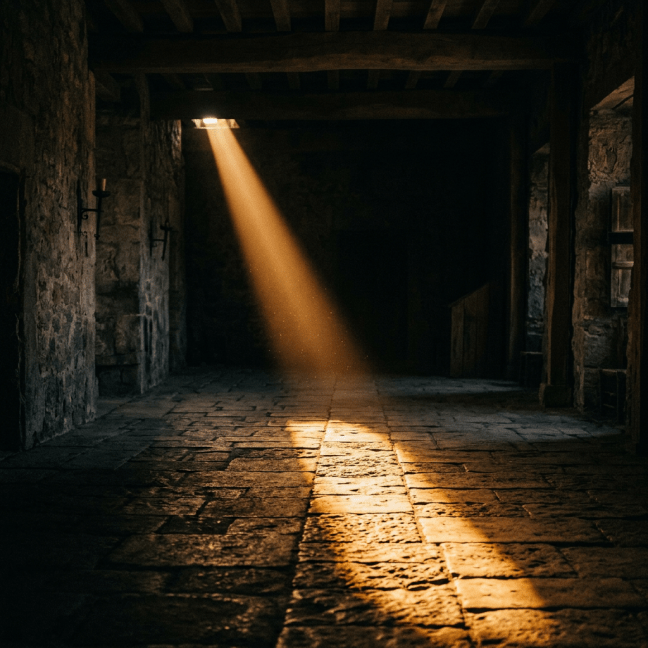
If a person walks into a room at night, there is no light there. So, they look for the light switch and turn it on. Simple, really, in our modern days. Not so long ago, the equivalent would have been a candle or an oil lamp, but any action to introduce light into a dark place involves two things. An understanding that there is darkness, but with a remedy, and then the application of an action to introduce light. But it seems that in Isaiah’s day, people were “in the dark” about what was happening to their nation and about God’s role and remedy. Instead of asking Him, however, they headed for the mediums and necromancers to obtain an answer. To return to our earlier analogy, the person entering the dark room would understand that they were in a dark place, but instead of turning on the light, they had forgotten what they needed to do to illuminate the room. And they would then have started asking other people, equally “in the dark,” for a solution, even to the point of seeking out dark and demonic spirits to see if they knew anything. Perhaps the person looking for a remedy to the darkness only had a very dim memory of a light switch, or had even completely forgotten what it was, and instead of asking the owner of the house how to illuminate the room, they started to ask other sources, such as the internet, Google, or even ChatGPT, for a solution. A very simple analogy, I know, but it illustrates that the people, God’s people at that, had forgotten that God was there for them, with an answer to their darkness.
The problem was not that God is hiding the truth by keeping them “in the dark”. It was that His people would not receive it. In other words, Isaiah said that those who will not hear the revealed word of God live in darkness. They rejected the light, and the light did not come. The day of their understanding of the truth never dawned. Paul picked up this theme in Romans 1:18-20. He wrote, “But God shows his anger from heaven against all sinful, wicked people who suppress the truth by their wickedness. They know the truth about God because he has made it obvious to them. Ever since the world was created, people have seen the earth and sky. Through everything God made, they can clearly see his invisible qualities—his eternal power and divine nature. So they have no excuse for not knowing God”. We pilgrims all know the tendency that people have to reject God and His ways, despite all the evidence. Paul pointed out that there is much evidence for God in the natural world, and so there is. Even atheistic scientists admit that the Earth is located, in stellar terms, in what they have called the “Goldilocks Zone”. The conditions for human life are precisely established: the right temperature for water to be a liquid, the right amount of gravity, the right amount of oxygen, the right amount of light, and so on. That all that happened by accident beggars belief, and yet “sinful, wicked people [have suppressed] the truth by their wickedness”. The same problem exists today just as it did in Isaiah’s day. To believe God and His “instructions and teachings” and, consequently, the truth about their existence, means that people will have to abandon their sin and live their lives God’s way.
The modern equivalent of the consultation of mediums and necromancers is a plethora of self-devised theories and explanations, such as evolution, big-bang theories and so on, all designed to replace God and His creation with a pack of lies. Sadly, just as in Isaiah’s day, the lies are propagated into lifestyles that deny God, and all sorts of social and religious error have crept in and corrupted our nation.
Isaiah prophesied that people would become hungry. Not for food but for the truth. Starvation would come later. We see a parallel in today’s society: it has permitted Godless laws and practices, and people have started to rage at each other because of their different beliefs and ideologies, and because they are all wandering around “in the dark”. Social cohesion has become a forgotten light switch in a Godless nation. People have been starved of the truth about God and even effectively rage against Him in their ignorance. And our churches and denominations, who should be the arbiters of God’s truth, have largely failed in their mission. But there is hope, just as there was in Isaiah’s day. Isaiah proclaimed God’s message, even though the people didn’t want to hear it. They could never claim before God that they were totally ignorant of the truth.
Fortunately, we pilgrims know where the spiritual light switches are located, and we diligently and counterculturally push back the forces of ignorance with our message of the truth. The people around us may not want to hear the Good News about Jesus and His selfless act of salvation, but without it, they will find themselves in a lost eternity. Jesus made a truthful statement that we can read in John 8:12, “Jesus spoke to the people once more and said, “I am the light of the world. If you follow me, you won’t have to walk in darkness, because you will have the light that leads to life””. An unequivocal statement, I think we can agree, and the people around Him, who heard that message and ignored it, would have continued to walk in darkness, as so many people do today.
So, wherever we are, we pilgrims must proclaim the light of God to the people stumbling around in darkness, believing lies and ignoring the truth.
Father God. We pray once again for the boldness we need to proclaim the Good News about Jesus and how He will forever illuminate people’s lives. Amen.