
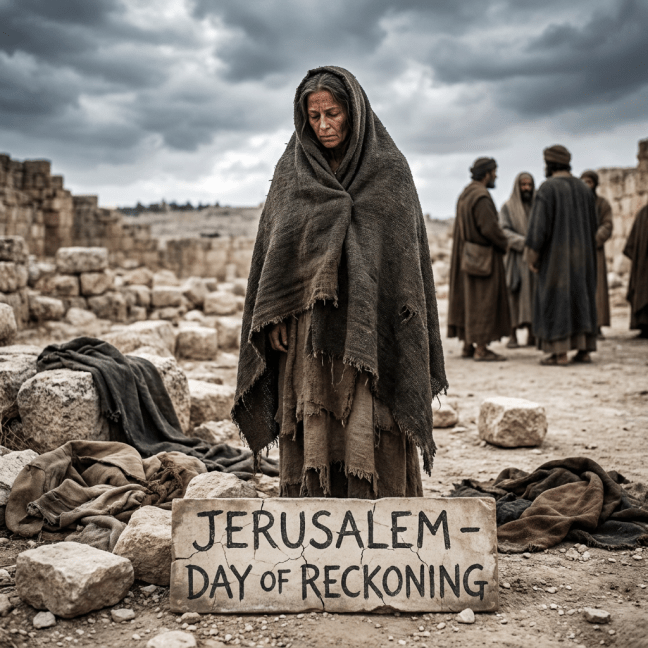
“The Lord says, “Beautiful Zion is haughty: craning her elegant neck, flirting with her eyes, walking with dainty steps, tinkling her ankle bracelets. So the Lord will send scabs on her head; the Lord will make beautiful Zion bald.” On that day of judgment, the Lord will strip away everything that makes her beautiful: ornaments, headbands, crescent necklaces, earrings, bracelets, and veils; scarves, ankle bracelets, sashes, perfumes, and charms; rings, jewels, party clothes, gowns, capes, and purses; mirrors, fine linen garments, head ornaments, and shawls.”
Isaiah 3:16-23 NLT
What was going on in Judah? The previous verses in Isaiah 3 paint a picture of corrupt leadership, oppression of the poor, arrogance, social disorder, and, sadly, spiritual rebellion against God. But now Isaiah turned to the “daughters of Zion”, referring to wealthy and influential women in Jerusalem who reflected the culture’s pride and luxury. In his vision, Isaiah described Zion, Jerusalem, as being like one of the affluent women who resided there, a woman who flirted with her eyes, with a mincing walk just sufficient to bring attention to herself with the tinkling of ankle bracelets, and he went on to describe a long list of their possessions. So the woman could be seen to be wealthy, obsessed with outward appearance, and oozing with excessive luxury.
But Isaiah continued the next section with “On that day of judgement”. All the woman’s finery would disappear when the Lord stripped everything she owned away. And he related all of this to his beloved Jerusalem, the city on the hill that he loved. So much in Jerusalem was just like this woman, full of luxury and finery, but none of it would survive the judgment of the Lord.
What was going wrong? The people of Jerusalem had become guilty of the sin of pride, outwardly beautiful but spiritually impure. The warning was that external elegance could not save a society that was morally collapsing. The people were cultivating an image of luxury and pride in its appearance while ignoring justice and holiness. They had forgotten verses like 1 Samuel 16:7, “But the Lord said to Samuel, ‘Don’t judge by his appearance or height, for I have rejected him. The Lord doesn’t see things the way you see them. People judge by outward appearance, but the Lord looks at the heart’”. God doesn’t look at how people present themselves externally. He looks directly into what is in their hearts, what they are thinking and how they view God and the people around them. Jesus warned the people about the Pharisees in a lengthy discourse in Matthew 23. Here is a selection of verses that record what He said, “Everything they do is for show. On their arms they wear extra wide prayer boxes with Scripture verses inside, and they wear robes with extra long tassels. … What sorrow awaits you teachers of religious law and you Pharisees. Hypocrites! For you are so careful to clean the outside of the cup and the dish, but inside you are filthy—full of greed and self-indulgence! … Outwardly you look like righteous people, but inwardly your hearts are filled with hypocrisy and lawlessness” (Matthew 23: 5, 25, 28).
For Christians, God’s people, today, does that mean we must dress sombrely and even poorly, without jewellery or any other embellishments? In days past, religious groups such as the Puritans dressed in sombre colours with styles designed to be modest and unrevealing, and there is nothing wrong with that unless it becomes an obsession. The Bible never forbade finery, with Rebekah being blessed with “… a gold ring for her nose and two large gold bracelets for her wrists” (Genesis 24:22b). The virtuous woman in Proverbs 31 “… dressed in fine linen and purple gowns” (Proverbs 31:22). And of course, we mustn’t forget Lydia in Acts 16. The issue is when appearance becomes an idol, luxury becomes pride, and wealth blinds people to justice and to God.
Peter wrote, “Don’t be concerned about the outward beauty of fancy hairstyles, expensive jewellery, or beautiful clothes. You should clothe yourselves instead with the beauty that comes from within, the unfading beauty of a gentle and quiet spirit, which is so precious to God” (1 Peter 3:3-4). Isaiah 3 speaks powerfully to modern culture, obsessed as it is with image, status symbols, social media presentation, consumerism and valuing appearance above character. If we pilgrims are caught up in any of this, perhaps we should pause and ask, “What are we really trusting in”? Another question perhaps is “How much energy are we expending in our outward appearance or the way we present ourselves, to the neglect of God and His Kingdom”? For the woman in Jerusalem, Isaiah had a stark reminder that beauty fades, and status could disappear at a stroke. The message to both them and us today is that Godly character lasts forever.
Dear Heavenly Father. A sober reminder today about our relationship with You and how so many worldly and temporal things can get in the way. Please forgive us for our pride and arrogance, and lead us in better ways, we pray. In Jesus’ name. Amen.

