Isaiah’s Vision: A Future of Peace and Justice

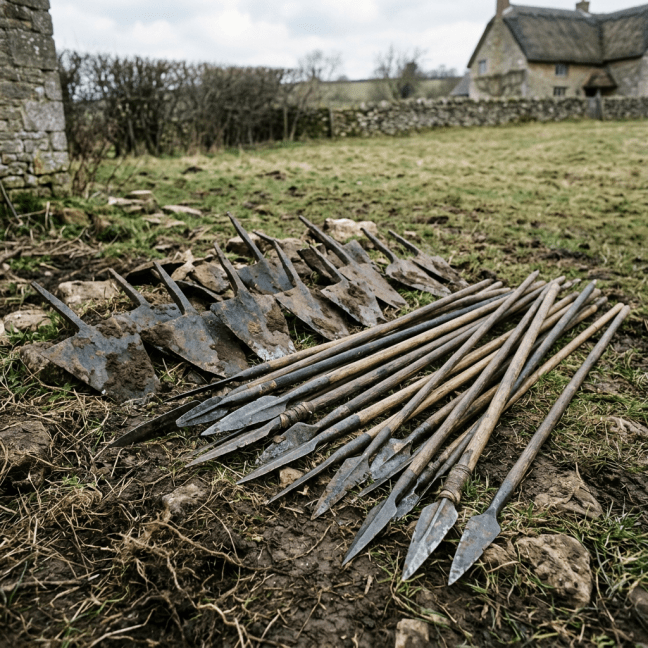
Old metal spearheads and plow blades laid out on grass with stone walls and houses in the background

“People from many nations will come and say, “Come, let us go up to the mountain of the Lord, to the house of Jacob’s God. There he will teach us his ways, and we will walk in his paths.” For the Lord’s teaching will go out from Zion; his word will go out from Jerusalem. The Lord will mediate between nations and will settle international disputes. They will hammer their swords into ploughshares and their spears into pruning hooks. Nation will no longer fight against nation, nor train for war anymore.”
Isaiah 2:3-4 NLT

As most people will know, there is a prominent inscription on a wall directly opposite the United Nations building in New York City, which is a quotation from Isaiah 2:4. It reads, “They shall beat their swords into plowshares, and their spears into pruning hooks; nation shall not lift up sword against nation, neither shall they learn war anymore”. The wall was erected out of granite in 1948, and the inscription was added in September 1975. Finally, the name “Isaiah” was added in 1985, giving the massive block of granite the name “The Isaiah Wall”. There is also a statue close by called the “Ploughshares Statue”, with the inscription “let us beat our swords into ploughshares”, which was a gift to the UN from the Soviet Union in 1959. Sadly, as we all know, we are a long way from such a noble aim, with Europe rearming at an alarming rate, and wars going on in various parts of the world.

But there is a time coming when there will be no more wars. We read about that time in Isaiah 11:6-9, “In that day the wolf and the lamb will live together; the leopard will lie down with the baby goat. The calf and the yearling will be safe with the lion, and a little child will lead them all. The cow will graze near the bear. The cub and the calf will lie down together. The lion will eat hay like a cow. The baby will play safely near the hole of a cobra. Yes, a little child will put its hand in a nest of deadly snakes without harm. Nothing will hurt or destroy in all my holy mountain, for as the waters fill the sea, so the earth will be filled with people who know the Lord”

This Utopian vision will come to pass one day, when Jesus comes to rule and reign for a thousand years in a kingdom of righteousness, justice and peace. With satan chained and incarcerated in a bottomless pit (Revelation 20:1-2), his influence over mankind no longer present, there will be peace, and in the next chapter in Revelation, we read about the new Jerusalem where God will dwell with His people. A wonderful time, and Jesus said its coming will be “soon”. 

In Isaiah 2, we see that the Lord will mediate between nations and settle international disputes. He will have the power to do this through His Word going out from Jerusalem. The nations of the world will desire to go to Jerusalem to hear the Lord’s teaching and learn how to walk in His ways. What is that other than a worldly spiritual revival centred on Jerusalem? No more wars. No more evil leaders. Peace prevails everywhere.

But we pilgrims must do more than sit in our homes waiting for the day when we pass into God’s presence. There is much work to do, as we prepare the way of the Lord. Mark wrote,  “ … Look, I am sending my messenger ahead of you, and he will prepare your way. He is a voice shouting in the wilderness, ‘Prepare the way for the Lord’s coming! Clear the road for him!’” (Mark 1:2-3). This verse refers to the coming of John the Baptist, who prepared the way for Jesus, who burst onto the religious scene in Palestine with His message of hope for a people lost in their sins. We pilgrims have the same commission as we prepare for Jesus’ return, His second coming. There are lost people around us who need to hear that Jesus is their only hope for salvation. John relayed the same message of repentance to the people of Judah, and we have the same message for the people around us today.

So, what steps are we taking to reach out to people? It may be only one or two, but we must be prepared to share our testimonies of God’s saving grace. He loves us so much, so how can we not tell others about that love while we still have the opportunity? I met a man a few days ago who asked me how I became a Christian. It didn’t happen overnight, but it was the culmination of a series of contacts over a period of months as we occasionally met at random in the local park. He now knows about God and what He has done for me, and I pray that my friend will come to make the decision to turn to Christ. We too must grab every opportunity while there is still time. 

Dear Heavenly Father. Your saving grace is alive and well in this age. Please help us to share Your message of hope to anyone who will listen. In Jesus’ name. Amen.

Finding Redemption: The Message of Isaiah 1:18-20

““Come now, let’s settle this,” says the Lord. “Though your sins are like scarlet, I will make them as white as snow. Though they are red like crimson, I will make them as white as wool. If you will only obey me, you will have plenty to eat. But if you turn away and refuse to listen, you will be devoured by the sword of your enemies. I, the Lord, have spoken!””
Isaiah 1:18-20 NLT

After a hard-hitting message that included a comparison between the Israelites and the inhabitants of Sodom and Gomorrah, God offered the Israelites a way out from the impending destruction that was getting closer and closer. The problem, though, was that the people didn’t recognise God for who He is anymore. Isaiah 1:3, “Even an ox knows its owner, and a donkey recognises its master’s care— but Israel doesn’t know its master. My people don’t recognise my care for them”.  So what was the point of all the burnt offerings, the blood of bulls, the ceremonies and meaningless gifts that we read about earlier? The Israelites were just going through the religious motions without any understanding of what they were really doing or why they were doing it. They were even praying, but to no avail, “When you lift up your hands in prayer, I will not look. Though you offer many prayers, I will not listen, for your hands are covered with the blood of innocent victims” (Isaiah 1:15). 

But God is always merciful, and He offered a way out for the Israelites. Our verses today start with “Come now, let’s settle this”. Other translations read, “Come now, let us reason together”, but the meaning is the same. The human race has always had the capacity and mental ability to look at the facts and draw a conclusion. And the facts for the Israelites were stark. In Isaiah’s day, the political situation in Israel, the Northern Kingdom, was one of instability, and the Assyrian empire was expanding its horizons, starting to encroach on its borders. It wouldn’t be long before Samaria would fall, and many Israelites would be deported to a foreign land. But they had, as a people, one last chance to avoid a fate that otherwise seemed inevitable. Isaiah’s vision was directed at Judah in the South with the warning that unless they changed their ways, they too would follow into captivity.

The Lord effectively said to them, “Look at your circumstances, look at what is about to happen, and turn to Me so that you can be saved”. And He then said, “But if you turn away and refuse to listen, you will be devoured by the sword of your enemies”. The problem for the Israelites was that they didn’t want to change their sinful and idolatrous practices. There is something seductive about sin, that makes repentance so very hard. The deeper the Israelites were engulfed in their evil ways, the harder it was for them to turn their backs on all that they were doing and instead turn to God. God told them they must use their rational minds and consider their future. It seems simple to us, looking on with the benefit of hindsight, but, sadly, as events turned out, they failed to make the right choices. God had the power and mercy to forgive them for their sins, and if only they had made the right choice, for Him rather than against Him, they would have been returned to His protection, and world events would have been different. 

Sins like scarlet and red like crimson. Colours that had stained their hands and hearts, leaving the people indelibly inked with sin for which there was only one solution. God offered to make their hands and hearts white like snow or as white as wool. There was no human solution. No chemical in a bottle on the shelf with the power to bleach out the redness. No other god or idol was available to forgive their sins. They had only one solution, and God was holding out His hands, pleading with them to turn from their wicked ways and return to Him. 

We pilgrims made the right choice when we turned to God from our lives of sin. We came to the Cross at Calvary, and bowed before the Man crucified, believing Him and His message of salvation. That was the moment when our crimson-red hearts were made as white as snow. King David made the right choice after his affair with Bathsheba when he wrote, “Purify me from my sins, and I will be clean; wash me, and I will be whiter than snow” (Psalm 51:7). He then wrote, “Don’t keep looking at my sins. Remove the stain of my guilt. Create in me a clean heart, O God. Renew a loyal spirit within me”. David could see the same choice before him three hundred years before that of the Israelites. He wrote, “You do not desire a sacrifice, or I would offer one. You do not want a burnt offering. The sacrifice you desire is a broken spirit. You will not reject a broken and repentant heart, O God” (Psalm 51:16-19).

There are many people around us who are heading toward destruction and a lost eternity. The same choice that Godless people face today is the same as the one before the Israelites in the 7th Century BC. We pilgrims must be diligent in telling them about the consequences of a life spent in sin. God is holding out His loving arms to them, just as He did to us, and we are His messengers responsible for dispensing His message of love and hope.

Dear God. Only You have the remedy for sin and guilt. Please help us, we pray, to be diligent in telling others of Your love and grace at every opportunity. In Jesus’ name. Amen.

The Burden of Guilt

“Oh, what a sinful nation they are— loaded down with a burden of guilt. They are evil people, corrupt children who have rejected the Lord. They have despised the Holy One of Israel and turned their backs on him. Why do you continue to invite punishment? Must you rebel forever? Your head is injured, and your heart is sick. You are battered from head to foot— covered with bruises, welts, and infected wounds— without any soothing ointments or bandages.”
Isaiah 1:4-6 NLT

The burden of guilt. It is a heavy burden to bear, and many are bearing it in our world today. God has created mankind with a conscience, designed to be aligned to Him so that their lives are without guilt. Man was never able to carry the burden of guilt. The psychiatrists may come up with band-aid solutions that might make someone feel better for a short while, but the issues are still there and before long the burden of guilt returns. Some people turn to some form of distraction, such as alcohol or drugs, “retail therapy”, or sexual gratification, but the burden of guilt remains in the cold light of the morning. 

Isaiah, bringing the Word of the Lord in our verses today, called out evil, corruption, God-rejection, sickness, and punishment, all self-inflicted conditions because of one single cause – the people had turned away from God. How had it come to this? As the previous verse in Isaiah 1 recorded, “Israel doesn’t know its Master”. They had become complacent in their land. The crops continued to grow. The rain came at the right time. Children were still being born. Affluence had dulled their spirits, and the effort of keeping a relationship with God had somehow become crowded out by living. 

The root of the problem was, of course, sin. The current generation in Isaiah’s day had been brought up without a knowledge of God, because their parents didn’t know Him either. This was because their parents were Godless as well. But this wasn’t a sudden decision, made one day to forget God and His ways. The sin and evil had come into their lives as God was forced out, getting worse generation by generation. Now, the storm clouds of war, famine, pestilence were starting to emerge on the horizon, and Isaiah brought a warning straight from God Himself. 

There was a remedy to their condition and David wrote about it in Psalm 32:5, “Finally, I confessed all my sins to you and stopped trying to hide my guilt. I said to myself, “I will confess my rebellion to the Lord.” And you forgave me! All my guilt is gone”. 

We pilgrims are not immune to the same problems the Israelites faced. It starts on a Sunday morning, with the thought that we might skip church just once. Then we find ourselves too busy to pray or read the Bible. Then sinfulness creeps in, and we finally find that we are well and truly on the slippery slope that leads to destruction. Yes, there are those who say that you don’t have to go to church to be a Christian. There are even those who claim eternal life from the “once saved, always saved” doctrine, and then proceed to live out the rest of their lives in a world full of sin and depravity. But always in the background is our loving Heavenly Father, calling out our names, warning us of the consequences of sin. We pilgrims know all this, of course, but somehow we can find it easy to rationalise our return to a world that invites the punishments the Lord warned the Israelites about in 740BC. 

Sin is rebellion against God. Pure and simple. And as sin builds, so does guilt. The burden gets heavier and heavier, bringing sickness, mental ill-health, and ultimately death. But today, should we find that we are carrying a burden of guilt, we come before God with a repentant heart, believing as David did, that He will forgive us. In 1 John 1:9, the Apostle John wrote, “But if we confess our sins to him, he is faithful and just to forgive us our sins and to cleanse us from all wickedness”. And so, we return to our knees once again, feeling His forgiveness wash away our burden of guilt.

Father God. Please forgive us for all our sins and for trying to hide our guilt. As we roll our burdens off our shoulders before Jesus, Your Son who died so that we can be forgiven for our sins, we experience an inner peace that cannot be found anywhere else. Thank You for saving us. Amen.

The Sting of Death

“Then, when our dying bodies have been transformed into bodies that will never die, this Scripture will be fulfilled: “Death is swallowed up in victory. O death, where is your victory? O death, where is your sting?” For sin is the sting that results in death, and the law gives sin its power.”
1 Corinthians 15:54-56 NLT

Imagine that day, when we find ourselves back in a body, no longer a spirit being. But this won’t be any body, much like our old one with all its aches and pains, and sinful tendencies. This will be a body that will never die. It will never let us down. It will be there for us forever. Too much to believe? But that is what Paul wrote in these verses before us today. So how is it going to happen? In 1 Corinthians 15:52, Paul wrote, “It will happen in a moment, in the blink of an eye, when the last trumpet is blown. For when the trumpet sounds, those who have died will be raised to live forever. And we who are living will also be transformed”

In Matthew 24, Jesus was replying to a question from the disciples about when the world would come to an end. It’s a question we might have too, because if we look at what has happened in our world since the start of the twentieth century, we wonder how life can continue. Two world wars, and even now, there is another war going on in the eastern boundaries of Europe. But Jesus was clear. He said, “Nation will go to war against nation, and kingdom against kingdom. There will be famines and earthquakes in many parts of the world. But all this is only the first of the birth pains, with more to come” (Matthew 24:7-8). However, other events must happen before the “last trumpet” is sounded. At the end of all the apocalyptic events Jesus described will be a sign that no one will miss. “And then at last, the sign that the Son of Man is coming will appear in the heavens, and there will be deep mourning among all the peoples of the earth. And they will see the Son of Man coming on the clouds of heaven with power and great glory. And he will send out his angels with the mighty blast of a trumpet, and they will gather his chosen ones from all over the world—from the farthest ends of the earth and heaven” (Matthew 24:30-31). But one day, sooner or later, our life as a human being will come to an end. Our physical bodies will be consigned to the grave and will return to dust as God told Adam in Genesis 3:19, “By the sweat of your brow will you have food to eat until you return to the ground from which you were made. For you were made from dust, and to dust you will return“. But our souls/spirits continue to live forever. Believers will find themselves in Paradise (Heaven): Luke 23:43, “And Jesus replied, “I assure you, today you will be with me in paradise”. Everyone else will end up in Hades or Sheol, different names for the Place of the Dead: Luke 16:22-23, “Finally, the poor man died and was carried by the angels to sit beside Abraham at the heavenly banquet. The rich man also died and was buried, and he went to the place of the dead. There, in torment, he saw Abraham in the far distance with Lazarus at his side”.

For the wages of sin is death

So we get a good idea of what the “sting of death” is all about when we consider what could happen after death. Believers, those who have put their trust in Christ, and have repented of their sins, and have accepted righteousness through Him, will have nothing to fear, and there is therefore no “sting” involved. But those who are unbelievers are unrepentant sinners, and so they will experience a spiritual death in the life to come. Paul wrote, “For sin is the sting that results in death“. God never intended Adam and Eve to experience death, but it was something they brought upon themselves through their sin, and human beings have been sinners ever since. Of course, we also realise that sin has a “sting” that impacts unbelievers within their natural lives, because their spirits will be dead and perishing. Whatever our state, sin alienates mankind from God: Isaiah 59:2, “It’s your sins that have cut you off from God. Because of your sins, he has turned away and will not listen anymore”. Consequently, sin, if unaddressed, will lead to eternal death: Romans 6:23, “For the wages of sin is death, but the free gift of God is eternal life through Christ Jesus our Lord“.

Once again, I find myself writing that people have a choice about where they will spend eternity. It seems to be a theme that runs through much of Paul’s letters, and I’m sure he implored people to make the right choice at every opportunity. So must we, and I’m always looking for people with whom I can share the love of Jesus. But I was thinking today: what if someone came up to me and told me they had life-changing news that could change my life forever? I know what my answer to them would be today, because I have embraced the message and believe it, but it wasn’t always so. We must ask God to prepare the hearts and minds of the next person He wants us to share the Good News about His Son with. Thankfully, due to the persistence of a Godly man, I am a child of God who doesn’t fear the “sting of death”. We, too, must persist, helping someone to become a child of God as well.

Dear Father God. Thank You for Your saving grace and for Jesus who died for our sins, taking on our punishment so that we wouldn’t have to. We praise and worship You today. Amen.

Resurrection Bodies

“But someone may ask, “How will the dead be raised? What kind of bodies will they have?” What a foolish question! When you put a seed into the ground, it doesn’t grow into a plant unless it dies first. And what you put in the ground is not the plant that will grow, but only a bare seed of wheat or whatever you are planting. Then God gives it the new body he wants it to have. A different plant grows from each kind of seed. Similarly there are different kinds of flesh—one kind for humans, another for animals, another for birds, and another for fish.”
1 Corinthians 15:35-39 NLT

Obviously, some people in the Corinthian church had asked two questions – “How will the dead be raised?” and “What kind of bodies will they have?” These seem like logical questions, perhaps asked by a new believer who had been raised in a culture that didn’t really believe in such things. Mainstream First Century Greek thought generally rejected the idea of bodily resurrection, viewing it as impossible, even for gods; to them, death meant the permanent dissolution of the body, with the soul going to a shadowy Hades. So here was a man called Paul, preaching about the Son of the only real God, the God-man who had been killed on a Roman cross, buried in a tomb carved out of rock, but who had been resurrected and provided with a body that was real, although it also had special powers. But Paul continued with the astonishing revelation that all believers will also receive a body just like that of Jesus.

My wife and I have a two-year-old great-grandson, who is at the “why” stage in his early years. Faced with a new situation, he has to find out “why” he is getting a particular response from an adult around him. His mind is like a sponge, absorbing all the new knowledge he is given, a process that places a specific responsibility on his parents and others who come into contact with him. A new Christian, recently saved, will also have many questions, although in the two questions today we have a “How” and a “What”, instead of a “Why”. In response, Paul used the analogy of a seed being planted to produce a plant. We all know the result of planting a seed in fertile soil: after a period of time, a green shoot will appear and keep growing until it becomes a mature plant. He said that the seed planted is different from the plant that grows, a process that follows God’s purposes for the vegetable kingdom. Paul continued to describe the differences with the animal kingdom. 

There is a general belief that once they die, a person’s soul goes to Heaven and then looks down on the loved ones left behind, showing approval, or otherwise, of how they are living their lives on earth. But there is a problem with this expectation, because it is not based on anything more than an emotional whim. The Bible teaches that there are two places for the disembodied spirits in the afterlife. For a believer, their spirit immediately goes to be with the Lord in a state of conscious presence. “Yes, we are fully confident, and we would rather be away from these earthly bodies, for then we will be at home with the Lord (2 Corinthians 5:8). Paul also wrote, “I’m torn between two desires: I long to go and be with Christ, which would be far better for me. But for your sakes, it is better that I continue to live” (Philippians 1:23-24). This state of “conscious presence” Jesus described as being in paradise. The thief on the cross next to Jesus said, “Jesus, remember me when you come into your Kingdom.” And Jesus replied, “I assure you, today you will be with me in paradise”” (Luke 23:42-43).

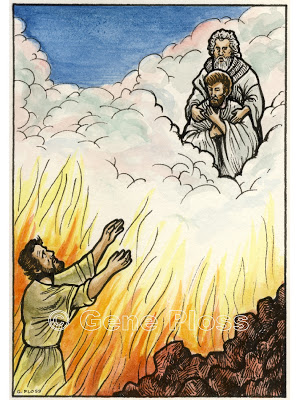
There, the spirit of the believer will live until it is given a new resurrected body. But the unrighteous go to a place of torment. We read in the story of the Rich Man and a poor beggar called Lazarus that the Rich Man died “and he went to the place of the dead. There, in torment, he saw Abraham in the far distance with Lazarus at his side. “The rich man shouted, ‘Father Abraham, have some pity! Send Lazarus over here to dip the tip of his finger in water and cool my tongue. I am in anguish in these flames’” (Luke 16:23-24). There, the unrighteous spirits will await final judgment in the “Lake of Fire” (see Revelation 20). To an unbeliever, all this seems a bit harsh, and, sadly, many people, when presented with Biblical facts, will reject them.

So, the responsibility for us pilgrims is to do what Jesus has asked us to do. To those believers questioning why it was taking Jesus so long to return, Peter wrote, “The Lord isn’t really being slow about his promise, as some people think. No, he is being patient for your sake. He does not want anyone to be destroyed, but wants everyone to repent” (2 Peter 3:9). We pilgrims have been commissioned to make disciples of the people around us, fulfilling God’s desires and purposes for this world. Jesus said that all who believe in Him will not perish. “Perishing” is the default state, leading to the position the Rich Man found himself in after death. But Jesus continued that all who believe in Him will inherit eternal life in a place He called Paradise. This has to be Good News. But we won’t find Good News presented to us in news reports and social media. Jesus has left the responsibility for spreading the Gospel to us. I carry tracts in my pocket just in case I meet someone whom the Holy Spirit has prepared for such an encounter. I expect pilgrims everywhere will do the same, but perhaps the next person we meet will go away with a new revelation of God, and the angels in Heaven will start preparing for a party. Are we ready for just such an encounter? Mordecai said to Queen Esther, “If you keep quiet at a time like this, deliverance and relief for the Jews will arise from some other place, but you and your relatives will die. Who knows if perhaps you were made queen for just such a time as this?” (Esther 4:14). We pilgrims are in a unique place in history, in this world for “such a time as this”.

Dear Father God. You want no one to perish, and neither do we. Thank You for Your grace and patience. Amen.

A Dusty End

“Let the rich of the earth feast and worship. Bow before him, all who are mortal, all whose lives will end as dust. Our children will also serve him. Future generations will hear about the wonders of the Lord. His righteous acts will be told to those not yet born. They will hear about everything he has done.”
Psalm 22:29-31 NLT

Why did David write, “all whose lives will end as dust” rather than “those who will die”? Both phrases mean the same thing, both referring to a human being’s mortality, but of course we know that. About Adam we read in Genesis 3:19, “By the sweat of your brow will you have food to eat until you return to the ground from which you were made. For you were made from dust, and to dust you will return“. Adam was originally made from dust, as we read in Genesis 2:7, “Then the Lord God formed the man from the dust of the ground. He breathed the breath of life into the man’s nostrils, and the man became a living person“. But were human beings originally intended to be immortal, because it was only after the Fall that Adam was informed about his ultimate demise and destination. In Genesis 1:27 we read, “So God created human beings in his own image. In the image of God he created them; male and female he created them”. We know that God is immortal, so if human beings were made “in His image”, would that have included immortality? God intended a very different world to what we have today, with the first inhabitants living a very long time, even after sin had entered Planet Earth. 

Most people are unable to contemplate the end to their earthly lives. When we were young, such a subject was never given much thought because the prevailing attitude was that we would live forever. People generally know that they have to face death one day but it is something they can’t control and therefore don’t think about it. A friend of mine once said, “I don’t fear death, but I just don’t want to be involved”. But death can and does happen to all ages and the wise amongst us make suitable preparations. I don’t mean getting affairs in order, planning a funeral service or starting a funeral plan with the local undertakers. I mean ensuring that the bits of us that are immortal, our souls and spirits, go to live in the right place. That is something we do have control over, through the grace of God.

People of all ages and regardless of sex all have bodies that one day “will end as dust”. Increasing years will introduce aches and pains and even serious health challenges reducing qualities of life, and Western countries in particular are facing into the problem of having a large and health-demanding elderly population. A human being is made up of many chemicals and a large amount of water (about 60% of an average adult’s body apparently) but it will all one day break down into its constituent parts, parts that David defined as “dust”. A depressing thought for most people, but for us pilgrims it will be just the beginning of an adventure we can only marvel at and look forward to. 

Paul wrote quite a bit about the process of dying but he followed it with the facts about resurrection. In 1 Corinthians 15:42b Paul wrote, “ … Our earthly bodies are planted in the ground when we die, but they will be raised to live forever.” He continues in verse 44, “They are buried as natural human bodies, but they will be raised as spiritual bodies. For just as there are natural bodies, there are also spiritual bodies“. In our current human lives, we have a glimpse of what it means to live in the Kingdom of God, but we will never experience the fulness of such a life until we have a body that is appropriate for God’s Kingdom. And then comes the crescendo of the final experience, “For our dying bodies must be transformed into bodies that will never die; our mortal bodies must be transformed into immortal bodies” (1 Corinthians 15:53). 

But we must read 1 Corinthians 15:47-49, “Adam, the first man, was made from the dust of the earth, while Christ, the second man, came from heaven. Earthly people are like the earthly man, and heavenly people are like the heavenly man. Just as we are now like the earthly man, we will someday be like the heavenly man”. We must meditate on this and chew over the wonder of it all. One day we will have a body like Jesus’ resurrected body. Read that sentence again, and again. Jesus was about 33 when He was so brutally put to death. Do we ever want to be 33 again? In a body that will never die. In a body which will never experience death, or pain, or sickness? Is that a resounding “YES” that I can hear?

I suppose we must think for a moment on the fate of all those who don’t believe in Jesus. They too will be resurrected but will find themselves standing before a Great White Throne. Revelation 20:12, 15, “I saw the dead, both great and small, standing before God’s throne. And the books were opened, including the Book of Life. And the dead were judged according to what they had done, as recorded in the books. … And anyone whose name was not found recorded in the Book of Life was thrown into the lake of fire“. Has anyone thought why people have to be “thrown” into their final destination? Purely because they don’t want to go there. Hell will not be a place that anyone will walk into by choice. Jesus said, “The Son of Man will send his angels, and they will remove from his Kingdom everything that causes sin and all who do evil. And the angels will throw them into the fiery furnace, where there will be weeping and gnashing of teeth” (Matthew 13:41-42).‭‭ 

But we won’t dwell on the fate of the wicked, because we do our best to tell them about what is ahead. Not to frighten them into the Kingdom, as preachers of old used to do, preaching sermons in which they dangled their audience over the flames of hell. William Booth was reported to have said, “Most Christians would like to send their recruits to Bible college for five years. I would like to send them to hell for five minutes. That would do more than anything else to prepare them for a lifetime of compassionate ministry. I am not waiting for a move of God, I am a move of God!” But we tell our friends and families and anyone we meet about our testimonies of God’s grace. How God has done so much for us, saving us from the finality of a horrible existence beyond the grave, that will ultimately be full of their dust.

Father God. We thank You for Your grace and favour, so liberally poured out on mankind, grace manifested by Your free gift of salvation. Please help us to tell all who we meet about You . In Jesus’ name. Amen.