
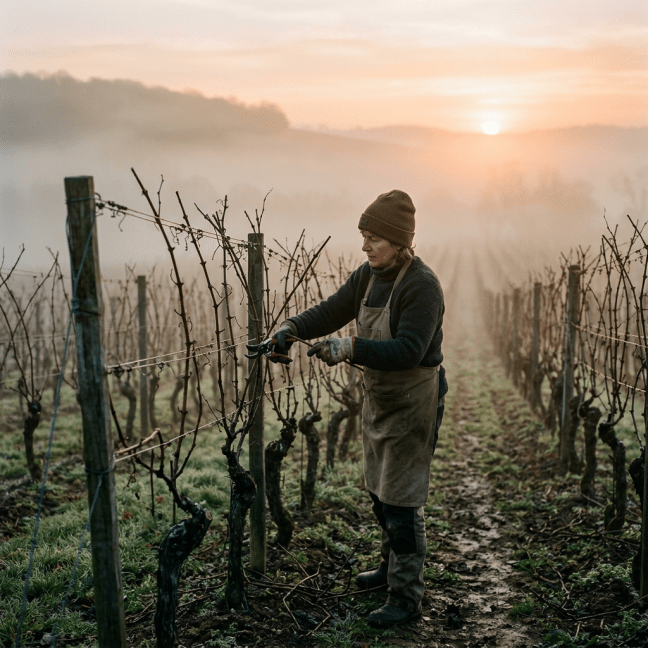
“I will sing for the one I love a song about his vineyard: my loved one had a vineyard on a fertile hillside. He dug it up and cleared it of stones and planted it with the choicest vines. He built a watchtower in it and cut out a winepress as well. Then he looked for a crop of good grapes, but it yielded only bad fruit.”
Isaiah 5:1-2 NIVUK
“I am the true grapevine, and my Father is the gardener. He cuts off every branch of mine that doesn’t produce fruit, and he prunes the branches that do bear fruit so they will produce even more. You have already been pruned and purified by the message I have given you. Remain in me, and I will remain in you. For a branch cannot produce fruit if it is severed from the vine, and you cannot be fruitful unless you remain in me.” John 15:1-4 NLT
The first four verses of John 15 were much referred to in the early days of the charismatic renewal. I can still remember a conference sermon based on these verses, delivered in 1979 or thereabouts, in which the speaker lambasted the charismatic audience for producing lots of leaves but no fruit. The “leaves” were all the charisma and excitement of a new move of God, but where was the Holy Spirit fruit being manifested in people’s lives? But Jesus’ illustration was clear. He described Himself as being like a grapevine from which many branches emanated, and there are as many branches as there are believers. The grapevine has always been of great spiritual significance to the Jews. For example, we read in Isaiah 5:1-7 about a vineyard God planted with great care, but instead of producing a harvest of sweet grapes, its fruit was bitter. And Isaiah finished with, “The nation of Israel is the vineyard of the Lord of Heaven’s Armies. The people of Judah are his pleasant garden. He expected a crop of justice, but instead he found oppression. He expected to find righteousness, but instead he heard cries of violence ” (Isaiah 5:7). So, when Jesus described Himself as the Grapevine, the people of His land would know what He meant.
To a Christian, a true, born-again believer in Jesus, His presence in our lives is indispensable. We cannot survive for long without Jesus’ life-giving spiritual nourishment, which sustains us and provides the resources we need for our daily life and pilgrimage. Sadly, some try to live without Jesus. They will read their Bibles. They will do all the right things, singing all the hymns and saying all the prayers, following their denominational liturgies to a fault, but in reality, they have been cut off from the true Grapevine. Their hope is that if they dig in and don’t do anything they shouldn’t, then they will get into Heaven. But Jesus went on to talk about fruit. Which brings us around to the thought – what fruit are we pilgrims producing?
Jesus’ analogy was that He was the Grapevine but His Father was the Gardener. The thing about a vine is that it can’t just be left year after year, in the hope that the crop of grapes will never end. It has to be pruned. Dead and unfruitful branches must be cut off. The farmer and his staff therefore, and with great skill, know exactly where to prune to maximise the return on their investment. Some parts of the vine will stop producing the sort of grapes that are required, so those branches have to go. Other parts only produce small grapes – they are no good either. And so by careful husbandry, the vine is cleaned and fruitful. In a spiritual setting, the Master Vinedresser, Father God Himself, carefully does His pruning, and by doing so He allows even more spiritual fruit to be realised. What are we doing that we shouldn’t be doing? Can we feel the secateurs starting to cut? Are we producing fruit that is bitter and sour? Cut, cut. And so the process continues day by day, through God’s careful pruning.
Thankfully, the Master Gardener is very patient. In Luke 13:6-9 we read, “Then Jesus told this story: “A man planted a fig tree in his garden and came again and again to see if there was any fruit on it, but he was always disappointed. Finally, he said to his gardener, ‘I’ve waited three years, and there hasn’t been a single fig! Cut it down. It’s just taking up space in the garden.’ “The gardener answered, ‘Sir, give it one more chance. Leave it another year, and I’ll give it special attention and plenty of fertiliser. If we get figs next year, fine. If not, then you can cut it down.’”” God is in no hurry to lop off unfruitful branches, but in the end, fruitless branches are finally cut off and burned, and there is no way that they can be re-attached without repentance at the foot of the Cross. Thankfully, our Lord and Master, Jesus Christ, will never reject a repentant sinner.
Dear Father God, the Wonderful Master Gardener, we praise and thank You today. Amen.

