The Temple of God (2)

“Don’t you realise that all of you together are the temple of God and that the Spirit of God lives in you? God will destroy anyone who destroys this temple. For God’s temple is holy, and you are that temple.”
1 Corinthians 3:16-17 NLT

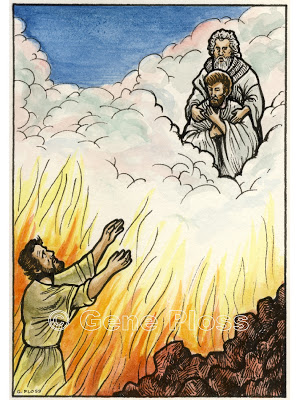
Paul said some other things about the “temple of God”. He wrote that “anyone who destroys this temple” would themselves be destroyed, and that “God’s temple” is holy. Just to recap, the temple Paul was referring to was the Corinthian church, and it was made up of the Spirit-filled believers there. It was not a physical “temple” made with stone, bricks, and mortar, but the people who met together as believers in Jesus.

It is an interesting coincidence that the Temple in Jerusalem was destroyed just a few years after this letter from Paul was written. Was that because the traditional, Law-bound Jewish leaders had tried to eliminate those who believed in Jesus, those men and women who believed that he was the Saviour of the world? We remember how a man called Saul burst onto the pages in our Bibles with a reference to him holding the coats of those men stoning Stephen, the first Christian martyr. And then we read just over the page in Acts 9:1-2, “Meanwhile, Saul was uttering threats with every breath and was eager to kill the Lord’s followers. So he went to the high priest. He requested letters addressed to the synagogues in Damascus, asking for their cooperation in the arrest of any followers of the Way he found there. He wanted to bring them—both men and women—back to Jerusalem in chains“. But Paul’s pogrom was short-lived, because we know what happened to him on the Damascus Road. Perhaps what happened to the Temple in Jerusalem stands as a stark warning to those people today who would desire to destroy God’s people. 

In the UK, we have the Humanists who promote a society based on rational thinking and one without God. It is an obvious tactic of the devil because humanists do everything expected of Christians, but have created a clone that has shifted worship away from God to themselves. Are they, with their evangelistic zeal, trying to destroy the “temple of God”? As an aside, in my case, it backfired because I used to work with a member of the British Humanist Association who was always teasing me about my lack of any sort of belief. I was sitting on the fence when it came to any faith at all, but it was his vision of a self-based humanistic religion that so horrified me that it led to my becoming a Christian (with help from others at that time, of course). My work colleague was not happy when I attributed my faith in God to his humanistic efforts to convert me. Here in the UK, there is no overt persecution of the Christians who make up the “temple of God”, but the signs are ominous, with levels of persecution starting to increase through legislation and societal attitudes. Our schools here are promoting ideologies that are against God’s order and commands. And then we have the nations in other parts of the world that have made a belief in Christ a capital offence. Places such as Afghanistan and North Korea. These regimes will not last for long because God has promised to destroy those who destroy His temple. There are also Islamic militant groups that persecute and murder Christians when they find them. God’s people are under threat in many places in this world.

Paul’s final reference to the “temple of God” in this section was about holiness. This is a reminder that the people of God, through their repentance of sin and acceptance of Christ’s atoning sacrifice, are declared righteous and can come into God’s presence as His children. Peter wrote, “But you are a chosen people, a royal priesthood, a holy nation, God’s special possession, that you may declare the praises of him who called you out of darkness into his wonderful light” (1 Peter 2:9). We are a special people, shown God’s favour, and able to live in the light of His presence, as the Holy Spirit lives and works within each one of us. Paul reminded the Corinthians that because of their identity as God’s holy temple, they had responsibilities to live a life worthy of that identity. He was gently saying, no more factionalism, no more jealousy and quarrelling, no more living as worldly people do, with their sinful natures to the fore. 

We pilgrims are a 21st-century manifestation of the “temple of God”. We may meet in different places, in different denominations, with different skin colours and languages, but we all have one thing in common, and that is that we are God’s children, fellow believers in Jesus, who died for our sins. We are people born again in the spirit, and because of that, we are obliged to function as God’s holy people, with Paul’s warnings and instructions ever in our minds. Peter wrote, “As you come to him, the living Stone – rejected by humans but chosen by God and precious to him – you also, like living stones, are being built into a spiritual house to be a holy priesthood, offering spiritual sacrifices acceptable to God through Jesus Christ” (1 Peter 2:4-5). Priests? An image of a man or woman decked out in strange clothes and wearing a funny hat comes to mind, but that is not what Peter, or Paul, was referring to. We are all part of God’s Kingdom and have a responsibility to offer sacrifices to God, just as the Levitical priests offered up animal sacrifices so many years before. But our offerings are spiritual and holy, and fitting for the One who died for our sins. “God’s temple is holy”, wrote Paul, and that is what we aspire to. After all that Jesus has done for us, what else can we be? Peter wrote, “So you must live as God’s obedient children. Don’t slip back into your old ways of living to satisfy your own desires. You didn’t know any better then. But now you must be holy in everything you do, just as God who chose you is holy. For the Scriptures say, “You must be holy because I am holy” (1 Peter 1:14-16). That doesn’t mean walking around with our hands clasped in an attitude of prayer, a halo delicately poised just above our heads. Being holy has the meaning of being set apart. So we don’t behave in an unGodly way. We avoid places and practices that are, or could be, sinful and likely to draw us back into the worldly society around us. We live differently, we think differently, always remembering that in Christ we are holy, totally and completely. We have a new identity as God’s children. We are now citizens of God’s Heavenly Kingdom, assigned for a time to Planet Earth to bring God’s Message of the Cross, the Gospel, the Good News about Jesus, to the people around us, all the time praying that we will not be drawn back into the ways of the world. We have help of course, and the Holy Spirit living within us will lead us into all truth.

Dear Heavenly Father. We understand that we are set apart from the world around us, but we also understand that we have to live in it for Your works of service. Please help us get the balance right so that we never let You down. In Jesus’ name. Amen.

Foolish Preaching

s the Scriptures say, “I will destroy the wisdom of the wise and discard the intelligence of the intelligent.” So where does this leave the philosophers, the scholars, and the world’s brilliant debaters? God has made the wisdom of this world look foolish. Since God in his wisdom saw to it that the world would never know him through human wisdom, he has used our foolish preaching to save those who believe. It is foolish to the Jews, who ask for signs from heaven. And it is foolish to the Greeks, who seek human wisdom. So when we preach that Christ was crucified, the Jews are offended and the Gentiles say it’s all nonsense.”
1 Corinthians 1:19-23 NLT

A mini-rant from Paul about the dichotomy between human and Godly wisdom introduces the theme in these five verses before us today. In his day Paul knew of men who, by reputation, were considered philosophers and who made their mark on the culture at the time. Men such as Seneca, who was a writer and advisor to the Roman emperor Nero. Then there was Epictetus, a Greek Stoic, who was born into slavery and later founded a philosophy school in Greece. Philo of Alexandria, a Hellenistic Jewish philosopher, attempted to harmonize Jewish scripture with Greek philosophy, particularly Platonism. He believed that reason was a gift from God and that philosophy could be used to understand divine revelation. Three “wise” men, great thinkers of their day, but of whom Paul said God had made look foolish. Oratorical skills, brilliance of mind and thought, and a scholarly background all conspire to produce … a fool. Not because of their gifts, but because their thinking was all about human matters and, in the context of God and Heaven, had no value at all. A “brilliant debater” will not get into Heaven. Regardless of his words, he will still die and find a lost eternity.

Interestingly, Paul wrote that God said “that the world would never know him through human wisdom”. No-one can get into Heaven by their own efforts. I know someone who claims to have had a revelation as to what is there, and has even gone so far as to describe what God has revealed to him about Heaven. Such knowledge, he said, revealed to him that God had made Heaven with different compartments, each for a world religion. So the Buddhists would be in one place, Muslims in another and so on. The poor man, undoubtably intelligent as he is, suffers from delusions because his wisdom is earthly in its origins, and is based on his own thoughts alone, without fact or divine revelation. Part of my own testimony involves several months of trying to find God in the Bible purely by my own efforts, until, in the end, I discarded what I had thought I had found and instead called out to God for Him to reveal Himself. My prayer one Saturday night was something along the lines, “God, I can’t work this out on my own. If You are real then You will have to reveal Yourself to me”. I woke up the next morning with the assurance that God was real and through His grace He had indeed revealed Himself. That was the start of a journey, bumpy at times, but one from which I have never wavered. There is only one way to Heaven, as we know from John 14:6, “Jesus told him, “I am the way, the truth, and the life. No one can come to the Father except through me“. And God in His loving graciousness has gently showed me the way, at a pace I can absorb, and He will continue to do so until I meet Him face to face. My wisdom and thinking was ineffective in its arrogance, but it was only when I came to the end of myself that God could start His work in a human being.

Paul wrote that God “has used our foolish preaching to save those who believe”. Is it foolish, to tell people everywhere about God’s saving grace? Most people we meet will say so, because their minds are limited by human wisdom. How do you introduce concepts of the spiritual world around us to people who have closed minds and who have rejected any thoughts of a “higher power”, who believe that we only live for a span for 70 or 80 years, and then enter a realm of unconscious extinction? People such as Richard Dawkins, a modern day philosopher and evolutionist, who said, “Be thankful that you have a life, and forsake your vain and presumptuous desire for a second one.” People such as him have closed their minds against God and His Son, and instead deny any efforts to help them discover the truth. Such people will one day have a terrible shock, because they firstly will find themselves, not in a blank state of nothing, but as souls in a holding place called Sheol or Hades, and then secondly they will find themselves resurrected to stand before God to give an account of their lives. Why did Jesus describe hell as a place of wailing and gnashing of teeth? Matthew 22:13, “Then the king said to his aides, ‘Bind his hands and feet and throw him into the outer darkness, where there will be weeping and gnashing of teeth’”. The reason is that such God-deniers will have to spend eternity in a state of regret, that they rejected the One who saves and there is nothing that they can do about it. What a terrible thought!

So we pilgrims continue to be foolish in the world’s eyes as we preach to a people who are devoid of any vestige of God’s wisdom. People who are resistant to the idea of a spiritual world unseen by their natural senses, and who instead quote their human wisdom as the reason for their incalcitrance. But there is only one way that such people will ever discover God and that is through our “foolish preaching”. Paul wrote, “But how can they call on him to save them unless they believe in him? And how can they believe in him if they have never heard about him? And how can they hear about him unless someone tells them? And how will anyone go and tell them without being sent? That is why the Scriptures say, “How beautiful are the feet of messengers who bring good news!” But not everyone welcomes the Good News, for Isaiah the prophet said, “Lord, who has believed our message?” So faith comes from hearing, that is, hearing the Good News about Christ” (Romans 10:14-17). So let’s double our efforts to be as foolish as we can. We never know, because such foolishness in our stories of God’s love and grace might be just what someone needs to hear and experience.

Dear Father God. There is nothing foolish about a child of God, because we have heard the divine call and have reached out to the only One who has the message of eternal life. Please help us to pass it on to the people around us. In Jesus’ name. Amen.

The Holy Place

“Who may climb the mountain of the Lord? Who may stand in his holy place? Only those whose hands and hearts are pure, who do not worship idols and never tell lies. They will receive the Lord’s blessing and have a right relationship with God their Saviour. Such people may seek you and worship in your presence, O God of Jacob.”
Psalm 24:3-6 NLT

David asks a question – “Who may climb the mountain of the Lord”? But before we move on to the answer, we must ask what the Lord’s mountain is, or was, and where it actually was. To the Jews there was a sacred place on which the Temple could be found called Mount Zion, a hill located in Jerusalem. So David was perhaps focused on a specific place when he wrote this Psalm. But in answer to the original questionnaire “Who may climb“, the “mountain of the Lord” was a “holy place” and was not to be defiled by anyone who was a sinner. Anyone coming into the Lord’s “holy place” needed to be clean and pure inside and out, and telling lies and the worship of idols were specifically highlighted as impure actions. Not just that, however, their hearts had to be pure. David may have written this Psalm in anticipation of the day when the Temple was finally built by his son Solomon (2 Chronicles 5) and he could foresee a procession of priests carrying the Ark of the Lord into the Holy Place. Or perhaps it was earlier than that, with the Ark brought into the special tent prepared by David to his City, Jerusalem, as we read in 2 Samuel 6. But there was a misconception in those days that to worship God you had to be in a special place, somewhere considered holy, somewhere such as when Jacob had the ladder experience in a dream. We read in Genesis 28:16-17, “Then Jacob awoke from his sleep and said, “Surely the Lord is in this place, and I wasn’t even aware of it!” But he was also afraid and said, “What an awesome place this is! It is none other than the house of God, the very gateway to heaven!”” Before he left Jacob anointed a memorial stone, naming the place the House of God, or Bethel. 

Much later, when Jesus stopped by a well on a journey from Galilee to Jerusalem, he had an encounter with a Samaritan woman who asked him a question, “So tell me, why is it that you Jews insist that Jerusalem is the only place of worship, while we Samaritans claim it is here at Mount Gerizim, where our ancestors worshiped?”” (John 4:20).In response, Jesus told her, “ … Believe me, dear woman, the time is coming when it will no longer matter whether you worship the Father on this mountain or in Jerusalem” (John 4:21). In Matthew 6:6, Jesus said, “But when you pray, go away by yourself, shut the door behind you, and pray to your Father in private. Then your Father, who sees everything, will reward you”. Jesus set the scene for believers everywhere that the “holy place” in their lives was somewhere private where they could be on their own with the Lord. 

At first glance, these words about mountains, holy places and idol worship seem to be a million miles away from us pilgrims on 21st Century Planet Earth. But there are some lessons to be learned, and some spiritual insights that we would do well to follow. We pilgrims look around our country, the UK, and can see many churches, considered sacred places of worship by many. Apparently, there are over 40,000 “places of worship”, many of them ornate and impressive buildings. But it may come as a surprise to many of our fellow believers that they don’t have to go there to find God. For many years, particularly as a young boy, I was convinced that there was something of God underneath that ornate cloth draped over a table called an altar at the front of the church, the place where the minister went through certain ceremonial functions particularly in the communion service. Every time the minister or church official walked in its vicinity, they genuflected before moving on, further affirming my thoughts. Without a doubt, many Christians are helped in their faith by the stained glass windows, the altar ornately decorated, the carvings and the statues. God may be there but only inasmuch as He is everywhere, always on hand for those who call upon His name. In Jeremiah 23:24 we read, “Can anyone hide from me in a secret place? Am I not everywhere in all the heavens and earth?” says the Lord”. David wrote, in another Psalm, “I can never escape from your Spirit! I can never get away from your presence! If I go up to heaven, you are there; if I go down to the grave, you are there. If I ride the wings of the morning, if I dwell by the farthest oceans, even there your hand will guide me, and your strength will support me” (Psalm 139:7-10). God is omnipresent. And regarding all the churches, Isaiah wrote, “This is what the Lord says: ‘Heaven is my throne, and the earth is my footstool. Where is the house you will build for me? Where will my resting-place be?”(Isaiah 66:1). No matter how wonderful and amazing a church building is, it will never be good enough for God to live there. The answer to the question “where is God” is perhaps found in the hearts and minds of believers everywhere, wherever they are.

We pilgrims can draw close to God regardless of our location, latitude or longitude. My favourite place is in God’s creation, the woods and parks that adorn our countryside, because it is there that I find that God listens to my fumbling prayers. Amongst the trees and birdsong I find a “holy place”, where, in His presence, I first confess my sins so that I can indeed “climb the mountain of the Lord” with a pure heart. Others find a place of communion with God in their bedrooms or studies or even a prison cell. But cleansed of our sin, regardless of where we are, we can indeed climb into God’s presence, where we will receive His blessing, and worship Him once again.

Dear Father God. In Your presence we find peace for our souls and comfort in our struggles. You are the only One worth worshiping. Amen.

Darkest Valleys

“The Lord is my shepherd; I have all that I need. He lets me rest in green meadows; he leads me beside peaceful streams. He renews my strength. He guides me along right paths, bringing honour to his name. Even when I walk through the darkest valley, I will not be afraid, for you are close beside me. Your rod and your staff protect and comfort me.”
Psalm 23:1-4 NLT

Notice that David wrote “when” not “if” when he considered the darkest valleys. We know that David suffered some dark times in his often eventful journey through life. Take what he wrote in Psalm 31:9-10 for example, “Have mercy on me, Lord, for I am in distress. Tears blur my eyes. My body and soul are withering away. I am dying from grief; my years are shortened by sadness. Sin has drained my strength; I am wasting away from within“. Was that a “darkest valley” for David? 

Elijah came to suffer in a dark place too, as we read in 1 Kings 19:4, “Then he went on alone into the wilderness, traveling all day. He sat down under a solitary broom tree and prayed that he might die. “I have had enough, Lord,” he said. “Take my life, for I am no better than my ancestors who have already died.”” In Elijah’s case, he had just been God’s front man at the epic event on the top of Mount Carmel, where God sent fire to consume the sacrifice, after which Elijah despatched 450 prophets of Baal. But the miracles didn’t stop there, because the three and a half year drought came to an end and “the Lord gave special strength to Elijah” allowing him to run faster than Ahab’s chariot. But then we read that Elijah literally did a runner after Jezebel’s threats, ending up in a “darkest valley” in the wilderness and under a broom tree, whatever that was.

One of the darkest Psalms in the Bible is Psalm 88. It was written by a man called Heman the Ezrahite and contains eighteen verses of gloom and depression, describing a valley so dark that it is a wonder that he could have written it at all. Verse 6, “You have thrown me into the lowest pit, into the darkest depths“, and he finishes “Darkness is my closest friend”. Oh dear! But to Heman perhaps the most poignant verses are 13 and 14, “O Lord, I cry out to you. I will keep on pleading day by day. O Lord, why do you reject me? Why do you turn your face from me?

Being in a “darkest valley” is indeed a terrible place to be. A blackness descends over all aspects of a person’s thinking, to the extent that no good can be found anywhere. But there are varying degrees of “darkest valleys”. Today we would perhaps suggest that such a place as a “darkest valley” is the mental state of depression, which seems endemic in today’s world. In the context of Psalm 23, a spiritual “darkest valley” is more likely than a physical “darkest valley” of which there are many around the world in the wildest and most remote parts, valleys sometime scary but mostly harmless. But why should we pilgrims ever experience depression, because, after all, God loves and cares for us. There are many causes of depression, a study of which is beyond our morning’s read, but the reality is that a Christian is no more immune from a valley experience than an unbeliever. Sadly, some consider depression as a sin, and although that could be the case in some situations, it is unhelpful to treat the depressive as a sinner. 

I occasionally meet people who tell me that they are depressed about the state of the world, usually in response to me sharing about my hope in Jesus. Their response is a forerunner to a question that goes something like this – “If God is a God of love why does He allow so much suffering and mayhem in the world?” They reject God because they consider Him to be the architect of all their, and the world’s, woes, or, if not, He is at least powerless to stop them. Without waiting for an explanation, such a person walks away, continuing in their depressed state, one more hopeless person in a hopeless world. But we pilgrims have a message of hope for such people and we pray for the opportunities to share all about God and what He has done for us. God is indeed a God of love, but He is also a God of righteousness and justice, and we will never know, in this life, the extent of His gracious power in holding back the forces of evil, intent on destroying God’s created human beings.

But what should we pilgrims do when we get depressed? We get medical help just in case the condition is treatable, and we call on our pastor and Christian friends to pray for us. We remember all of God’s promises. Ones that have helped me include 1 Peter 5:7, “Give all your worries and cares to God, for he cares about you“. David prayed Psalm 43:5, “Why am I discouraged? Why is my heart so sad? I will put my hope in God! I will praise him again— my Saviour and my God!” Jesus said to His disciples, “I have told you all this so that you may have peace in me. Here on earth you will have many trials and sorrows. But take heart, because I have overcome the world” (John 16:33). And we pray for ourselves, believing God for a solution. But in those “darkest valleys” where things are so black that we cannot even contemplate anything to do with God, we are assured that He is close behind us, protecting and comforting us. And we remember that every valley is followed by a mountain top. Valleys won’t last forever.

Dear Father God. We know that in Your presence there is no sickness and pain, and we look ahead to the time when “darkest valleys” are no more. Thank You Jesus. Amen.

The Heavenly Shepherd

“The Lord is my shepherd; I have all that I need. He lets me rest in green meadows; he leads me beside peaceful streams. He renews my strength. He guides me along right paths, bringing honour to his name. Even when I walk through the darkest valley, I will not be afraid, for you are close beside me. Your rod and your staff protect and comfort me.”
Psalm 23:1-4 NLT

We now move onto Psalm 23, that well known and incredibly comforting Psalm, containing “must read” verses often spoken out at a funeral or in difficult times when someone is facing into seemingly insurmountable problems. Just the thought of the Lord being a Shepherd can bring feelings of comfort that help dispel any feelings of loneliness or despair. But to us Western pilgrims, mostly living in an urban or city environment, the profession of “Shepherd” is relatively unknown. We don’t have flocks of sheep wandering around our town centres munching the grass in our green and open spaces these days, and the only contact we have with them would tend to be on the supermarket meat counter. But there are supposed to be 31 million sheep populating the rural parts of the UK and they need many shepherds. On long journeys cross country, however, we will notice the fluffy white animals and while I am writing this many of them are producing lambs, that run and play and amuse us with their gambolling. I’m sure we could soon work out a job spec for a shepherd, but the reality is a long way from a paper description. Many sheep live on farms in inhospitable parts of our country, and the shepherds role is hard and often lonely. Sheep have a tendency to get into bother, woolly coats caught in bushes, or getting stuck in muddy places and the presence of their shepherd can be life-saving for them. 

And all that brings us to the point of this Psalm, because David was a shepherd in his early years and he honed his craft in the presence of the Lord, giving him insight into the work of the Heavenly Shepherd Himself. It was easy for David to imagine people as a flock of sheep, knowing their tendency for sin and doing wrong things, and he knew that the Lord Himself would lead and guide them out of trouble – if they let Him. At first sight, verse 1 could be interpreted as the Lord meeting physical needs. In David’s day, the shepherd would lead his flock between pastures containing the food needed for the physical well being of his sheep. But today, us townies would mostly fail to connect God with our food. We might say grace before a meal but that would be about as far as we would go. In a restaurant in Fife near where I live there is the Selkirk grace written on the wall in large letters, a grace written by Scotland’s well known poet, Rabbie Burns. “Some hae meat and canna eat, And some wad eat that want it, But we hae meat and we can eat, Sae let the Lord be Thankit!” A naval chaplain I used to know was famous amongst sailors who knew him for the briefest grace possible – “Heavenly Pa, Ta!” But how many of us really look at the plate before us and realise that what we see is all down to God’s grace? He created a world on which all the food we need has been grown. The trouble is that we don’t tend to dwell on the complexities of our lives on this planet and we have forgotten what Jesus said about concerns we may have about our food and drink. He said, “That is why I tell you not to worry about everyday life—whether you have enough food and drink, or enough clothes to wear. Isn’t life more than food, and your body more than clothing? Look at the birds. They don’t plant or harvest or store food in barns, for your heavenly Father feeds them. And aren’t you far more valuable to him than they are?” (Matthew 6:25-26).‭‭ 

But the first verse of Psalm 23 contains the phrase “I have all I need”. The Lord’s prayer includes the words, “Give us this day our daily bread” and as we ponder on the meaning of these words, we soon realise that God’s provision for our bodies is a complete food, that nourishes body, soul and spirit. Our cornflakes for breakfast may fill an empty stomach but did we remember our spiritual food this morning, the Word of God? How many times have we set off on the activities of the day hungry and unsatisfied souls, our spirits shrivelled and unable to cope with the pressures of life, our spiritual resilience missing and leaving us forgetful of the Heavenly Shepherd. He holds in His hands the food that we need but have we decided to go without for another day?

Our Lord and Shepherd knows what we need, just as David knew what his flock needed each day. But wouldn’t it have been strange if his sheep arrived at a lush pasture and then refused to eat, instead just lying down and ignoring the feast before them? We can be a bit like that some days. We have the richness of God’s Word, loaded with a veritable banquet of food for our souls, and yet we instead pick up a newspaper, full of sin and evil reports, bad news that will do our spirits and souls more harm than good In fact, the world’s news will sap all the strength remaining in our souls, leaving us with no resilience to face the day before us. All the media will do is to introduce fears and anxieties that turn us away from God and His Kingdom.

So, today, we reach for our Bibles in anticipation that there are some rich and nourishing morsels there to fill the needs of our souls. As we ponder and meditate upon them, we won’t be disappointed or hungry in the day ahead. In the strength of the spiritual food we have received, we will find that our Heavenly Shepherd, Jesus Himself, will lead and guide us through the minefields of life.

Dear Lord Jesus, our Heavenly Shepherd. Thank You for Your complete provision for us and the strength to face into the day ahead. Amen.

The Heavenly Message

“The heavens proclaim the glory of God. The skies display his craftsmanship. Day after day they continue to speak; night after night they make him known. They speak without a sound or word; their voice is never heard. Yet their message has gone throughout the earth, and their words to all the world. God has made a home in the heavens for the sun.”
Psalm 19:1-4 NLT

David wrote that God created the heavens and they were so wonderful that they continually display His glory. Day or night the message of who God is, is proclaimed without sound but as a visual presentation to everyone in the world. And that is true, because wherever we live on this planet, God’s glory in the heavens is there for all to see. The message of the skies “has gone throughout the earth” David wrote. But what was and is the message?

Paul wrote a clear explanation about this message in Romans 1:18-20, “But God shows his anger from heaven against all sinful, wicked people who suppress the truth by their wickedness. They know the truth about God because he has made it obvious to them. For ever since the world was created, people have seen the earth and sky. Through everything God made, they can clearly see his invisible qualities—his eternal power and divine nature. So they have no excuse for not knowing God“. But such is the sin of man that they have devised an explanation for the craftsmanship in the skies that excludes God. Instead they attribute the presence of the heavenly bodies and everything else in the universe to an event that took place many billions of years ago. In recent years the “Big Bang” theory has emerged, based on observations about how the galaxies and stars are moving. The scientists, with the aid of mathematical formulae, have worked out a theory that about 13.7 billion years ago the origin of the universe was a small, intensely dense and very hot, piece of matter that suddenly exploded. However, they fail to explain where this piece of matter came from and why it suddenly exploded. But if someone, observing the heavens in all their glory, asked such a scientist about how all the stars got there, they have a natural, Godless, explanation ready and waiting to be rolled out. And sadly, this theory is bundled together with the theory of evolution, and rolled out in our schools and places of learning as fact, not theory. 

Paul called these God-and-creation-deniers “sinful, wicked people who suppress the truth by their wickedness”. But why do people deny the existence of God, even when there is so much evidence about Him in the heavens, where God made “a home … for the sun”? The Billy Graham organisation claims that people deny the existence of God because of pride. People want to run their lives their own way and don’t want anyone, especially God, to interfere with the way they are living. They want to be in control of everything they do, and they know that if they were to believe in God, they’d have to change their lifestyle. Instead of living by their own list of what’s right and wrong, they’d have to take seriously God’s moral standards. But we pilgrims know the consequences of such a life-choice, because we have read the last few chapters in the Book, chapters that the God-deniers claim are just fairy tales for emotionally needy people. The first three verses of Psalm 14 read, “Only fools say in their hearts, “There is no God.” They are corrupt, and their actions are evil; not one of them does good! The Lord looks down from heaven on the entire human race; he looks to see if anyone is truly wise, if anyone seeks God. But no, all have turned away; all have become corrupt. No one does good, not a single one!” This Psalm, another written by David, is unequivocal in its conclusion that the God-deniers are fools. Of course, they have to be, because otherwise who would want to spend eternity in the company of the devil and his cohorts?

The message written long ago in the heavens, the message of the glory and existence of God, is there for everyone to observe, and one day everyone will stand before God to give an account of their lives. What will the God-deniers say? Probably nothing, as the enormity of their foolishness and pride suddenly dawns upon them, as their minds try and process all their sinful and evil ways in the light of God’s presence.

But on a positive, we pilgrims look up on a clear day or night, and are reminded once again of the wonderful God we worship. He loves us and cares for us, because we have chosen to cast aside our pride and arrogance and instead live His way. We know that it was our sins that nailed Jesus to that cross, and we bow in worship to the One who has forgiven us because we confessed our sins. God now sees us as His righteous adopted sons and daughters. How amazing is that? 

Father God, we thank You today in wonder for the extent You have gone to, to save mankind from hell. Please help us endorse Your Heavenly message to those we meet, those who are heading for a lost eternity. In Jesus’ name. Amen.

The Fate of Nations

“The nations have fallen into the pit they dug for others. Their own feet have been caught in the trap they set. The Lord is known for his justice. The wicked are trapped by their own deeds. … The wicked will go down to the grave. This is the fate of all the nations who ignore God.”
Psalm 9:15-17 NLT

‭It is not just the wicked who end up in a grave, of course. We will all die one day and our physical remains will ultimately end up either in a grave or our ashes scattered where our families decide. Cheery subject to start the day, I know, but one that cannot be avoided, no matter how hard we try. So when David wrote about the “fate of all the nations”, he was stating the obvious. But other Bible versions substitute “grave” for “hell” or “Sheol”, and this makes more sense in the context of these verses. David writes that there are consequences for individuals and nations who “ignore God”, in that they will be trapped by the very tactics they use against others. I suppose the last world war comes to mind, with a militarily-aggressive Germany ultimately ending up as a defeated nation and its evil leader dead. The Nazi programmes against the Jews and others put the German government well into the “wicked” bracket and even those like Dietrich Bonhoeffer, who vocally opposed the evil being promoted, failed to turn round the wickedness present in that nation and at that time. The AMP version of Psalm 9:17 reads, “The wicked will turn to Sheol (the nether world, the place of the dead), Even all the nations who forget God”

But what is this “Sheol” (or “Hades” in the Greek), called the place of the dead? If the wicked nations end up there, will believers join them in the same place? Simplistically, Christian thought is that when we die, our spirits end up either in hell or Heaven. The story of the Rich Man and Lazarus in Luke 16 gives some credence to this thought, with Lazarus, the poor man ending up with Abraham eating at the Heavenly banquet, and the Rich Man in a place of torment. Luke 16:23 (AMP), “In Hades (the realm of the dead), being in torment, he looked up and saw Abraham far away and Lazarus in his bosom (paradise)”. But whatever we believe, it is inconceivable that a wicked person or nation will ever end up in a place called Heaven or paradise, and that is what David wrote about the “fate of all nations who ignore God”

We UK residents are living in an increasingly secular society with Christians being marginalised by legislation at variance with what God has ordained in His Word. But there are also green shoots of a new move of God starting to emerge. In my home town of Dunfermline, in Scotland, there are some exciting things happening with new Christian groups emerging and some existing churches growing almost weekly with new converts and baptisms. And we thank God for His grace and favour, with believers providing a ground-swell of opposition to the ideologies and laws that promote rebellion against God but will not end well for their adherents and promoters. One day they will find themselves in Sheol, in the company of the Rich Man, even desperate, like him, to send a warning back to those they left behind, colleagues or family members living a life ignoring God.

We pilgrims probably will never fully appreciate the impact we have on our societies as we continue as salt and light, beacons of hope in a Godless nation. We look to Jesus, as we read in Hebrews 12:2a, “We do this by keeping our eyes on Jesus, the champion who initiates and perfects our faith …”. And we extend God’s love and grace to those around us, who are journeying to a lost eternity.

Dear Father God. Not for us to be a part of a Godless people who will end up in a place they don’t want to be. Please encourage and empower us to spread Your Gospel each and every day. In Jesus’ name. Amen.

It Is Finished

“Jesus knew that his mission was now finished, and to fulfil Scripture he said, “I am thirsty.” A jar of sour wine was sitting there, so they soaked a sponge in it, put it on a hyssop branch, and held it up to his lips. When Jesus had tasted it, he said, “It is finished!” Then he bowed his head and gave up his spirit.”
John 19:28-30 NLT

The crucifixion account in John’s Gospel lacks the other details contained in the Synoptic Gospels of Matthew, Mark and Luke, but John recorded the way Jesus finally died. The Scripture that Jesus fulfilled was in Psalm 22:15, “My strength has dried up like sunbaked clay. My tongue sticks to the roof of my mouth. You have laid me in the dust and left me for dead” and Psalm 69:21, “But instead, they give me poison for food; they offer me sour wine for my thirst”. There was nothing more that Jesus had to do, to complete His mission to Planet Earth. He had done everything that His Father in Heaven had asked of Him. Even on the cross, Jesus could remember the Scriptures and the prophetic words uttered in Psalm 69 would resonate with Him. But it was more than coincidence that there was some sour wine available, because it was used, when mixed with gall, to provide a little pain relief to those being crucified. On its own, the sour wine would have provided a little alleviation of thirst, and perhaps would have extended the time of consciousness for the dying. Jesus tasted the wine and then called out the timeless three words, “It is finished”. He finally then “gave up His spirit”

Jesus made it clear in John 10:17-18 that He had the power to allow Himself to be killed but would also return to life. “The Father loves me because I sacrifice my life so I may take it back again. No one can take my life from me. I sacrifice it voluntarily. For I have the authority to lay it down when I want to and also to take it up again. For this is what my Father has commanded“. Back in the Garden during His arrest Jesus reminded the disciples that He could call upon a large number of angels to protect Him, but He didn’t and what followed, right through to His final words, demonstrated Jesus sacrificing His life voluntarily. Without His death there would be no resurrection. Without His willingness to take on the sins of humanity there would be no salvation and eternal life with God.

John’s account told us that Jesus “gave up His spirit” when He diedHis dead body remained on the cross but His spirit went elsewhere. There are an intriguing couple of verses in Peter’s first epistle – “So he went and preached to the spirits in prison— those who disobeyed God long ago when God waited patiently while Noah was building his boat. Only eight people were saved from drowning in that terrible flood” (1 Peter 3:19-20). What that is all about I’ll leave to the theologians, but the point is that, although His body was of no use any more, Jesus’ spirit was alive and well. And so it is with human beings. After death our spirit lives on and dwells somewhere else. Paul referred to it as being “unclothed”. Will believing spirits end up in the “many rooms” or “mansions” that Jesus taught His disciples about? Perhaps, but it is clear that the place for spirits after death will either be in “Paradise” (read the account of the thief on the cross next to Jesus, a sinner saved in his final moments) or in prison, like the people who died in the flood. Also worthy of mention is the story of the Rich Man and Lazarus, where the Rich Man ends up in torment, and the poor man “in the bosom of Abraham”. Spirits after death go to one of two places that we can refer to as either Heaven or hell. 

Of course, we pilgrims know where we are going. We have no doubts. But many around us are like lemmings, heading for destruction over the cliff of death. Once beyond life, there is no going back. We pilgrims have a mission and we mustn’t give up spreading the Good News about Jesus.

Dear Lord. We thank You for sacrificing Your life so that we could receive forgiveness for our sins. We worship You today. Amen.

The Time Has Come

“As soon as Judas left the room, Jesus said, “The time has come for the Son of Man to enter into his glory, and God will be glorified because of him. And since God receives glory because of the Son, he will give his own glory to the Son, and he will do so at once.”
John 13:31-32 NLT

The exit of Judas from that upper room, where Jesus had been sharing the Passover meal with His disciples, started a train of events that have had profound and eternal consequences for the human race. Most of the Jewish nation lived outside Jerusalem and they wouldn’t have known much about what was going to happen over the next few hours. But Jesus did, and He told His disciples that “the time has come”. By saying that He was going to “enter into His glory“, Jesus told His disciples that he was about to return to be with His Father in Heaven. Many old songs, like Woody Guthrie’s “This Train”, refer to Heaven as Glory. But the glory of God is His perfection, in all the attributes we recognise such as His love, grace, mercy, holiness, and many more qualities besides. And Jesus was returning to His Heavenly home to be a part of it. John recorded in His Gospel, “So the Word became human and made his home among us. He was full of unfailing love and faithfulness. And we have seen his glory, the glory of the Father’s one and only Son” (John 1:14). Those who had lived with Jesus during His ministry years had discovered the perfection that John called His glory. Through Jesus they received a glimpse of the glory of God. 

Jesus’ time on Planet Earth was coming to an end. The glorious climax of God’s rescue plan for mankind, through Jesus’ sacrificial and unjust death on a cross at Calvary. Redemption from the consequences of sin for all who believed in Jesus and repented of their sins. A pivotal moment that changed the course of history. “The time has come”. 

I looked out of my office window as I was writing this, to see the heavy and dark clouds, full of water and thundery menace, briefly part and expose a small patch of blue sky. Most of our fellow members in society are living under permanent clouds of doom-laden peril, unaware that they have an opportunity to look up and see the glory of God. Their clouds of sin can be parted in an instant by the simple act of repentance and belief that Jesus’ time two thousand years ago provided an opportunity to join God in His glory one day sooner than they think. Paul wrote in 2 Corinthians 6:1-2, “As God’s partners, we beg you not to accept this marvellous gift of God’s kindness and then ignore it. For God says, “At just the right time, I heard you. On the day of salvation, I helped you.” Indeed, the “right time” is now. Today is the day of salvation“. But most people in the secular West prefer to live in permanent doom, under clouds of sin, rather than move house into a world of light, saved for eternity.

Who do we pilgrims know today, someone who needs to look up and accept that “the time has come” for them? A loved one, a workplace or school colleague? We pray for just the right opportunity to show whoever it is that glimpse of Heaven up through the clouds. The place where God’s glory can be seen. 

Father God, as we look to the future and the paradise awaiting us, we thank You and ask for Your help in our daily lives as we continue our journey. Please help us too encourage others to join us. In Jesus’ name. Amen.

Children of the Light

“Jesus replied, “My light will shine for you just a little longer. Walk in the light while you can, so the darkness will not overtake you. Those who walk in the darkness cannot see where they are going. Put your trust in the light while there is still time; then you will become children of the light.” After saying these things, Jesus went away and was hidden from them.”
John 12:35-36 NLT

Light and darkness, good and evil, blessings and curses. A black and white world in which no grey middle ground exists. People think that if they live a “good” life then all will be well. Those who acknowledge that they are living a “bad” life accept their ultimate fate. But then there are those who reject such semantics about life and live in what they think is a grey world driven by secular beliefs and attitudes, bolstered by politicians who have no moral compass, all drifters in a sea that, because it is not illuminated by the Light, is effectively in darkness. They just don’t realise that if they are not light inhabitants, then they, by default, live in the dark. 

But whether or not people live in darkness or light, they are all made in God’s image. Genesis 1:26a, “Then God said, “Let us make human beings in our image, to be like us. …” So every human being is wired with light already built in, just waiting to connect with the Source of light, their Creator. A light bulb is ready to illuminate its surroundings, but until it is connected to a source of power, it remains dark and useless. God graciously allows people to make choices about the world in which they live but there will come the day when they find out that they are in a place of darkness. Those that choose the light end up in God’s presence.

There are those who do some amazing good works during their lives, works obviously illuminated by the light within them, but they are still heading for a dark eternity. Surely God will have mercy on such people when they stand before Him to account for their lives, is a common thought propagated by people of the dark. But as Paul wrote in Romans 3:23, “For everyone has sinned; we all fall short of God’s glorious standard“. Even the most amazing good deed will still fall short of the righteousness that God requires. It is not deeds that God requires, but a repentant heart that believes in Him. But I have a suspicion that God, as He did with the penitent thief, will still draw to Him those breathing their last, allowing a choice to be made when those around them think that it is too late.

Jesus said to the people in the crowd around Him in those Passover days that they were in a privileged position, with the Light of the world living with them. He would soon be executed following trumped up and baseless charges administered by an illegal court, but for all those in His company, time stood still while His words hung in the air. “Put your trust in the light while there is still time; then you will become children of the light”. And even today those words, through God’s grace, are still with us, words of life and hope in a dark, sad and hopeless world. 

The amazing thing about God’s grace is that it never changes or is diminished as long as a human being is breathing. A hardened criminal, being executed following a life of crime, hung on a cross next to Jesus, and received forgiveness as he put his trust in the light. The other criminal chose darkness in a whirl of curses and anger. One found himself in Heaven, the other in hell. Light and darkness, good and bad, blessings and curses, Heaven and hell. Choices that can be made in this life for eternity in the life thereafter. 

Dear Father God. We are so grateful for Your grace and mercy. Without it we would be heading for the punishment we deserve, the punishment that Jesus took on Himself in our place. Thank You. Amen.