Foolish Preaching

s the Scriptures say, “I will destroy the wisdom of the wise and discard the intelligence of the intelligent.” So where does this leave the philosophers, the scholars, and the world’s brilliant debaters? God has made the wisdom of this world look foolish. Since God in his wisdom saw to it that the world would never know him through human wisdom, he has used our foolish preaching to save those who believe. It is foolish to the Jews, who ask for signs from heaven. And it is foolish to the Greeks, who seek human wisdom. So when we preach that Christ was crucified, the Jews are offended and the Gentiles say it’s all nonsense.”
1 Corinthians 1:19-23 NLT

A mini-rant from Paul about the dichotomy between human and Godly wisdom introduces the theme in these five verses before us today. In his day Paul knew of men who, by reputation, were considered philosophers and who made their mark on the culture at the time. Men such as Seneca, who was a writer and advisor to the Roman emperor Nero. Then there was Epictetus, a Greek Stoic, who was born into slavery and later founded a philosophy school in Greece. Philo of Alexandria, a Hellenistic Jewish philosopher, attempted to harmonize Jewish scripture with Greek philosophy, particularly Platonism. He believed that reason was a gift from God and that philosophy could be used to understand divine revelation. Three “wise” men, great thinkers of their day, but of whom Paul said God had made look foolish. Oratorical skills, brilliance of mind and thought, and a scholarly background all conspire to produce … a fool. Not because of their gifts, but because their thinking was all about human matters and, in the context of God and Heaven, had no value at all. A “brilliant debater” will not get into Heaven. Regardless of his words, he will still die and find a lost eternity.

Interestingly, Paul wrote that God said “that the world would never know him through human wisdom”. No-one can get into Heaven by their own efforts. I know someone who claims to have had a revelation as to what is there, and has even gone so far as to describe what God has revealed to him about Heaven. Such knowledge, he said, revealed to him that God had made Heaven with different compartments, each for a world religion. So the Buddhists would be in one place, Muslims in another and so on. The poor man, undoubtably intelligent as he is, suffers from delusions because his wisdom is earthly in its origins, and is based on his own thoughts alone, without fact or divine revelation. Part of my own testimony involves several months of trying to find God in the Bible purely by my own efforts, until, in the end, I discarded what I had thought I had found and instead called out to God for Him to reveal Himself. My prayer one Saturday night was something along the lines, “God, I can’t work this out on my own. If You are real then You will have to reveal Yourself to me”. I woke up the next morning with the assurance that God was real and through His grace He had indeed revealed Himself. That was the start of a journey, bumpy at times, but one from which I have never wavered. There is only one way to Heaven, as we know from John 14:6, “Jesus told him, “I am the way, the truth, and the life. No one can come to the Father except through me“. And God in His loving graciousness has gently showed me the way, at a pace I can absorb, and He will continue to do so until I meet Him face to face. My wisdom and thinking was ineffective in its arrogance, but it was only when I came to the end of myself that God could start His work in a human being.

Paul wrote that God “has used our foolish preaching to save those who believe”. Is it foolish, to tell people everywhere about God’s saving grace? Most people we meet will say so, because their minds are limited by human wisdom. How do you introduce concepts of the spiritual world around us to people who have closed minds and who have rejected any thoughts of a “higher power”, who believe that we only live for a span for 70 or 80 years, and then enter a realm of unconscious extinction? People such as Richard Dawkins, a modern day philosopher and evolutionist, who said, “Be thankful that you have a life, and forsake your vain and presumptuous desire for a second one.” People such as him have closed their minds against God and His Son, and instead deny any efforts to help them discover the truth. Such people will one day have a terrible shock, because they firstly will find themselves, not in a blank state of nothing, but as souls in a holding place called Sheol or Hades, and then secondly they will find themselves resurrected to stand before God to give an account of their lives. Why did Jesus describe hell as a place of wailing and gnashing of teeth? Matthew 22:13, “Then the king said to his aides, ‘Bind his hands and feet and throw him into the outer darkness, where there will be weeping and gnashing of teeth’”. The reason is that such God-deniers will have to spend eternity in a state of regret, that they rejected the One who saves and there is nothing that they can do about it. What a terrible thought!

So we pilgrims continue to be foolish in the world’s eyes as we preach to a people who are devoid of any vestige of God’s wisdom. People who are resistant to the idea of a spiritual world unseen by their natural senses, and who instead quote their human wisdom as the reason for their incalcitrance. But there is only one way that such people will ever discover God and that is through our “foolish preaching”. Paul wrote, “But how can they call on him to save them unless they believe in him? And how can they believe in him if they have never heard about him? And how can they hear about him unless someone tells them? And how will anyone go and tell them without being sent? That is why the Scriptures say, “How beautiful are the feet of messengers who bring good news!” But not everyone welcomes the Good News, for Isaiah the prophet said, “Lord, who has believed our message?” So faith comes from hearing, that is, hearing the Good News about Christ” (Romans 10:14-17). So let’s double our efforts to be as foolish as we can. We never know, because such foolishness in our stories of God’s love and grace might be just what someone needs to hear and experience.

Dear Father God. There is nothing foolish about a child of God, because we have heard the divine call and have reached out to the only One who has the message of eternal life. Please help us to pass it on to the people around us. In Jesus’ name. Amen.

A Dusty End

“Let the rich of the earth feast and worship. Bow before him, all who are mortal, all whose lives will end as dust. Our children will also serve him. Future generations will hear about the wonders of the Lord. His righteous acts will be told to those not yet born. They will hear about everything he has done.”
Psalm 22:29-31 NLT

Why did David write, “all whose lives will end as dust” rather than “those who will die”? Both phrases mean the same thing, both referring to a human being’s mortality, but of course we know that. About Adam we read in Genesis 3:19, “By the sweat of your brow will you have food to eat until you return to the ground from which you were made. For you were made from dust, and to dust you will return“. Adam was originally made from dust, as we read in Genesis 2:7, “Then the Lord God formed the man from the dust of the ground. He breathed the breath of life into the man’s nostrils, and the man became a living person“. But were human beings originally intended to be immortal, because it was only after the Fall that Adam was informed about his ultimate demise and destination. In Genesis 1:27 we read, “So God created human beings in his own image. In the image of God he created them; male and female he created them”. We know that God is immortal, so if human beings were made “in His image”, would that have included immortality? God intended a very different world to what we have today, with the first inhabitants living a very long time, even after sin had entered Planet Earth. 

Most people are unable to contemplate the end to their earthly lives. When we were young, such a subject was never given much thought because the prevailing attitude was that we would live forever. People generally know that they have to face death one day but it is something they can’t control and therefore don’t think about it. A friend of mine once said, “I don’t fear death, but I just don’t want to be involved”. But death can and does happen to all ages and the wise amongst us make suitable preparations. I don’t mean getting affairs in order, planning a funeral service or starting a funeral plan with the local undertakers. I mean ensuring that the bits of us that are immortal, our souls and spirits, go to live in the right place. That is something we do have control over, through the grace of God.

People of all ages and regardless of sex all have bodies that one day “will end as dust”. Increasing years will introduce aches and pains and even serious health challenges reducing qualities of life, and Western countries in particular are facing into the problem of having a large and health-demanding elderly population. A human being is made up of many chemicals and a large amount of water (about 60% of an average adult’s body apparently) but it will all one day break down into its constituent parts, parts that David defined as “dust”. A depressing thought for most people, but for us pilgrims it will be just the beginning of an adventure we can only marvel at and look forward to. 

Paul wrote quite a bit about the process of dying but he followed it with the facts about resurrection. In 1 Corinthians 15:42b Paul wrote, “ … Our earthly bodies are planted in the ground when we die, but they will be raised to live forever.” He continues in verse 44, “They are buried as natural human bodies, but they will be raised as spiritual bodies. For just as there are natural bodies, there are also spiritual bodies“. In our current human lives, we have a glimpse of what it means to live in the Kingdom of God, but we will never experience the fulness of such a life until we have a body that is appropriate for God’s Kingdom. And then comes the crescendo of the final experience, “For our dying bodies must be transformed into bodies that will never die; our mortal bodies must be transformed into immortal bodies” (1 Corinthians 15:53). 

But we must read 1 Corinthians 15:47-49, “Adam, the first man, was made from the dust of the earth, while Christ, the second man, came from heaven. Earthly people are like the earthly man, and heavenly people are like the heavenly man. Just as we are now like the earthly man, we will someday be like the heavenly man”. We must meditate on this and chew over the wonder of it all. One day we will have a body like Jesus’ resurrected body. Read that sentence again, and again. Jesus was about 33 when He was so brutally put to death. Do we ever want to be 33 again? In a body that will never die. In a body which will never experience death, or pain, or sickness? Is that a resounding “YES” that I can hear?

I suppose we must think for a moment on the fate of all those who don’t believe in Jesus. They too will be resurrected but will find themselves standing before a Great White Throne. Revelation 20:12, 15, “I saw the dead, both great and small, standing before God’s throne. And the books were opened, including the Book of Life. And the dead were judged according to what they had done, as recorded in the books. … And anyone whose name was not found recorded in the Book of Life was thrown into the lake of fire“. Has anyone thought why people have to be “thrown” into their final destination? Purely because they don’t want to go there. Hell will not be a place that anyone will walk into by choice. Jesus said, “The Son of Man will send his angels, and they will remove from his Kingdom everything that causes sin and all who do evil. And the angels will throw them into the fiery furnace, where there will be weeping and gnashing of teeth” (Matthew 13:41-42).‭‭ 

But we won’t dwell on the fate of the wicked, because we do our best to tell them about what is ahead. Not to frighten them into the Kingdom, as preachers of old used to do, preaching sermons in which they dangled their audience over the flames of hell. William Booth was reported to have said, “Most Christians would like to send their recruits to Bible college for five years. I would like to send them to hell for five minutes. That would do more than anything else to prepare them for a lifetime of compassionate ministry. I am not waiting for a move of God, I am a move of God!” But we tell our friends and families and anyone we meet about our testimonies of God’s grace. How God has done so much for us, saving us from the finality of a horrible existence beyond the grave, that will ultimately be full of their dust.

Father God. We thank You for Your grace and favour, so liberally poured out on mankind, grace manifested by Your free gift of salvation. Please help us to tell all who we meet about You . In Jesus’ name. Amen.

The Fiery Furnace

“You will capture all your enemies. Your strong right hand will seize all who hate you. You will throw them in a flaming furnace when you appear. The Lord will consume them in his anger; fire will devour them.
Psalm 21:8-9 NLT

‭‭Apocalyptic language from David. He set out a terrible end for God’s enemies, graphically describing their end in life, “devoured by fire”. There is no escape for the God-haters in this world, because God has a “strong right hand” that will “seize all who hate” Him. Notice too that there will be a “flaming furnace” ready and waiting, and it is there that God’s enemies will be consumed. But who are these “enemies”? The thing about God is that He is not a physical, natural, Being, who walks around Planet Earth in Person today. For many people it would be a relief if He did, because it would bring encouragement for His people, and provide a focus for all those who decided that they didn’t like His goodness and holiness. But then we pause, because God did walk around this earth two thousand years ago. His Son, Jesus, the second member of the Trinity, came to this earth, and God’s enemies soon came out of the woodwork with accusations and aggressive antipathy, a triple-A package of hate. But how could anyone, no matter how bad they are, ever resent and even hate the Man who brought love and forgiveness to a world steeped in sin. However, a mob stirred up by the Jews’ religious leaders ultimately engineered His death on a Roman cross, thinking that they were bringing religious stability to a fractious region in the Middle East, but instead bringing God’s plan for the salvation of mankind to a momentous and complete conclusion. Why was Jesus so contentious, and how did He become such a figure of hate? Because those people who were quite happy living a life of sin became very uncomfortable when faced with the sinless Man Jesus. A Man who pointed out to them their hypocrisy, their devil-inspired ways, their hatred of the God that Jesus represented. As Jesus once pointed out, their God was the devil and he called him the god of this world. And so, Jesus died as he predicted and as the Old testament prophets foretold, lifted up above the earth nailed to a cross.

Jesus said to the Pharisees and the other religious leaders, “For you are the children of your father the devil, and you love to do the evil things he does. He was a murderer from the beginning. He has always hated the truth, because there is no truth in him. When he lies, it is consistent with his character; for he is a liar and the father of lies” (John 8:44). God’s enemies emerge as those who love evil, and hate good. There is no middle ground, however, because human beings are natural sinners and by default are God’s enemies. After all how can a perfectly pure and holy God ever allow evil of any kind into His presence. Intuitively, people know that but it doesn’t stop them changing their ways. The pull and attraction of sin is too strong for most. It is only by the acknowledgement, confession, and repentance from sin that forgiveness and righteousness can result. And then, at this point, people cease to be God’s enemies. 

There will come a day when God’s enemies will be dealt with. Thankfully, the eternal flaming furnace has not yet been lit. Its first inhabitants will be the devil and his minions, but they will be followed by God’s enemies. We can read the account in Revelation 19 and 20. Grim reading, but even then God’s enemies have rationalised that such an event will never happen. After all, many claim, how can a God of love even treat a person in that way, human thinking that underpins the doctrine of Universalism. But the Bible is clear, that although God is indeed a God of love, full of mercy and compassion, He is also a God of holiness and righteousness. So how can sinners steeped in evil ever appear in His presence? 

But enough of the negatives of how God will deal with His enemies. We start with Romans 3:23-26, “For everyone has sinned; we all fall short of God’s glorious standard. Yet God, in his grace, freely makes us right in his sight. He did this through Christ Jesus when he freed us from the penalty for our sins. For God presented Jesus as the sacrifice for sin. People are made right with God when they believe that Jesus sacrificed his life, shedding his blood. This sacrifice shows that God was being fair when he held back and did not punish those who sinned in times past, for he was looking ahead and including them in what he would do in this present time. God did this to demonstrate his righteousness, for he himself is fair and just, and he makes sinners right in his sight when they believe in Jesus”. These are forever words, simple but eternally effective, and difficult to present in any other way. We move on to Romans 10:9-10, “If you openly declare that Jesus is Lord and believe in your heart that God raised him from the dead, you will be saved. For it is by believing in your heart that you are made right with God, and it is by openly declaring your faith that you are saved“. ‭‭The process of acknowledgement and repentance from sins and believing in God, will transform an enemy of God into His friend. At a stroke. But a decision made to believe in Jesus will insure that we will never have to be thrown into that fiery furnace. Ever.

Dear Father God. The thought of the flaming furnace is surely enough to convince all of Your enemies of their sin. Please help us to share Your love and justice with those around us, in a way that helps them realise that You are the only way to eternal life. Amen.

Entering the Sanctuary (2)

“Who may worship in your sanctuary, Lord? Who may enter your presence on your holy hill? Those who lead blameless lives and do what is right, speaking the truth from sincere hearts.”
Psalm 15:1-2 NLT

David asked the question, “Who may enter your presence on your holy hill?” There is of course two scenarios – one in this life and the other in the life to come. In this life we believers want to worship the Lord wherever we can find Him. It doesn’t have to be in a Temple, or on Mount Zion, or even in a church. He can be found anywhere and everywhere. And in the life to come we will be in God’s presence and will join with the angels and all the saints in worship so incredible that it will be nothing like we have ever experienced.

But consider that the sanctuary David wrote about was Heaven, where the Lord will be worshipped, and where there will be no soul present that is still polluted with the stains of sin. We pilgrims know that one day we will join the Lord there because we responded whole-heartedly to the Gospel, the Good News about Jesus and all He did for us at Calvary. In Heaven the worship of the Lord will be absolutely amazing and we who worship Him in this life look forward to it. Sadly, there are many people, however, who don’t lead blameless lives and, in fact, don’t know Jesus at all, but they think they will end up in Heaven when they die. Will those people still find themselves able to worship the Lord, or will they be somewhere else?

Anyone who goes to a funeral will often find many who are deluded in their thinking. They have come to believe that their departed loved ones are in Heaven with the Lord and they find comfort in the thought that they will also join them there one day. They even go further and think that their loved ones are benignly looking down on them, pleased or otherwise about what they are doing. The departed spirits will go somewhere of course, and they may even be looking down at those left behind, but I always come back to the story Jesus told of the Rich Man and Lazarus. Luke 16: 22-23, “Finally, the poor man died and was carried by the angels to sit beside Abraham at the heavenly banquet. The rich man also died and was buried, and he went to the place of the dead. There, in torment, he saw Abraham in the far distance with Lazarus at his side”. The souls of our departed loved ones, and everyone else come to that, end up in one of two places. Those that know and love Jesus, those who are His wholehearted followers, will end up in a place called Heaven, or Paradise (look up the conversation the thief on the cross next to Jesus had with the Lord). Those who are unbelievers, the agnostics, the atheists, followers of other religions or those who don’t believe that our souls will survive death, will end up in the place of the dead, called Hades or Sheol in the various Bible translations. We know from the Luke 16 account of the resting place of the Rich Man that the place of the dead will not be a pleasant place. But it is logical really. David asked “Who may worship in Your sanctuary, Lord?” Those who don’t know the Lord will not really want to worship Him. What would be the point?

Jesus was asked a question about eternal life which we can read in Matthew 19:16, “Someone came to Jesus with this question: “Teacher, what good deed must I do to have eternal life?”” Jesus replied to the young man who asked the question with an answer outlining the commandments that must be followed. We read the man’s reply in Matthew 19:20, ““I’ve obeyed all these commandments,” the young man replied. “What else must I do?”” Jesus’ reply was for him to sell his possessions and give away the proceeds to the poor, something, as it turned out, that he was unable to countenance. In the subsequent conversation with His disciples, they said it was impossible to achieve a life spent in the presence of God by human efforts alone. Jesus agreed, and we read in Matthew 19:26, “Jesus looked at them intently and said, “Humanly speaking, it is impossible. But with God everything is possible””.

David asked the question, “Who may enter your presence on your holy hill?” The same question still hangs in the air today and we should perhaps ask a similar question of those we meet, “Where will your soul go when you die – the place of the dead or will it join the Lord in Heaven?” In this life we have a powerful choice between being a believer in Jesus, with all that that means, or being against Jesus as an unbeliever. Making the right choice is the most important decision we can make in our lifetimes because it determines where we will spend eternity. Jesus was very clear. In John 14:6 we read, “Jesus answered, ‘I am the way and the truth and the life. No-one comes to the Father except through me”. The times are short and many of my friends are reaching the age in life when this question needs to be answered soon. Remember, those who fail to make the decision for Jesus will end up in a place they find they don’t want to be by default. 

At the end of Revelation 20 we read, “And anyone whose name was not found recorded in the Book of Life was thrown into the lake of fire“. Why did people have to be “thrown” into that place? Because when they saw what was coming they recoiled in horror and did everything they could to avoid going there. But it was too late. Their resistance had to be overcome with force. A stark and horrible warning that we pilgrims have to be clear about when we share our testimonies of what Jesus has done for us. There is a time coming when the results of a person’s choice will be realised. There is no escape. There is no third way. And we pilgrims have been entrusted with a Gospel that not only presents God’s love, but also His judgement. 

Father God. We have reviewed some sobering thoughts this morning and we pray for Your love and grace to flow even more in our lives and the lives of those we meet. Please help us present the Good News about Jesus to those who are heading for a lost eternity in a way that exposes Your heart for them. We love You Lord and always will. Amen.

The Fate of Nations

“The nations have fallen into the pit they dug for others. Their own feet have been caught in the trap they set. The Lord is known for his justice. The wicked are trapped by their own deeds. … The wicked will go down to the grave. This is the fate of all the nations who ignore God.”
Psalm 9:15-17 NLT

‭It is not just the wicked who end up in a grave, of course. We will all die one day and our physical remains will ultimately end up either in a grave or our ashes scattered where our families decide. Cheery subject to start the day, I know, but one that cannot be avoided, no matter how hard we try. So when David wrote about the “fate of all the nations”, he was stating the obvious. But other Bible versions substitute “grave” for “hell” or “Sheol”, and this makes more sense in the context of these verses. David writes that there are consequences for individuals and nations who “ignore God”, in that they will be trapped by the very tactics they use against others. I suppose the last world war comes to mind, with a militarily-aggressive Germany ultimately ending up as a defeated nation and its evil leader dead. The Nazi programmes against the Jews and others put the German government well into the “wicked” bracket and even those like Dietrich Bonhoeffer, who vocally opposed the evil being promoted, failed to turn round the wickedness present in that nation and at that time. The AMP version of Psalm 9:17 reads, “The wicked will turn to Sheol (the nether world, the place of the dead), Even all the nations who forget God”

But what is this “Sheol” (or “Hades” in the Greek), called the place of the dead? If the wicked nations end up there, will believers join them in the same place? Simplistically, Christian thought is that when we die, our spirits end up either in hell or Heaven. The story of the Rich Man and Lazarus in Luke 16 gives some credence to this thought, with Lazarus, the poor man ending up with Abraham eating at the Heavenly banquet, and the Rich Man in a place of torment. Luke 16:23 (AMP), “In Hades (the realm of the dead), being in torment, he looked up and saw Abraham far away and Lazarus in his bosom (paradise)”. But whatever we believe, it is inconceivable that a wicked person or nation will ever end up in a place called Heaven or paradise, and that is what David wrote about the “fate of all nations who ignore God”

We UK residents are living in an increasingly secular society with Christians being marginalised by legislation at variance with what God has ordained in His Word. But there are also green shoots of a new move of God starting to emerge. In my home town of Dunfermline, in Scotland, there are some exciting things happening with new Christian groups emerging and some existing churches growing almost weekly with new converts and baptisms. And we thank God for His grace and favour, with believers providing a ground-swell of opposition to the ideologies and laws that promote rebellion against God but will not end well for their adherents and promoters. One day they will find themselves in Sheol, in the company of the Rich Man, even desperate, like him, to send a warning back to those they left behind, colleagues or family members living a life ignoring God.

We pilgrims probably will never fully appreciate the impact we have on our societies as we continue as salt and light, beacons of hope in a Godless nation. We look to Jesus, as we read in Hebrews 12:2a, “We do this by keeping our eyes on Jesus, the champion who initiates and perfects our faith …”. And we extend God’s love and grace to those around us, who are journeying to a lost eternity.

Dear Father God. Not for us to be a part of a Godless people who will end up in a place they don’t want to be. Please encourage and empower us to spread Your Gospel each and every day. In Jesus’ name. Amen.

Foul Talk

“My enemies cannot speak a truthful word. Their deepest desire is to destroy others. Their talk is foul, like the stench from an open grave. Their tongues are filled with flattery. O God, declare them guilty. Let them be caught in their own traps. Drive them away because of their many sins, for they have rebelled against you.”
Psalm 5:9-10 NLT

The smell that emanates from a rotting corpse is disgusting, and it is just as well that bodies are buried today in a box or cremated and not left to decompose where there are people. However, in his day David was obviously aware of such a smell and he compared it to the “foul talk” that comes from the mouths of his enemies. But who are these enemies? There is nothing to say that they are foreign forces or nations on Israel’s borders. David’s enemies are probably those within Israel who don’t like the way he rules the country. You will always find a group of people, usually a minority, who think that the only important thing in life is their own particular ideology and anyone who disagrees with them, especially the governing authorities, then become an “enemy” of the state. Or there may have been a political party who disagreed with David and were intent on stirring up trouble in the hope that a new government could be formed, more sympathetic to their politics. And in David’s days, as in our modern societies, truth becomes a scarce commodity. But David wasn’t fazed by such people. He knew what they were about, their lies, their flattery, their plotting and scheming. If only, he thought, God would get rid of them, and then he would’t have to put up with them.

But David somehow associated what came out of their mouths with the “stench from an open grave”. The Apostle James had another view of “foul talk” In James 3:5-6, we read, “ ... the tongue is a small thing that makes grand speeches. But a tiny spark can set a great forest on fire. And among all the parts of the body, the tongue is a flame of fire. It is a whole world of wickedness, corrupting your entire body. It can set your whole life on fire, for it is set on fire by hell itself.” In David’s day, in James’ day and even in our 21st Century societies, what comes out of the mouths of human beings can, and often will, be “foul”. Jesus put His finger on the problem in Matthew 15:18-19, “But the words you speak come from the heart—that’s what defiles you. For from the heart come evil thoughts, murder, adultery, all sexual immorality, theft, lying, and slander“. The tongue is just a tool that expresses what is happening inside someone’s head, because it is here that the “foul talk” originates.

“Foul talk” has no place in a pilgrim’s life, and the Apostle Paul wrote about the remedy in Ephesians 4:21-23, “Since you have heard about Jesus and have learned the truth that comes from him, throw off your old sinful nature and your former way of life, which is corrupted by lust and deception. Instead, let the Spirit renew your thoughts and attitudes.” Our minds, soaked and renewed in the power of the Holy Spirit, will find it more and more difficult to generate the lying thoughts that irritate the nostrils of those around us. Instead, truth will emanate graciously from our lips, pleasing our wonderful Heavenly Father.

Dear Father God. We pray David’s prayer in Psalm 19 before You today, “May the words of my mouth and the meditation of my heart be pleasing to you, O Lord, my rock and my redeemer.” Amen.

Children of the Light

“Jesus replied, “My light will shine for you just a little longer. Walk in the light while you can, so the darkness will not overtake you. Those who walk in the darkness cannot see where they are going. Put your trust in the light while there is still time; then you will become children of the light.” After saying these things, Jesus went away and was hidden from them.”
John 12:35-36 NLT

Light and darkness, good and evil, blessings and curses. A black and white world in which no grey middle ground exists. People think that if they live a “good” life then all will be well. Those who acknowledge that they are living a “bad” life accept their ultimate fate. But then there are those who reject such semantics about life and live in what they think is a grey world driven by secular beliefs and attitudes, bolstered by politicians who have no moral compass, all drifters in a sea that, because it is not illuminated by the Light, is effectively in darkness. They just don’t realise that if they are not light inhabitants, then they, by default, live in the dark. 

But whether or not people live in darkness or light, they are all made in God’s image. Genesis 1:26a, “Then God said, “Let us make human beings in our image, to be like us. …” So every human being is wired with light already built in, just waiting to connect with the Source of light, their Creator. A light bulb is ready to illuminate its surroundings, but until it is connected to a source of power, it remains dark and useless. God graciously allows people to make choices about the world in which they live but there will come the day when they find out that they are in a place of darkness. Those that choose the light end up in God’s presence.

There are those who do some amazing good works during their lives, works obviously illuminated by the light within them, but they are still heading for a dark eternity. Surely God will have mercy on such people when they stand before Him to account for their lives, is a common thought propagated by people of the dark. But as Paul wrote in Romans 3:23, “For everyone has sinned; we all fall short of God’s glorious standard“. Even the most amazing good deed will still fall short of the righteousness that God requires. It is not deeds that God requires, but a repentant heart that believes in Him. But I have a suspicion that God, as He did with the penitent thief, will still draw to Him those breathing their last, allowing a choice to be made when those around them think that it is too late.

Jesus said to the people in the crowd around Him in those Passover days that they were in a privileged position, with the Light of the world living with them. He would soon be executed following trumped up and baseless charges administered by an illegal court, but for all those in His company, time stood still while His words hung in the air. “Put your trust in the light while there is still time; then you will become children of the light”. And even today those words, through God’s grace, are still with us, words of life and hope in a dark, sad and hopeless world. 

The amazing thing about God’s grace is that it never changes or is diminished as long as a human being is breathing. A hardened criminal, being executed following a life of crime, hung on a cross next to Jesus, and received forgiveness as he put his trust in the light. The other criminal chose darkness in a whirl of curses and anger. One found himself in Heaven, the other in hell. Light and darkness, good and bad, blessings and curses, Heaven and hell. Choices that can be made in this life for eternity in the life thereafter. 

Dear Father God. We are so grateful for Your grace and mercy. Without it we would be heading for the punishment we deserve, the punishment that Jesus took on Himself in our place. Thank You. Amen.

The Second Sign

“This was the second miraculous sign Jesus did in Galilee after coming from Judea. Afterward Jesus returned to Jerusalem for one of the Jewish holy days.”
John 4:54-5:1 NLT

A miracle happened when Jesus turned water into wine, and here John records that the healing of the government official’s son was the second that had taken place in Galilee. Both events were, as John wrote, miraculous occasions, inexplicable to anyone taking them at face value, but there will always be someone who attempts to explain them away by attributing to them some natural cause. Perhaps, such people say, the healing of the official’s son was a coincidence. The boy might have been very sick when his father decided to journey to find Jesus, but in the meantime he became well through the normal course of an illness, in which some people get better and others died. Perhaps the water turned into wine was some form of hoax perpetrated by the bridegroom or someone else at the wedding reception. We will always be able to find the sceptics and deniers, people who don’t want to believe what they see or hear, because to do so would result in them having to abandon their world view and take on board something that will change and even transform their lives. These people are very comfortable with their sinful lives, for now.

Jesus said, as recorded in John 4:48, “ … Will you never believe in me unless you see miraculous signs and wonders?” What was there about the Galileans that seemed to indicate that they didn’t believe Jesus’ message on its own? Was Jesus a bit exasperated that His words of eternal life were rejected until He reinforced them with a miracle or two? After all, He had a tremendous reception in Sychar, and the people there believed what He said, not what He did. John 4:42, “Then they said to the woman, “Now we believe, not just because of what you told us, but because we have heard him ourselves. Now we know that he is indeed the Saviour of the world.“”

The people in Jesus’ day had the benefit of the Son of God living with them. He walked amongst the Jewish people spreading His message of hope about the Kingdom of God. He preached in their synagogues, He taught in the fields and educated His disciples as they journeyed from one place to another. And yet, most people He met had a problem believing what He said. But before we condemn them, we need to walk in their shoes. If someone came to our societies today, even Jesus Himself, preaching the message that Jesus preached, what reception would they get? It would be even more difficult today, because the spirit of the age promotes any message, any ideology, that feels good. Anything that satisfies the sinful yearnings within human beings. So people today will reject any message that confronts their sin, even if their rejection of it comes with a warning that hell beckons, just over the horizons of their lives. There is a man who lives close by who I shared the Gospel with, and his response was that he would be taking part in the “big party downstairs”. Not for him a life with God in Heaven. Such a response staggered me, because its intensity in its rejection of the love of God was basically a self-imposed death sentence.

Do miracles happen today? There are many that have been documented, but still most people choose to reject the Gospel. They reject even the resurrection of the Man who was cruelly put to death on a Roman cross, perhaps the biggest miracle that this world has ever seen. But miracles or not, there is only one way to Heaven and that is through repentance and believing in Jesus. Our Heavenly Father loved the people He created so much that He was prepared to sacrifice His only Son to save them from the consequences of their sins. The people of Galilee had a choice, and that same choice is still hanging in the air, for now. It won’t be there for ever, because one day we will die and the option of believing in Jesus will die with us. We pilgrims have an opportunity to tell others about the wonderful future people can have, both in this life and beyond. And every time someone we tell about Jesus decides to believe in Him, they hold a party in Heaven. There is nothing more important in this life than the Good News brought to this world by the Son of God.

Dear Father God. All we can do is to worship You, with grateful hearts. Amen.

Grace Upon Grace

“From his abundance we have all received one gracious blessing after another.”
John 1:16 NLT
“For out of His fullness [the superabundance of His grace and truth] we have all received grace upon grace [spiritual blessing upon spiritual blessing, favour upon favour, and gift heaped upon gift].”
John 1:16 AMP

We can’t get past the word “grace” in our Christian lives. The reality that Christ took on Himself the consequences of our sin, dying on a Roman cross, so that we could stand before God clothed in Christ’s righteousness, is grace beyond anything we could expect, or even deserve. A reality that can only drive us to our knees in grateful thanks, in worship of God’s Son Himself. The acronym for grace – God’s Riches At Christ’s Expense – is well known but it is underpinned by today’s verse from John 1. There is no limit to God’s grace. 

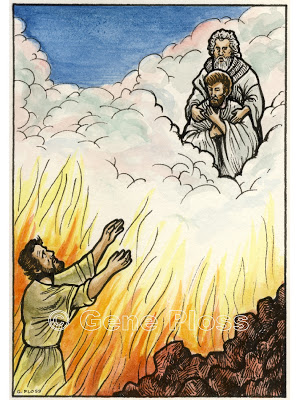
A church leader I used to know was a great public evangelist, and one of his methods of gaining attention to the Gospel message was to try and hand out a bank note to a stranger in the shopping mall, emulating in a small way God’s grace. Many rushed on by, too busy or too uninterested, to stop and take the gift. Such are those who reject God’s offer of salvation, eyes blinded by the world and its sinful pleasures. They fail to see that the best offer they will ever receive in this life, worth far more than any of the world’s riches, has passed them by. For all those who have turned their backs on God, rejecting His free offer of salvation, spurning that “grace upon grace”, there is an awful alternative. Jesus said, “And what do you benefit if you gain the whole world but lose your own soul? Is anything worth more than your soul?” (Matthew 16:26). The alternative to accepting God’s graciousness is eternity spent in a place, as Jesus described it, “where the maggots never die and the fire never goes out” (Mark 9:48). 

For those who accept God’s offer of salvation will truly discover “spiritual blessing upon spiritual blessing“, as they journey towards their goal of eternal life spent with God. To send His Son to live and die with human beings was the ultimate act of grace. 

Dear Father God. On our knees we thank You for Jesus and His willingness to die so that we might have life. Such grace! Amen.

Rebels

“Once, you Gentiles were rebels against God, but when the people of Israel rebelled against him, God was merciful to you instead. Now they are the rebels, and God’s mercy has come to you so that they, too, will share in God’s mercy. For God has imprisoned everyone in disobedience so he could have mercy on everyone.”
Romans 11:30-32 NLT

A rebel is someone who opposes an authority, such as the government, or an employer, or even a parent or guardian. The act of rebellion manifests itself in various ways, ranging from being mildly awkward in response to an instruction, through to armed resistance. It could be exposed through written reports via newspapers or social media outlets such as Twitter. During this past weekend there was the celebration of the coronation of King Charles III in the UK. He was installed as the monarch of these islands in a ceremony enjoyed by most of the inhabitants, but there was a vocal minority intent on causing disruption in their rebellion against the new King. Sometimes rebellion can be justified, perhaps if it is against an unjust power, but much of the civil rebellion manifesting in the UK at the moment is by a small number of people promoting their own particular ideologies, which aren’t shared by the majority of the citizens of this land.

But we see rebellion particularly when it comes to people’s relationship God, if they even have one. Most people will deny that He even exists, or that, if He does, He is of no relevance to them. The Old Testament is full of accounts of the rebellion of the Israelites towards God. For example, Psalm 78:7-8, “So each generation should set its hope anew on God, not forgetting his glorious miracles and obeying his commands. Then they will not be like their ancestors— stubborn, rebellious, and unfaithful, refusing to give their hearts to God”. The rest of this Psalm details God’s response to a rebellious generation. Sober reading.

Paul said that because of the rebellion of His people, God instead showed mercy to the Gentiles. Jesus Himself warned His generation about the consequences of refusing God. We read in the Wicked Farmers’ parable Jesus’s conclusion, “I tell you, the Kingdom of God will be taken away from you and given to a nation that will produce the proper fruit” (Matthew 21:43). Rebellion is the wrong fruit. God is looking for the fruit of obedience.

But what did Paul mean when he said that God “imprisoned everyone in disobedience”? The Message translates this as, “ … In one way or another, God makes sure that we all experience what it means to be outside so that he can personally open the door and welcome us back in.” Perhaps those people who have experienced the depths of sin, revelling in disobedience towards God, are transformed by God’s love when they discover His grace and mercy. I used to know a drug addict, who plumbed the depths of a life style of depravity, but who became a great evangelist after God lifted him out of his pit. In the story of a woman who anointed Jesus’ feet with her tears at the home of a Pharisee called Simon, Jesus made this observation, “I tell you, her sins—and they are many—have been forgiven, so she has shown me much love. But a person who is forgiven little shows only little love” (Luke 7:47). 

God will not stop anyone from rebelling against Him. He will still be gracious enough to maintain the systems the rebels depend upon for their existence, such as the basics of life – air to breathe, and so on. But God will withdraw His mercy from them, and He will hand them over to the consequences of their rebellious choices. In that state the rebels can continue, in apparent blissful ignorance of what will happen to them one day. Jesus was horrified about the prospects for those who rejected God and His grace. Perhaps we should be as well, making sure that we ourselves are not counted amongst the rebels, and exposing those around us to God’s grace and mercy.

Dear Father God. Your love and grace knows no limits. We thank You for all You have done, and will do, for us. Amen.

‭‭