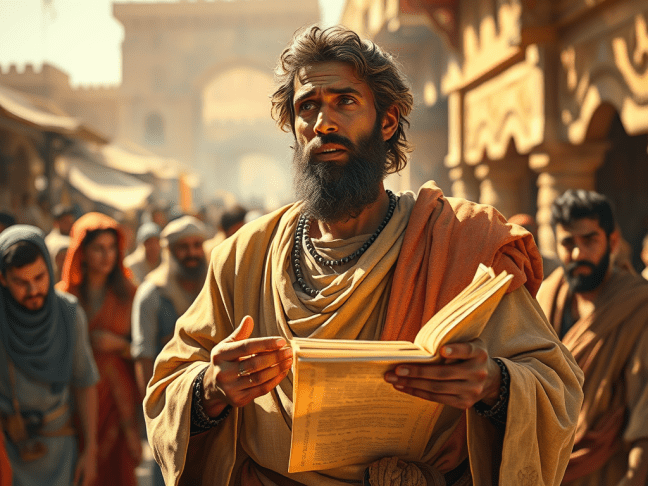
One Lord, Jesus Christ (1)

“So, what about eating meat that has been offered to idols? Well, we all know that an idol is not really a god and that there is only one God. There may be so-called gods both in heaven and on earth, and some people actually worship many gods and many Lords. But for us, There is one God, the Father, by whom all things were created, and for whom we live. And there is one Lord, Jesus Christ, through whom all things were created, and through whom we live.”
1 Corinthians 8:4-6 NLT

Paul made two unambiguous statements about God and Christ in the last verse of our reading today. He said we live for God the Father, but through Jesus Christ. They identify two separate roles for God the Father and God the Son, in that all things were created by the Father, but through Jesus. These statements are foundational to the Christian faith, and there is no alternative way of life for any pilgrim. We considered the Father yesterday, and now we turn to Jesus, “through whom we live”

All the way back in Genesis 1, we see that God “spoke” the heavens and the earth into being. Genesis 1:3, “Then God said, “Let there be light,” and there was light”“. But if we now turn to John 1, we find out about what was said. John 1:1-3, “In the beginning the Word already existed. The Word was with God, and the Word was God. He existed in the beginning with God. God created everything through him, and nothing was created except through him“. So we find the Trinitarian relationship between the Father and Son, because God spoke and Jesus was the Word, a partnership that has always existed. In Genesis, we read that humanity was created in God’s image (Genesis 1:26f), and we must consider what that truly means. God had already created the angels – we don’t know exactly when, but this probably occurred before the world was created – and He then created human beings, populating both the spiritual realm and the natural world. Two separate kingdoms have existed, one eternal and one bounded by time, but it was God’s desire that He brought them both together under the authority of His Son, Jesus, as we read in Ephesians 1:9-10, “God has now revealed to us his mysterious will regarding Christ—which is to fulfil his own good plan. And this is the plan: At the right time he will bring everything together under the authority of Christ—everything in heaven and on earth”

The mind-boggling truth is that through the Word, the logos, we find the God-man Jesus walking this world, bringing God’s love and grace to people dying in their sins. Jesus was, and is, the Logos, as described by John, who went to great lengths to explain and correct false beliefs and ideas about God, and to provide us with the proper and correct facts about Him. In discussions with the JW’s, we will find that they do not believe that Jesus is God, a member of the Trinity with the Father and the Holy Spirit. Their version of John 1:1 (New World Translation) reads, “In the beginning was the Word, and the Word was with God, and the Word was a god”, and that identifies the JW’s as a sect that denies the divinity of Jesus as He went about Palestine showing His love and grace for the people. There are other differences, but we need to beware of a religion claiming to be Christian but one which has been infiltrated by the devil.

One of the first things that Jesus said when He started His public ministry was, “For God so loved the world that He gave His only begotten Son, that whoever believes in Him should not perish but have everlasting life” (John 3:16). We are all very familiar with this verse but the word “perish” is often overlooked. We go for the “love” bit and how we must believe in God’s Son, but the consequences for people who don’t are that they will perish. Back to Genesis 1:26. Being created in God’s image means that with the package came free choice, a huge responsibility that is avoided by most of the people in our unbelieving society. It is a responsibility because those who don’t believe will “perish”and we know what that means if we read Revelation 20. And to those who claim a God of love would never send anyone to hell, we have to respond with the message that He would not overrule their right to free choice and turn them into an automaton. Instead, He sent His Son, full of unlimited love and grace, to take on the punishment they deserve and by His sacrifice ensure that they will never perish. 

There was a time in Galilee when Jesus addressed a couple of local news reports, brought to Him by the people there. The first was concerning Pilate, who had murdered some people in the Temple while they were offering sacrifices, and the second was when eighteen people died after a tower in Siloam fell on them. But Jesus turned the emphasis around, ““Do you think those Galileans were worse sinners than all the other people from Galilee?” Jesus asked. “Is that why they suffered? Not at all! And you will perish, too, unless you repent of your sins and turn to God. And what about the eighteen people who died when the tower in Siloam fell on them? Were they the worst sinners in Jerusalem? No, and I tell you again that unless you repent, you will perish, too” (Luke 13:2-5). Jesus’ response was clear. Don’t get caught up with temporal matters and neglect the reality that unless we believe in Him, repenting of our sins, then we will “perish”

We pilgrims live our lives through the lens of the Cross, where we lay our burdens down and believe that Jesus died for our sins. Paul reminded the Corinthians of that, and, with a sober and realistic perspective, we too take on board what it means to live through Jesus, the Son of God.

Dear Father God. Thank You for Your Son Jesus and all He has done for us at Calvary. Thank You that through Your plan for salvation You have saved us from perishing in a terrible place. Amen.

Living By God’s Power

“Some of you have become arrogant, thinking I will not visit you again. But I will come—and soon—if the Lord lets me, and then I’ll find out whether these arrogant people just give pretentious speeches or whether they really have God’s power. For the Kingdom of God is not just a lot of talk; it is living by God’s power. Which do you choose? Should I come with a rod to punish you, or should I come with love and a gentle spirit?”
1 Corinthians 4:18-21 NLT

Do we believers talk a lot about the things of the Kingdom but fail to leverage the power available to us through the Holy Spirit? I think we probably do, because there is a disconnect between what happened in the early church and what is happening today. When was the last time we had a prayer meeting that was so powerful that the building shook, for example (see Acts 4)? When was the last time we were in a meeting where the power and presence of the Holy Spirit were so evident that healings occurred, a crescendo of praise erupted spontaneously, and everyone spoke out in tongues? Of course, the Cessationists claim that all this would have finished with the death of the Apostles, because they believe that certain spiritual gifts, particularly those considered miraculous or revelatory, ceased to be active after the first century. They believe gifts like speaking in tongues, prophecy, and healing are not meant for the church today. In contrast, we have the Continuationists (like me) who believe that the miraculous gifts mentioned in the Bible, such as healing, prophecy, tongues, and miracles, are still given by the Holy Spirit to believers today and should be actively sought after and practised in the church. Whichever position we follow will have a profound effect on how we view and believe the Bible. Take, for example, 1 Corinthians 12, a chapter where Paul taught about the Spiritual Gifts. A Cessationist might be comfortable with the Holy Spirit gifts of service, enabling us to help each other (vs 4-7), but they would start to become a bit uneasy when it comes to verses 9-10, “The same Spirit gives great faith to another, and to someone else the one Spirit gives the gift of healing. He gives one person the power to perform miracles, and another the ability to prophesy. He gives someone else the ability to discern whether a message is from the Spirit of God or from another spirit. Still another person is given the ability to speak in unknown languages, while another is given the ability to interpret what is being said”, and in the end they would get a black marker pen out and find themselves redacting parts of these verses, because they don’t believe they apply today. After all, if they don’t believe what is written in the Bible, then they may as well remove the bits they disagree with, or treat the Holy Scriptures as nothing more than a good read or a history book detailing the life of the Jews and the early Christians.

As a Continuationist, I have no problem in accepting these verses, and those written anywhere else in the Bible about miracles and healings, prophecies and tongues, and in fact, I have personal experience of the Holy Spirit moving in healings and miracles. Some years ago, my daughter was totally healed of a brain illness with a prognosis so poor that my wife and I were told to expect, and prepare for, the worst. But she recovered through God’s grace and healing power, and her hospital medical notes were completed with the comment “this is nothing short of a miracle” written by an unbelieving medic. Today, through her, we have two grandchildren and three great-grandchildren (so far), bringing blessings upon blessings. We serve an amazing God, who loves us and cares for us.

Paul wrote to the Corinthian believers that there was no use in all their “pretentious speeches” and accompanying arrogant talk because there was a lack of God’s power at work. But what does “living by God’s power” really mean? In our own lives, God has supplied all that we need for life in His Kingdom. 2 Peter 1:3, “By his divine power, God has given us everything we need for living a godly life. We have received all of this by coming to know him, the one who called us to himself through his marvellous glory and excellence”. We may not have the riches and means to live a prosperous life in our natural years, but God has supplied all that we need for life in His Kingdom. There is a difference. Jesus said to the church in Smyrna, “I know about your suffering and your poverty—but you are rich! … ” (Revelation 2:9a). Here was a fellowship of believers who had little financially but who were rich with the resources and power of the Holy Spirit. Also, our needs have been met by God with all the resources of God being placed at our disposal. In our earthly lives, we are in the middle of a battle described by Paul in Ephesians 6:12, “For our struggle is not against flesh and blood, but against the rulers, against the authorities, against the powers of this dark world and against the spiritual forces of evil in the heavenly realms“. And Paul continued to describe the whole armour of God, set out to replicate the physical armour of the Roman soldiers to whom he was chained. We know the passage of Scripture, with the defensive items followed by one offensive weapon – ” … the sword of the Spirit, which is the word of God” (Ephesians 6:17b). And finally, Paul exhorts us to “pray in the Spirit”

Are we pilgrims living in God’s power, so freely available to all those who believe? Or are we in a place of fear and anxiety, depressed by world events, and hoping that Jesus comes soon? We pilgrims are made of stern stuff, solid in our faith, and dependable in times of crisis. Psalm 112:6-7 is a pillar in our faith, “Surely the righteous will never be shaken; they will be remembered for ever. They will have no fear of bad news; their hearts are steadfast, trusting in the Lord“. We share Scriptures like Psalm 105:4-5, “Look to the Lord and his strength; seek his face always. Remember the wonders he has done, his miracles, and the judgments he pronounced“. We can all recall the difficult times when God came through for us, and we strengthened ourselves with prayers of “do it again, Lord” when faced with a crisis. It is a tragedy that so many pilgrims can be stoics, gritting their teeth when troubles come against them, and sometimes hoping against hope that the Lord will return soon. But, folks, we have access to God’s power, and when we live by it, we are in a different world. Even when the world and society are falling apart around us, we can stand strong and firm, living in the power of God.

Dear God. Your power is limitless. Please forgive our lack of faith and help us to grasp all You have us with both hands, as we walk day by day in his sad and bad world. In Jesus’ name, amen.

How Did Jesus Know?

“So that disciple leaned over to Jesus and asked, “Lord, who is it?” Jesus responded, “It is the one to whom I give the bread I dip in the bowl.” And when he had dipped it, he gave it to Judas, son of Simon Iscariot. When Judas had eaten the bread, Satan entered into him. Then Jesus told him, “Hurry and do what you’re going to do.””
John 13:25-27 NLT

Jesus was, and still is, the Son of God, divine and human. Two thousand years ago He was sent to Israel with a plan for the redemption of mankind, following through every requirement to bring it into fruition, a successful conclusion. Jesus knew that His death and resurrection were the final part of the plan, and He spoke several times about it – Mark 8:31, “Then Jesus began to tell them that the Son of Man must suffer many terrible things and be rejected by the elders, the leading priests, and the teachers of religious law. He would be killed, but three days later he would rise from the dead“. But how much of the detail beforehand did Jesus know? Father God could of course see the end from the beginning, every twist and turn, every event, because He lives in eternity, a place without time. Imagine something like the Bayeux Tapestry, laid out before Him, but with every event portrayed in its minutest detail. Because of His humanity, Jesus would not have had such a view, and He regularly communicated with His father in prayer to obtain the guidance He needed, to make sure He stayed on track. Through the third member of the Trinity, the Holy Spirit, He retained that divine communication.

But Jesus was also human. We see from John 4:6 that He got tired, “Jacob’s well was there; and Jesus, tired from the long walk, sat wearily beside the well about noontime.” About Jesus, Paul wrote, “Though he was God, he did not think of equality with God as something to cling to. Instead, he gave up his divine privileges; he took the humble position of a slave and was born as a human being. … ” (Philippians 2:6-7a). So Jesus needed to eat and drink, sleep, and use the bathroom. Even as early as the age of twelve, Jesus had a sense of His mission, as we read from the account of Jesus in the Temple, “So when they saw Him, they were amazed; and His mother said to Him, “Son, why have You done this to us? Look, Your father and I have sought You anxiously.” And He said to them, “Why did you seek Me? Did you not know that I must be about My Father’s business?”” (Luke 2:48-49). 

So, did Jesus know beforehand about the woman at the Samaritan well? Or the fact that there would be five thousand men and their families to be fed? What about the other miraculous occasions? Did Jesus know about all these in advance? I don’t think He did, but He did know about the power through the Holy Spirit that He had within Him, and He was close enough in tune with His mission and His Father’s will to know what to do at the time. So, how did Jesus know it was Judas who would betray Him? In fact, how did He know that He would be betrayed at all? Judas was a pivotal factor in God’s redemptive plan, to the extent that he was prophesised about in Psalm 41:9, “Even my own familiar friend in whom I trusted, Who ate my bread, Has lifted up his heel against me“. At first sight, it would seem strange that Jesus gave a piece of bread soaked in the vinegary dip common at the Passover meal, to expose the man who would betray Him. But that was a very real part of the Psalm 41 prophecy. 

Jesus did know what was going to happen because He knew the Scriptures. Today, there are many problems both inside and outside the church caused by a lack of Bible knowledge and, consequently, a failure to put God’s commands into practice. But at a personal level, we find most of what we need to live in the Bible. It is a unique book. There in none other like it. As Peter said in John 6:68, “Simon Peter replied, “Lord, to whom would we go? You have the words that give eternal life“. There is nowhere else where we can find the words we need. Of course we pray to our Father in Heaven and trust in the Holy Spirit for power and guidance, but through the Word of God we have a foundation that underpins our lives on this planet and leads us to a life with God for ever.

Dear Father God. We thank You for Your Word, and the guidance it provides for our lives. Amen.

Demon Possessed

“The people retorted, “You Samaritan devil! Didn’t we say all along that you were possessed by a demon?” “No,” Jesus said, “I have no demon in me. For I honour my Father—and you dishonour me. … I tell you the truth, anyone who obeys my teaching will never die!” The people said, “Now we know you are possessed by a demon. Even Abraham and the prophets died, but you say, ‘Anyone who obeys my teaching will never die!’ Are you greater than our father Abraham? He died, and so did the prophets. Who do you think you are?””
John 8:48-49, 51-53 NLT

The accusation that someone is possessed by a demon is only rarely heard in our Western cultures, if at all. Much was attributed to demon possession in Biblical days, society using it as a catch-all for a variety of unexplained physical, mental and behavioural attributes and conditions. To the crowd, heavily infiltrated by Pharisees and other religious leaders, Jesus’ counter-cultural claims and message were so unusual that the accusation of demon possession was, at least superficially in that culture, a logical choice. The crowd were doing what we often do – they tried to make sense of behaviours unexplained by any other cause. In our societies today we might conclude that strange and unusual behaviour is because of “learning difficulties” or some form of mental illness. But in Jesus’ day there was no reason why the crowd should level the accusation of demon possession at Him just because they disagreed with what He was saying. Jesus’ message was simple yet profound, and never the ravings of someone possessed. The dangerous thing for the people was that by levelling such accusations at Jesus, they were at risk of committing the unpardonable sin. Mark 3:28-29, “I tell you the truth, all sin and blasphemy can be forgiven, but anyone who blasphemes the Holy Spirit will never be forgiven. This is a sin with eternal consequences”. Imagine the scene before the “pearly gates” as one of Jesus’ intransigent accusers arrived and tried to gain entry. The realisation of what they had done would have preceded a quick journey to a place where they would find out what real demon possession was all about!

To a crowd steeped in a religious culture that claimed salvation through obeying the Law of Moses and the plethora of rules devised by generations of rabbis, someone who claimed otherwise would have been most unwelcome, to the point that they might become associated with the devil, who, by definition, was anti-God. To a sincere law-believer of that day, such a person as Jesus was in danger of destroying their entire belief system, and their first instinct was to protect what they had. But the sad thing was that religious people of Jesus’ day had replaced God’s loving plans with a liturgy that excluded relationship with God and exchanged it for a life style devoid of the life that God intended. 

In 21st Century Western societies, people only rarely display anything that would warrant the claim or accusation of demon possession. But things happen that display the same stubborn behaviour in the face of messianic claims of a new way or alternative explanation. The ideological clashes between groups of fanatics over issues such as the climate or gender are perhaps a modern day demonstration of the same refusal to change demonstrated in the crowd before Jesus and such behaviour is still very much part of the human psyche. The same crowd who accused Jesus of demon possession would perhaps deny the holocaust ever happened in the mid-twentieth century. Or they would make other outrageous claims all in the name of their own particular “religion”.

How do we pilgrims cope in the face of new claims and better ways? We do what countless others have done – we turn to the Word of God. There we find truthful nourishment for our souls. And rather than accuse the ideological fanatics of demon possession, we reach out to them with a message of hope straight from the throne of God. They will probably reject both us and the message, even screaming accusations of demon possession, but, like Jesus, we patiently and lovingly repeat what we have said and then move on, leaving the consequences of their denials to the mercy of God. 

Father God. Please help us to stay close to You and listen constantly for Your voice in all we think and do. In Jesus’ name. Amen.

Trained by God

“Then, midway through the festival, Jesus went up to the Temple and began to teach. The people were surprised when they heard him. “How does he know so much when he hasn’t been trained?” they asked. So Jesus told them, “My message is not my own; it comes from God who sent me.””
John 7:14-16 NLT

There came the day when Jesus finally appeared in the Temple, and John recorded that He “began to teach”. As a reminder, Jesus appeared publicly half way through the Feast of Tabernacles, which was a week long festival of thanksgiving to God, for the harvest just completed and the feeding of the Israelite slaves in the wilderness so many years before. It was an essential event for the Jews, particularly the male contingent, so Jerusalem would have been mobbed by huge crowds. John also recorded that the “people were surprised when they heard Him” because of His lack of training. 

What was there about Jesus’ teaching that made the people think that way? There were probably several reasons. Perhaps His style of presentation was different to what the people were used to. His teaching material, though Scripturally based, would have had a different interpretation to that of the conventional text books. The miraculous signs he used to support His message would have wowed the crowd but, again, suggest to them that He had not been trained in the traditional Jewish ways. Jesus was honest and said it as it was. He made no attempt to woo the crowd with benign platitudes and a false praise. He regularly attacked the hypocrisy of the Jewish leaders, even on one occasion saying that their father was not God but the devil. When they tried to trap Him with difficult questions, He confounded and silenced them. Jesus told the crowd that, like it or not, His message “is not [His] own; it comes from God who sent [Him]”.

Most church ministers, as we pilgrims know, are trained in some theological college or other. The people who are training for the ministry become acquainted with the culture and teaching of their particular denomination, learning the liturgies and Biblical interpretations. But there is a better way through the Holy Spirit who lives within us. Jesus told His disciples that He will lead us into all truth – ”When the Spirit of truth comes, he will guide you into all truth. He will not speak on his own but will tell you what he has heard. He will tell you about the future” (John 16:13). That’s all Jesus did. He told the people what His Father in Heaven told Him to say. We pilgrims have a duty to consult with God over what we should do and say. His Words may or may not agree with the teaching of our denominations but by being soundly Bible based then they will be truth. The words Jesus said cut across cultural sensitivities to declare and teach the truth after generations of misinterpretations or even untruths supposedly based on the Hebrew Bible. The truths we declare will increasingly impact the cultures in which we live, because they expose sin and evil, never a popular subject in a society without a relationship with God.

We pilgrims had embraced the Gospel, repented of our sins, and believe in Jesus 100%. We speak as God directs. There is no other way.

Dear Father God. We reach out to You today, trusting in You to lead and guide us through the minefields of life. Only You have the words of eternal life. Thank You. Amen.

The Words of Eternal Life

“At this point many of his disciples turned away and deserted him. Then Jesus turned to the Twelve and asked, “Are you also going to leave?” Simon Peter replied, “Lord, to whom would we go? You have the words that give eternal life. We believe, and we know you are the Holy One of God.””
John 6:66-69 NLT

In our fellowships and churches there can sometimes be a parting of ways between a member of the congregation and the leadership. It can be due to a simple administrative problem such as who does what, or someone falls out with another person,  or it could be over a doctrinal issue or some form of Biblical interpretation. Regarding the latter I know of a church where a member left because they disagreed with the Biblical stance over matters of sex and marriage. But all these situations may or may not be valid and I’m sure most divisions within the Christian real estate are avoidable, should there be a will to work out a solution.

However, in Jesus’ case, the disciples left Him because they could not accept His teaching. These men and women were having difficulty in accepting that Jesus was the Son of God, and that what He taught about His body and blood was true. Jesus said, “For no one can come to me unless the Father who sent me draws them to me, and at the last day I will raise them up” (John 6:44), implying that Father God sent Jesus to this world, and in the process He was going to attract people to support His Son. So perhaps the disciples who left Jesus were not the ones needed at that time. This is perhaps a contentious thought, because we know that the Gospel is available to all, but after there had been an exodus of disciples, Jesus turned to the twelve disciples He had chosen, and asked if they were going to leave too. But Peter responded with a timeless statement, “You have the words that give eternal life”. After all that had happened, the difficult (to them) teaching, the divinity claim, the consequent murmuring and complaining, and the mass exodus of Jesus’ followers, the Twelve disciples, later to become the Apostles, stood firm in their allegiance to Jesus. What would I have done, is a question I ask myself. But we note that not all the disciples other than the Twelve deserted Jesus – just “many” of them. There were still some who remain faithful. Men and women on the periphery doing what many do today, quietly getting on with a life of service to God, below the radar of public notice. People who have accepted Jesus, who believe in Him and His teaching, and who are doing their best to apply it in their own lives. 

Peter, speaking as the Twelve’s representative, stated two truths that must have gladdened Jesus’ heart. Peter said that the Disciples recognised Jesus’ divinity, and that they believed in Him. Because of that, the Disciples knew that Jesus was speaking words that, for those like them that believed them, will lead to a life spent with God.

We pilgrims too have declared that Jesus is the Son of God, that we believe in Him and we follow His teaching. The “words of eternal life” were not just for that generation but timelessly apply over the millennia right up until today and beyond. Paul wrote in Romans 10:9-10, “If you openly declare that Jesus is Lord and believe in your heart that God raised him from the dead, you will be saved. For it is by believing in your heart that you are made right with God, and it is by openly declaring your faith that you are saved”. The early disciples who left Jesus failed to make the declaration and ended up in a spiritual wilderness, but we pilgrims are in a privileged position, being of those who have declared and believed. 

Today we once again declare that Jesus is Lord and that he has the Words we need to hear for our future. And we tell others about our wonderful Saviour, that they too will have the same opportunity we have had.

Yes, Lord Jesus. We proclaim and declare that only Your have the words that will lead to eternal life. We give You all the glory today. Amen.

Too Hard to Understand

“So Jesus said again, “I tell you the truth, unless you eat the flesh of the Son of Man and drink his blood, you cannot have eternal life within you. But anyone who eats my flesh and drinks my blood has eternal life, and I will raise that person at the last day. … Many of his disciples said, “This is very hard to understand. How can anyone accept it?” … At this point many of his disciples turned away and deserted him.”
John 6:53-54, 60, 66 NLT

On the way to the synagogue in Capernaum Jesus had made many disciples. These were men (and presumably women) who believed in what He said. They saw His miraculous signs. They heard His wonderful words of grace. They heard Him expound the Scriptures in a way they liked. But then they heard Jesus say things that they struggled to understand. So they ended up leaving Him and they “turned away”. A tragedy for them because they missed the only opportunity of receiving Jesus’ promise of eternal life. There may have been too many problems for these early disciples. Firstly, the concept of eating and drinking Jesus’ body and blood from a physical perspective blinded their minds to the spiritual meaning behind His words. Secondly, they perhaps did understand what Jesus was meaning, but the consequent commitment and implication for how they should now live their lives was too great a sacrifice. 

There are always people who are unable to understand, or don’t want to understand, what Biblical teaching says. One day a person might hear a sermon on anger, taking as its text Jesus’ teaching on anger – “You have heard that our ancestors were told, ‘You must not murder. If you commit murder, you are subject to judgment.’ But I say, if you are even angry with someone, you are subject to judgment! If you call someone an idiot, you are in danger of being brought before the court. And if you curse someone, you are in danger of the fires of hell” (Matthew 5:21-22). A naturally angry person might decide that to change their approach to other people who upsets them is too big an ask and they decide they can’t follow teaching like this. So they either rationalise it and continue as they did before, or they leave and find a church where Biblical teaching is less challenging. And they conveniently forget these verses from Matthew. It is easy to follow a Gospel that we agree with and won’t mean we have to change our lives.

The more liberal of Christians will have a relaxed and dismissive approach to some parts of the Bible. For example in Matthew 5:27-28, Jesus said some hard words about adultery. “You have heard the commandment that says, ‘You must not commit adultery.’ But I say, anyone who even looks at a woman with lust has already committed adultery with her in his heart.“ Of course, this is a very sensitive subject, but it emphasised a principle that Jesus expounded – it is not what we appear to do but what is going on inside of us. So people, particularly men, who may struggle to change their behaviour in this area, may instead choose to disagree or ignore what Jesus said. As pilgrims, do we approach the Bible with reverence and in the knowledge that it is the Word of God and the final arbiter of truth, or do we just take from it the bits that we agree with and ignore the rest, even making up excuses, or changing the meaning, for the contentious verses?

So many of the early disciples in Jesus’ day started to follow Him until His teaching became too difficult for them to follow. I wonder what they did then? But for us pilgrims, we have decided to follow Jesus, come what may. There is no turning back.

Dear Father God. There is indeed no way that we pilgrims will turn our backs on the very One who gave His all for us. We are so grateful. Amen.

Light and Life

“In the beginning the Word already existed. The Word was with God, and the Word was God. He existed in the beginning with God. God created everything through him, and nothing was created except through him. The Word gave life to everything that was created, and his life brought light to everyone. The light shines in the darkness, and the darkness can never extinguish it.”
John 1:1-5 NLT

Continuing our theme concerning the Word of God, who is Jesus Himself, John wrote that He is Light and Life. We read back in Genesis 2:7 how life was birthed, “Then the Lord God formed the man from the dust of the ground. He breathed the breath of life into the man’s nostrils, and the man became a living person“. And ever since, life has been ubiquitous, taken for granted even and the Creator of life ignored by most. Jesus Himself proclaimed His illuminating presence as we read in John 8:12, “Jesus spoke to the people once more and said, “I am the light of the world. If you follow me, you won’t have to walk in darkness, because you will have the light that leads to life.”” So why is it so hard for people to realise that they do indeed walk in darkness? Stumbling around in the gloom is not a new phenomenon, limited to the 21st Century. At a time of national peril in 700 BC, Isaiah prophesied about the coming Messiah. Isaiah 9:1-2, “Nevertheless, that time of darkness and despair will not go on forever. The land of Zebulun and Naphtali will be humbled, but there will be a time in the future when Galilee of the Gentiles, which lies along the road that runs between the Jordan and the sea, will be filled with glory. The people who walk in darkness will see a great light. For those who live in a land of deep darkness, a light will shine.” People today are living in a perilous time, of “deep darkness”. The wars in Ukraine and Palestine continue to dominate the news. Terrible floods in Australia and an earthquake in China have found their way into the news headlines. And there are many more disasters and conflicts waiting in the wings of world history and still to emerge to darken the world even more. The people of this world are truly living in dark times.

In Matthew 5:14-16, Jesus proclaimed the mission for His followers, “You are the light of the world—like a city on a hilltop that cannot be hidden. No one lights a lamp and then puts it under a basket. Instead, a lamp is placed on a stand, where it gives light to everyone in the house. In the same way, let your good deeds shine out for all to see, so that everyone will praise your heavenly Father“. The people around us need to hear Good News. God’s News of a Man who brought Light and Life into this world. A Man who set aside His Godliness and came from Heaven because of His love for a world that was without hope and heading for a lost eternity. The Man was the Son of God Himself. We pilgrim believers carry torches that burn with God’s eternal glory, the message of hope that Jesus left us to share with our friends and communities. We are torch bearers in a relay race that has extended over centuries.

A carol we sing every year has this second verse. The lyric writer, Charles Wesley, and obviously a John’s Gospel reader, wrote it in 1739:

Hail the heaven-born Prince of Peace!
Hail the Sun of Righteousness!
Light and life to all He brings
Risen with healing in His wings
Mild He lays His glory by
Born that man no more may die
Born to raise the sons of earth
Born to give them second birth
Hark! The herald angels sing
“Glory to the new-born king”

Dear Lord Jesus, we proclaim Your light and life to all those around us at the start of this New Year. Your light is eternal, and is never extinguished. Your life is available to all. We worship You today. Amen.

Twisting Scripture

“And remember, our Lord’s patience gives people time to be saved. This is what our beloved brother Paul also wrote to you with the wisdom God gave him— speaking of these things in all of his letters. Some of his comments are hard to understand, and those who are ignorant and unstable have twisted his letters to mean something quite different, just as they do with other parts of Scripture. And this will result in their destruction.”
2 Peter 3:15-16 NLT

Almost as an aside, Peter rushes to the defence of his spiritual brother Paul, who was a trail blazer when it came to theology in the early years after Jesus was crucified. Paul’s life was overturned on the Damascus Road, and regarding his message, we read in Galatians 1:12, “I received my message from no human source, and no one taught me. Instead, I received it by direct revelation from Jesus Christ.” In the first and second chapters in Paul’s Galatians letter we get a hint of the preparatory process Paul went through before he was able to set out that “direct revelation from Jesus Christ”, and God’s plan for mankind, but it was, at that time, probably so radical, particularly to Jews, that he suffered much abuse, not only because of his message, but also his theology. People in his day misinterpreted what he said, and, as Peter wrote, “twisted his letters to mean something quite different”. But the same process goes on today. 

The Bible is not difficult to understand. The Gospel message is perhaps too simple for some. The problem is that when we get to a passage or verse of Scripture, that might not fit in with our sinful world view, we try and make it say something that it doesn’t. The Bible was written over many years and the last contribution to it was nearly two thousand years ago. In those days the culture was different. The geography was different. In our technological age, however, Western Christians are sometimes left puzzling over what God thinks, but the answers we seek are in the Bible somewhere, if only we look. A modern approach to Scripture involves “liberal” thought, where people miss out or reinterpret Biblical truths to suit their own point of view, or try and make it more palatable, so they think, to the secular society around them. So someone of a particular sexual orientation will ignore what difficult verses say. Jesus’ teaching about marriage makes some people feel uncomfortable, so they say it was for that culture but it doesn’t apply today. And then we find the Anglican bishop who even denied that the virgin birth actually happened.

As an aside, an Anglican vicar, David Goodhew, summed up the dangers of liberal theology, when he said, “churches trimming faith to fit in with culture have tended to shrink, and those offering a ‘full-fat’ faith, vividly supernatural, have tended to grow.” A religious observer, commenting on the previous quote, wrote, “Christianity is not dying – rather, it is becoming more conservative. Congregants don’t want to be preached to about politics. What they want is the full-fat version of faith.” There is no point in going to a church that has effectively become secular in what it offers to society around them. We can find all the secularism we want in the local pub. Only Bible believing churches will survive, because they regard the Bible, in its entirety, as the inspired and eternal Word of God. Isaiah 40:8, “The grass withers and the flowers fade, but the word of our God stands forever“.

Paul aptly summed up the Bible when he wrote to Timothy, “All Scripture is inspired by God and is useful to teach us what is true and to make us realise what is wrong in our lives. It corrects us when we are wrong and teaches us to do what is right. God uses it to prepare and equip his people to do every good work” (2 Timothy 3:16-17). We ignore this verse at our peril, something that Peter emphasised, as he wrote that life for those twisting Scripture will not end well. And the same end is waiting for those who ignore the parts of Scripture that fail to fit in with secular thought.

To avoid misinterpreting Scripture we must rely on the Holy Spirit within us to lead and guide us and bring to our minds exactly what God intended. So we precede reading a difficult passage with a prayer, and we allow the Holy Spirit to do what Paul wrote, teaching “us to do what is right”. And we definitely don’t ignore those Bible passages that challenge us.

Dear Father God. We pray for Your Spirit to open our eyes to the truths embedded in Your Word. In Jesus’ name. Amen.

A Timely Reminder?

“Therefore, I will always remind you about these things—even though you already know them and are standing firm in the truth you have been taught. And it is only right that I should keep on reminding you as long as I live.”
2 Peter 1:12-13 NLT

We all need Peters in our lives. Faithful men and women who are diligent in reminding us about the wonderful truths and promises in the Bible, and how we must be equally as diligent in applying them to our lives. But do we know a “Peter” who has a spiritual input into our lives? Are we listening when a fellow believer provides some encouragement? Or have we cut ourselves off from contact with other Christians, adopting an “I’ll do it my way” attitude? Peter said to his readers that they, of course, know the truths he is reminding them about, and that, although they probably don’t need any reminders, he is doing so anyway.

We pilgrim believers in our journey through life are constantly dealing with conflicts between two kingdoms. The Kingdom of God, and the kingdom of the world. God has provided all the resources we need in these situations, but sometimes we get a bit wobbly in our faith. The enemy will seek out our weak spots and try and capitalise on them to destroy our faith. The Holy Spirit will guide us to the right truths and promises of course, but we have to go and look for them, examining the Scriptures if we are not sure about something. And sometimes the Holy Spirit will use a “Peter” to help us, particularly if we have gone a bit spiritually deaf.

At the present time, with war in Eastern Europe and, as I write, the conflict in Palestine, we can lose sight of the fact that God is in control of His creation, His world. To think that human beings can destroy something that He created is arrogance in the extreme. In our community Bible Study yesterday we read Psalm 2, and came across verses 4-6, “But the one who rules in heaven laughs. The Lord scoffs at them. Then in anger he rebukes them, terrifying them with his fierce fury. For the Lord declares, “I have placed my chosen king on the throne in Jerusalem, on my holy mountain.”” This is the reality – God will rebuke the nations who fight against Him, and He will one day in the future instal Jesus in His rightful place as ruler of the world. 

We pilgrims must always be open to the “Peters” who cross our paths. Our loving Heavenly Father is very faithful and He will often lead us to green pastures where we can find the spiritual nourishment we need. A word from a brother or sister at just the right time will often help us when we need help, but we must keep our spiritual ears open. One practical help is the use of a notebook. When we hear a sermon, write down what we are hearing and go over it afterwards. If the preacher quoted Scriptures, check them out. and the truths and promises we find may be just what God wants us to hear. And we must pray for discernment, to filter out the noise that so easily can divert us from the course. If we find a “Peter”, we may want to journey with him for a bit. But in it all, God loves and cares for us, just as He did for the people who read Peter’s message all those years ago.

Father God. Thank You for the faithful men and women who so often provide a word of encouragement when we need it. We pray today for them, and ask for Your blessings to be with them. In Jesus’ name. Amen.