

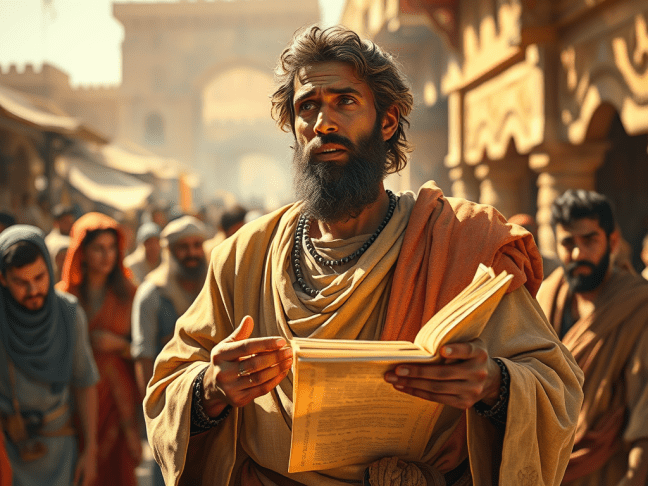
Preach the Good News

“Yet preaching the Good News is not something I can boast about. I am compelled by God to do it. How terrible for me if I didn’t preach the Good News! If I were doing this on my own initiative, I would deserve payment. But I have no choice, for God has given me this sacred trust. What then is my pay? It is the opportunity to preach the Good News without charging anyone. That’s why I never demand my rights when I preach the Good News.”
1 Corinthians 9:16-18 NLT

Paul was a driven man, driven by his zealous desire to preach the Gospel, the Good News about Christ, at every opportunity. In fact, this desire was so strong that he was prepared to do it without receiving any reward at all. Even though he had a right to be paid, he never demanded that his right be satisfied. Paul was unique in that God channelled his zeal, previously focused on eliminating the new followers of the Way who were appearing everywhere, into being a preacher of the Good News all over the Middle East. A total “U-turn” if ever there was one. We could ask the question, “Where are the Pauls today”? However, looking back through British history, we can see how God has raised up men and women who did something significant for the Kingdom, often at great personal cost, including the ultimate sacrifice of their lives. We think of two “Johns” – John Bunyan and John Wesley. There is another “John”, John Knox, in Scotland. William Tynsdale translated the Bible into English. William Booth founded the Salvation Army, and we mustn’t forget Smith Wigglesworth and Charles Spurgeon. But there are many more who God had commissioned in previous centuries. In modern times, I think of John Lennox, Derek Prince, David Pawson, and others, all of whom have made significant contributions to the work and life of Christians. But there has never been another Paul. 

Paul’s zeal and mission were laser-focused on preaching the Gospel. It was more than just a few words that he spoke. In Athens, his approach is clearly evident. “He went to the synagogue to reason with the Jews and the God-fearing Gentiles, and he spoke daily in the public square to all who happened to be there” (Acts 17:17). And he fearlessly took on the great Greek philosophers of his day, as we see in the next verse, “He also had a debate with some of the Epicurean and Stoic philosophers. When he told them about Jesus and his resurrection, they said, “What’s this babbler trying to say with these strange ideas he’s picked up?” Others said, “He seems to be preaching about some foreign gods””. Although he experienced ridicule and insults, Paul made a sufficient impact to be invited to the city’s high council, the Areopagus, to explain himself. He started his address, “So Paul, standing before the council, addressed them as follows: “Men of Athens, I notice that you are very religious in every way” (Acts 17:22). His introduction got their attention right from the start, and after a masterful and persuasive speech, he achieved a mixed outcome, that, importantly, included some of them becoming believers. Acts 17:33-34, “That ended Paul’s discussion with them, but some joined him and became believers. Among them were Dionysius, a member of the council, a woman named Damaris, and others with them”. Paul shared the Gospel with people at all levels of society, but that was his commission from Jesus. We read in Acts 9:15 something Jesus said to Ananias, “But the Lord said, “Go, for Saul is my chosen instrument to take my message to the Gentiles and to kings, as well as to the people of Israel”. There was King Agrippa of course, as we read in Acts 26:2,28, “”I am fortunate, King Agrippa, that you are the one hearing my defense today against all these accusations made by the Jewish leaders, … Agrippa interrupted him. “Do you think you can persuade me to become a Christian so quickly?“” Did Agrippa eventually become a Christian? We don’t know, unfortunately, but he could never stand before God claiming ignorance of the Good News about Christ.

We pilgrims are also commissioned to preach the Gospel. Mark 16:15,”“And then [Jesus] told them,”“Go into all the world and preach the Good News to everyone””. His message was to His disciples, but it equally applies to us today, as it has to every believer who has ever lived. So how do we do that? We can take an example from Jesus,””“The time promised by God has come at last”” he announced.”“The Kingdom of God is near! Repent of your sins and believe the Good News””” (Mark 1:15). Paul wrote to the Romans the following,”“For“Everyone who calls on the name of the Lord will be saved”” But how can they call on him to save them unless they believe in him? And how can they believe in him if they have never heard about him? And how can they hear about him unless someone tells them? And how will anyone go and tell them without being sent? That is why the Scriptures say,”“How beautiful are the feet of messengers who bring good news””” (Romans 10:13-15).

Some Christians I have met promote the old saying, “Preach the Gospel and if necessary use words”, justifying the thought that they don’t need to preach the Gospel because anyone seeing their good lives will convert to a belief in Jesus. But nothing can be further from the truth. Romans 10:17, “So faith comes from hearing, that is, hearing the Good News about Christ”. There is a need for our lives to mirror what we say about Jesus. We mustn’t be like the Christian who had a bumper sticker promoting Jesus but regularly exceeded speed limits.

And so we pilgrims regularly pray for divine appointments, so that we can share and preach as Jesus has commanded us, always remembering that there is a party in Heaven every time someone becomes a believer in Jesus.

Dear Lord Jesus. Your Gospel is the only news worth hearing in this sad and bad world. Please help us to share our faith at every opportunity. In Your precious name. Amen.

Foolish Preaching

s the Scriptures say, “I will destroy the wisdom of the wise and discard the intelligence of the intelligent.” So where does this leave the philosophers, the scholars, and the world’s brilliant debaters? God has made the wisdom of this world look foolish. Since God in his wisdom saw to it that the world would never know him through human wisdom, he has used our foolish preaching to save those who believe. It is foolish to the Jews, who ask for signs from heaven. And it is foolish to the Greeks, who seek human wisdom. So when we preach that Christ was crucified, the Jews are offended and the Gentiles say it’s all nonsense.”
1 Corinthians 1:19-23 NLT

A mini-rant from Paul about the dichotomy between human and Godly wisdom introduces the theme in these five verses before us today. In his day Paul knew of men who, by reputation, were considered philosophers and who made their mark on the culture at the time. Men such as Seneca, who was a writer and advisor to the Roman emperor Nero. Then there was Epictetus, a Greek Stoic, who was born into slavery and later founded a philosophy school in Greece. Philo of Alexandria, a Hellenistic Jewish philosopher, attempted to harmonize Jewish scripture with Greek philosophy, particularly Platonism. He believed that reason was a gift from God and that philosophy could be used to understand divine revelation. Three “wise” men, great thinkers of their day, but of whom Paul said God had made look foolish. Oratorical skills, brilliance of mind and thought, and a scholarly background all conspire to produce … a fool. Not because of their gifts, but because their thinking was all about human matters and, in the context of God and Heaven, had no value at all. A “brilliant debater” will not get into Heaven. Regardless of his words, he will still die and find a lost eternity.

Interestingly, Paul wrote that God said “that the world would never know him through human wisdom”. No-one can get into Heaven by their own efforts. I know someone who claims to have had a revelation as to what is there, and has even gone so far as to describe what God has revealed to him about Heaven. Such knowledge, he said, revealed to him that God had made Heaven with different compartments, each for a world religion. So the Buddhists would be in one place, Muslims in another and so on. The poor man, undoubtably intelligent as he is, suffers from delusions because his wisdom is earthly in its origins, and is based on his own thoughts alone, without fact or divine revelation. Part of my own testimony involves several months of trying to find God in the Bible purely by my own efforts, until, in the end, I discarded what I had thought I had found and instead called out to God for Him to reveal Himself. My prayer one Saturday night was something along the lines, “God, I can’t work this out on my own. If You are real then You will have to reveal Yourself to me”. I woke up the next morning with the assurance that God was real and through His grace He had indeed revealed Himself. That was the start of a journey, bumpy at times, but one from which I have never wavered. There is only one way to Heaven, as we know from John 14:6, “Jesus told him, “I am the way, the truth, and the life. No one can come to the Father except through me“. And God in His loving graciousness has gently showed me the way, at a pace I can absorb, and He will continue to do so until I meet Him face to face. My wisdom and thinking was ineffective in its arrogance, but it was only when I came to the end of myself that God could start His work in a human being.

Paul wrote that God “has used our foolish preaching to save those who believe”. Is it foolish, to tell people everywhere about God’s saving grace? Most people we meet will say so, because their minds are limited by human wisdom. How do you introduce concepts of the spiritual world around us to people who have closed minds and who have rejected any thoughts of a “higher power”, who believe that we only live for a span for 70 or 80 years, and then enter a realm of unconscious extinction? People such as Richard Dawkins, a modern day philosopher and evolutionist, who said, “Be thankful that you have a life, and forsake your vain and presumptuous desire for a second one.” People such as him have closed their minds against God and His Son, and instead deny any efforts to help them discover the truth. Such people will one day have a terrible shock, because they firstly will find themselves, not in a blank state of nothing, but as souls in a holding place called Sheol or Hades, and then secondly they will find themselves resurrected to stand before God to give an account of their lives. Why did Jesus describe hell as a place of wailing and gnashing of teeth? Matthew 22:13, “Then the king said to his aides, ‘Bind his hands and feet and throw him into the outer darkness, where there will be weeping and gnashing of teeth’”. The reason is that such God-deniers will have to spend eternity in a state of regret, that they rejected the One who saves and there is nothing that they can do about it. What a terrible thought!

So we pilgrims continue to be foolish in the world’s eyes as we preach to a people who are devoid of any vestige of God’s wisdom. People who are resistant to the idea of a spiritual world unseen by their natural senses, and who instead quote their human wisdom as the reason for their incalcitrance. But there is only one way that such people will ever discover God and that is through our “foolish preaching”. Paul wrote, “But how can they call on him to save them unless they believe in him? And how can they believe in him if they have never heard about him? And how can they hear about him unless someone tells them? And how will anyone go and tell them without being sent? That is why the Scriptures say, “How beautiful are the feet of messengers who bring good news!” But not everyone welcomes the Good News, for Isaiah the prophet said, “Lord, who has believed our message?” So faith comes from hearing, that is, hearing the Good News about Christ” (Romans 10:14-17). So let’s double our efforts to be as foolish as we can. We never know, because such foolishness in our stories of God’s love and grace might be just what someone needs to hear and experience.

Dear Father God. There is nothing foolish about a child of God, because we have heard the divine call and have reached out to the only One who has the message of eternal life. Please help us to pass it on to the people around us. In Jesus’ name. Amen.

Spirits in Prison (2)

“So he went and preached to the spirits in prison— those who disobeyed God long ago when God waited patiently while Noah was building his boat. Only eight people were saved from drowning in that terrible flood. And that water is a picture of baptism, which now saves you, not by removing dirt from your body, but as a response to God from a clean conscience. It is effective because of the resurrection of Jesus Christ.”
1 Peter 3:19-21 NLT

In a previous blog we asked ourselves three questions – what was the message that Jesus preached, what happens to our spirits after we die and why select just this particular group of spirits. We have considered what happens to our spirits when we die, and concluded that they go to one of two “compartments” in a place called Hades or Sheol. This is the holding place for spirits pending God’s final act of judgement, and believers end up in a compartment called Paradise and unbelievers in another compartment which seems to be a most unpleasant place, and is perhaps a taste of what hell will be like. 

But now taking the first question, what message did Jesus preach? Theologians seem divided on this and some have concluded that He made an announcement to a group of either demons or humans from the time of the flood. But what would be the point of an “announcement”? God will provide that soon enough on Judgement Day. Another suggestion is that Jesus preached in the spirit through Noah at the time of the flood, but they rejected His message. Yet another possibility is that Jesus preached the Gospel to a generation, now represented by their spirits, that otherwise could rightly complain that they were short-changed and unfairly treated. But literally, Peter wrote that there were people who were disobedient to God during the time leading up to their drowning in the flood and Jesus preached a message to them.

While on earth, Jesus devoted His teaching to the message of salvation through repentance of sins. The mechanics of how that message would apply to the spirits of dead people is a mystery, but there is no other logical explanation. The fact that His audience were imprisoned indicates that they were in a place that wasn’t the Paradise promised to the penitent thief. C S Lewis wrote a book called The Great Divorce which fictionally described a spiritual holding place, “hell”, from which the spirits, or “ghosts”, were given the opportunity to travel to Heaven, where salvation became an option for them. But it was of course fictional without any Scriptural basis.

We don’t know anything more about Jesus preaching to spirits in Hades, so we must draw our own conclusions. But we do know about the preaching Jesus did while He was here with us on Planet Earth. Faithful disciples recorded His many messages, often illustrated in a way that everyday people in His generation could understand. And Jesus underpinned His messages with practical deeds, such as healing the sick or raising the dead. As far as we aware, there is no post-death opportunity to hear the Gospel message in the world of spirits. If there was, what was the point of Jesus delegating the preaching of His Word to His followers? And people would become even more complacent than they are. Acts 1:8 reads, “But you will receive power when the Holy Spirit comes upon you. And you will be my witnesses, telling people about me everywhere—in Jerusalem, throughout Judea, in Samaria, and to the ends of the earth””. We pilgrims are at the sharp end of spreading God’s grace and love to those around us. The Holy Spirit will bring conviction of sin and repentance. So we must be ready and willing to share all that God has done for us.

Dear Father God. Please bring us to people who don’t know You. Please prepare the ground we pray and give us just the right words to say. For Jesus’ sake. Amen.

Watching Angels

“They were told that their messages were not for themselves, but for you. And now this Good News has been announced to you by those who preached in the power of the Holy Spirit sent from heaven. It is all so wonderful that even the angels are eagerly watching these things happen.”
1 Peter 1:12 NLT

Peter wrote that the preaching of the Gospel in the power of the Holy Spirit was “all so wonderful that even the angels are eagerly watching”. How do we feel about angels? Do we think that they exist or are they just mythical entities, superstitious legacies from a bygone age? I used to know an old lady whose driving skills were atrocious, but she never seemed to experience any bumps or scrapes, arriving at her destinations totally unscathed. The suspicion was that she had an angel positioned on each corner of her car, keeping her safe. Someone else I knew always advised against speeding when driving, as the angels then couldn’t keep up. The concept of guardian angels has always been with us.

Personally, I’m convinced that angels are real and play a very important part in our lives, even though we cannot see them. In my walks around the woods near my home I sometimes meet a man who shows an interest in spiritual matters, and I have shared the Good News with him on several occasions. But Peter said that angels are “eagerly watching” me as I speak with him and you can just imagine what they might have been saying. Perhaps they were trying hard to put words into my mouth. Or praying that the other man would open his mind to the Gospel truths. One thing is certain though, and that is that the angels were excited about the “Good News” being shared, because, as Peter wrote, “it is all so wonderful”. 

Angels are created spirit beings, who live in Heaven. So we cannot see them as tangible beings although we presume they can see us. To enable us to see them, they have to somehow acquire an earthly body. Daniel saw such an embodied angel, as we read in Daniel 10:5-6, “I looked up and saw a man dressed in linen clothing, with a belt of pure gold around his waist. His body looked like a precious gem. His face flashed like lightning, and his eyes flamed like torches. His arms and feet shone like polished bronze, and his voice roared like a vast multitude of people”. Those men around him knew something was going on but they didn’t see what Daniel saw. In Revelation 22:8, John wrote, “I, John, am the one who heard and saw all these things. And when I heard and saw them, I fell down to worship at the feet of the angel who showed them to me”. The writer of the Letter to the Hebrews wrote in Hebrews 13:2, “Don’t forget to show hospitality to strangers, for some who have done this have entertained angels without realising it!” 

We may be unconvinced of the presence of angels. Our scientific and technological age discounts anything spiritual because it can’t be measured or observed. But the Bible is full of references to angels and to ignore them impoverishes our experience of Scripture. In Hebrews 1:14 we read, “Therefore, angels are only servants—spirits sent to care for people who will inherit salvation“. Psalm 91:11, “For he will order his angels to protect you wherever you go“. But as we preach the Good News to those around us we do so with the knowledge that angels are “eagerly watching” what is happening. And we read in Luke 15:10, “In the same way, there is joy in the presence of God’s angels when even one sinner repents“. Can you imagine it – when we pilgrims became believers the angels had a party in Heaven! As we share the Good News with our friends and families, let’s remember there’s a party coming!

Dear Father God. Thank You for Your servants the angels. Amen.


Powerful Preaching

“They were told that their messages were not for themselves, but for you. And now this Good News has been announced to you by those who preached in the power of the Holy Spirit sent from heaven. It is all so wonderful that even the angels are eagerly watching these things happen.”
1 Peter 1:12 NLT

Peter knew all about the Good News. He lived with its Author for over three years learning all about it and even getting the opportunity to practise it. After a “wobbly” at Jesus’ trial, and his subsequent restoration over a breakfast of fried fish, he stayed largely below the radar until that momentous day, the Day of Pentecost. And then he came forward with the other Apostles, and announced the Good News. He provided a foretaste of what happens when a preacher dispenses his or her message of Good News “in the power of the Holy Spirit”. Not for Peter, or any of the other Apostles, was the preaching going to be a message full of flummery. It was the raw truth of the Good News.

Peter commenced his preaching by quoting the prophecy of Joel 2, which ends, “But everyone who calls on the name of the Lord will be saved” (Acts 2:21). His accurate quotation of an Old Testament Scripture, was the first evidence of the work of the Holy Spirit, bringing to his remembrance just the right verses at the right time. Jesus of course said this would happen, as we read in John 16:13, “When the Spirit of truth comes, he will guide you into all truth. He will not speak on his own but will tell you what he has heard. He will tell you about the future.” But Jesus also warned His disciples that when faced with a stressful situation in front of the rulers and authorities of the day, the Holy Spirit would help them with what they should say. We read in Matthew 10:19-20, “When you are arrested, don’t worry about how to respond or what to say. God will give you the right words at the right time. For it is not you who will be speaking—it will be the Spirit of your Father speaking through you”. So Peter probably amazed himself with the words that came from his mouth – it wasn’t him but the Holy Spirit bringing words of power and conviction.

There is no shortage of opportunities to find out what the “Good News” actually is. The internet is a source of such information of course. And we have the wayside pulpits outside traditional church buildings and more besides. The sincere seekers after the truth of the “Good News” will find it. But for everyone else there is a lethargy, a fatigue, when it comes to things of God. We pilgrims of course look for opportunities ourselves to share what God has done for us, testimonies that are real and relevant. But we pilgrims are not all preachers. Or so we think. We may think of a preacher being someone dressed in a white gown and delivering a formal message from a piece of church furniture we call a pulpit. An ornately carved wooden construction usually elevated in a corner of the building and accessed via a number of stairs hidden behind a wooden façade. And a message is delivered but is it “Good News”? That of course depends on Peter’s assertion that the “Good News” must be “preached in the power of the Holy Spirit sent from heaven”. Without the Holy Spirit’s presence the announcement will usually fall flat and will be largely ineffective.

Before He left this world, Jesus gave His disciples an instruction. “And then he told them, “Go into all the world and preach the Good News to everyone” (Mark 16:15). There is a different dynamic if the preaching includes the Holy Spirit’s power, however. We read in Acts 4:31, “After this prayer, the meeting place shook, and they were all filled with the Holy Spirit. Then they preached the word of God with boldness”. Something called conviction ensures that the message is powerful. There has been many a preacher without a personal relationship with Jesus who nevertheless has preached the Gospel. But those who know that Jesus is their personal Saviour have an even more powerful message.

We pilgrims of course may not grace a pulpit with our presence. But we do have a message to share about what Jesus has done for us. In the pulpit of life we have the words that can make a difference to where someone will spend eternity. Romans 10:14, “But how can they call on him to save them unless they believe in him? And how can they believe in him if they have never heard about him? And how can they hear about him unless someone tells them”? We are “someone tells them” pilgrims. Let’s not miss any opportunity that comes our way.

Dear God. Please forgive us for when we make simple things like sharing what Jesus has done for us, so complicated. Your words of eternal life will reach any receptive hearts and we pray for the same boldness that the early disciples had. In Jesus’ name. Amen.

Preaching Ambition

“My ambition has always been to preach the Good News where the name of Christ has never been heard, rather than where a church has already been started by someone else. I have been following the plan spoken of in the Scriptures, where it says, “Those who have never been told about him will see, and those who have never heard of him will understand.” In fact, my visit to you has been delayed so long because I have been preaching in these places.”
Romans 15:20-22 NLT

Paul was very clear about what really floated his boat – his preference was for being a church planter in virgin territory, in places where the inhabitants had never heard the Gospel before. Throughout the Middle East in those days communications were poor, so the Good News about Christ was carried by word of mouth, by itinerant preachers such as Paul. No internet or social media to spread the news. So it would have been very possible for Paul and his entourage to walk into a new place, and find a harvest of people desperate for some Good News. We read what happened at Philippi, with a lady called Lydia. The story is recorded in Acts 16, “On the Sabbath we went a little way outside the city to a riverbank, where we thought people would be meeting for prayer, and we sat down to speak with some women who had gathered there. One of them was Lydia from Thyatira, a merchant of expensive purple cloth, who worshiped God. As she listened to us, the Lord opened her heart, and she accepted what Paul was saying. She and her household were baptised … ” (Acts 16:13-15a). There were people around with a God-awareness in those days, but the Good News of Jesus and God’s plan for the salvation of mankind was not widely known, even though it was prophesied in the Bible. In Ephesians 3, Paul referred to God’s plan as being mysterious, but from Paul’s lips came the simple but profound facts of Christ, His sacrifice at Calvary, and the way to God “through the dark paths of sin”. Good News indeed.

But Paul’s heart as a Pastor wasn’t in doubt. We read his letters and see the care and love he had for both the churches he planted and those he didn’t. The Ephesians and the Galatians. The Philippians and the Romans. All received, with others, his letters of correction and encouragement. But his heart was really in bringing new souls into the Kingdom of God.

Fast forward to 21st Century Western society. Some have started to refer to the current age as being “post-Christian”. We have the many church buildings, mostly unique and very beautiful, particularly here in the UK, dotted around our landscape, like monuments to the glory of a past age, where people worshipped a person they called God. Prayers written in an antique style were read in unison from elderly books; songs they called hymns with strange lyrics were sung to tunes unfamiliar to today’s ear. And we now have a generation, or more, who may have a God-awareness, but not in a worshipful way like Lydia and her family. In today’s society, the name of God is more likely to be heard as a swear word than in a worshipful prayer. The only contact with God most have is at a church wedding or in a funeral service, rituals quickly forgotten in the celebrations afterwards.

But there is hope, because our wonderful Heavenly Father planted within every person an awareness of Himself. In Genesis 1:27 we read, “So God created human beings in his own image. In the image of God he created them; male and female he created them”. We can try and suppress our inner feelings, but the reality is that each human being has within him God’s image. People try and find something to fill the God-hole within them with spiritual activities like Yoga or they delve into things like horoscopes. But they soon find that the emptiness is still there. Others try and fill the gap with materialistic activities. People talk about “retail therapy”, or they claim closeness to nature with their gardens or eco-activities. But only God can fill the yearning, the spiritual thirstiness, within them. We pilgrims have the opportunity, through the power that is within us, to tap into that spiritual awareness, and bring the only lasting solution. Jesus invited the thirsty to come to Him. We read what he said in John 7:37-38a, “On the last day, the climax of the festival, Jesus stood and shouted to the crowds, “Anyone who is thirsty may come to me! Anyone who believes in me may come and drink!“”

What do we pilgrims have an ambition for? Of course we have to earn a living, but do we search after promotion in our companies or do we put our earthly yearnings to one side and, like Paul, say that we, “ … would forget everything except Jesus Christ, the one who was crucified” (1 Corinthians 2:2b). Promotion to a higher position in our employment won’t help the lost around us. But our testimonies and preaching about Christ could just promote them into Heavenly places.

Dear Father God. Please help us prioritise our lives to get them aligned with Your will and purposes. For Jesus’ sake.Amen.