The Ephesians Beasts

“For I swear, dear brothers and sisters, that I face death daily. This is as certain as my pride in what Christ Jesus our Lord has done in you. And what value was there in fighting wild beasts—those people of Ephesus—if there will be no resurrection from the dead? And if there is no resurrection, “Let’s feast and drink, for tomorrow we die!” Don’t be fooled by those who say such things, for “bad company corrupts good character.””
1 Corinthians 15:31-33 NLT

It appears that the early believers in Ephesus were having a difficult time. The Romans loved their “games,” where gladiators fought each other, often to death, and unfortunate people were set against wild animals such as lions for the entertainment of the crowd. So when this movement of Christ-followers emerged, they became candidates for the lions unless they recanted their faith and denied Christ. But looking closer at 1 Corinthians 15:32, it seems Paul was referring to having to fight the wild beasts, who were the people of Ephesus. He wasn’t, as far as we can tell, a violent man, so to what was he referring?

The name of the Lord Jesus
was greatly honoured“.

As a background, Paul found himself in Ephesus on his Third Missionary Journey. We read in Acts 19:8, “Then Paul went to the synagogue and preached boldly for the next three months, arguing persuasively about the Kingdom of God”. At first, he had great success: “This went on for the next two years, so that people throughout the province of Asia—both Jews and Greeks—heard the word of the Lord” (Acts 19:10). After the “Seven Sons of Sceva” episode, we read, “The story of what happened spread quickly all through Ephesus, to Jews and Greeks alike. A solemn fear descended on the city, and the name of the Lord Jesus was greatly honoured. Many who became believers confessed their sinful practices” … So the message about the Lord spread widely and had a powerful effect” (Acts 19:17-18, 20). 

But all was not well in the Ephesian silversmith industry. A businessman called Demetrius had a good business going, manufacturing images and shrines of the Greek goddess Artemis. We are told that he “kept many craftsmen busy”. A riot broke out when the silversmiths objected to Paul’s preaching, claiming it was damaging their livelihood. We can read all about it in Acts 19. On this occasion, Paul was prevented from getting involved by the Ephesian believers, but the raw hatred and religious fervour could have spilt over into violence against Paul. There was also a possibility that Paul’s “wild beasts” referred to the demonic influences in Ephesus, with the Seven Sons of Sceva’s attempt to cast out a demon indicating the demonic stronghold present in that city. 

Paul’s reference to “fighting wild beasts—those people of Ephesus” was perhaps referring to his experiences there. The riot in Ephesus would have been a frightening experience, and at such times, men behave as “wild beasts”, out of control and capable of violence. But if we have difficulty understanding the silversmith’s anger and reaction, think about the UK Miners’ Strike in 1984, where there were scenes of violence directed against the police and the government. If the Prime Minister of the day, Margaret Thatcher, had personally tried to reason with the miners, she would have been just as vulnerable as Paul would have been, had he found himself before the braying mob of Ephesian beasts.

Paul pointed out to the Corinthian believers that there was no value in fighting the “wild beasts”, regardless of what they were, if there was no resurrection from the dead. Why should I have faced into such danger for no benefit, Paul argued? In fact, to make his point to those who believed there was no resurrection, Paul went on to say that the people might just as well make the best of their lives on earth. He quoted from Isaiah 22:13, “But instead, you dance and play; you slaughter cattle and kill sheep. You feast on meat and drink wine. You say, “Let’s feast and drink, for tomorrow we die!”” 

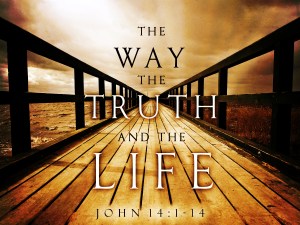
The same logic applies to believers today. If there is nothing to look forward to after death, then why bother with having faith in a lie? If, when we die, there’s just blackness and a realm of nothingness, we might as well live life to the max, complete with every sin imaginable. But because of Jesus, and our faith in Him, we, like Paul, have a different future from those around us who don’t believe there will be something better over the terminal horizon. Jesus said, “Don’t let your hearts be troubled. Trust in God, and trust also in me. There is more than enough room in my Father’s home. If this were not so, would I have told you that I am going to prepare a place for you? When everything is ready, I will come and get you, so that you will always be with me where I am” (John 14:1-3). A few verses on in John 14, Jesus also said, “ … I am the way, the truth, and the life. No one can come to the Father except through me”. 

We pilgrims have much to look forward to. A life to come that is worth fighting for. A life that will be in God’s presence in a place Jesus called Paradise. So we keep short accounts with God as we persevere in our journeys to glory. We follow the Master in obedience, doing His work as He has ordained. The enemy, the devil, and his minions will do their utmost to destroy us, “But you belong to God, my dear children. You have already won a victory over those people, because the Spirit who lives in you is greater than the spirit who lives in the world” (1 John 4:4). We are equipped for the battles ahead, and we put on the spiritual armour of Ephesians 6 with the confidence and certainty that we are on the winning side.

Dear Father God. Thank You for Jesus. We thank You for all He did for us at Calvary, and for showing us the way to glory. Amen.

The Good News

“Let me now remind you, dear brothers and sisters, of the Good News I preached to you before. You welcomed it then, and you still stand firm in it. It is this Good News that saves you if you continue to believe the message I told you—unless, of course, you believed something that was never true in the first place.”
1 Corinthians 15:1-2 NLT

Paul starts Chapter 15 of 1 Corinthians with a reminder about the Good News, the Gospel, that he had preached to Corinthians converts when he was with them. We should remember that in those early days of the church, there was no New Testament as we know it. That didn’t arrive in its current form until the New Testament canon was established in the 4th century, with councils in Rome (382), Hippo (393), and Carthage (397). However, there would have been one or two letters available for the Corinthians, and perhaps some early writings that we don’t know about. 1 Corinthians was written around 55 AD, but the four Gospels (Matthew, Mark, Luke and John) didn’t appear until after 70 AD. So we pilgrims are a blessed people, having access to so much Holy Spirit-inspired literature that has primarily established the theology and doctrine we take as read and enjoy. 

The Gospel is all about Jesus

The Gospel of Mark starts, “This is the Good News about Jesus the Messiah, the Son of God” (Mark 1:1). It is Good News, because the Gospel is all about Jesus, the true God-man, the Son of God, the second member of the Trinity, the One who came to this world, born as a baby in humble circumstances, living in a poor village until He was about thirty years old. At that point, He began preaching to His fellow Jews that He was the Messiah and had come to save His people from their sins. The first words of Jesus are recorded in Mark 1:15: ““The time promised by God has come at last!” he announced. “The Kingdom of God is near! Repent of your sins and believe the Good News!”

Paul would have known all of this from Jesus Himself because of his salvation experience on the Damascus Road. Ananias, a man living in Damascus, was told to go and lay his hands on Paul, bringing healing, as we read in Acts 9:15-16. “But the Lord said, “Go, for Saul is my chosen instrument to take my message to the Gentiles and to kings, as well as to the people of Israel. And I will show him how much he must suffer for my name’s sake””. But Paul didn’t hang around, wondering about the veracity of his experience. We read, “Afterward he ate some food and regained his strength. Saul stayed with the believers in Damascus for a few days. And immediately he began preaching about Jesus in the synagogues, saying, “He is indeed the Son of God!”” (Acts 9:19-20).

Paul needed no convincing about what the Good News was, and he needed no reminder. But apparently the Corinthians did, as otherwise he wouldn’t have needed to mention it at all. He encouraged them by reminding them that they had welcomed it and now stood firm in it, but there were obviously some niggling doubts in Paul’s mind that there were some who perhaps were not sure. But just in case, Paul reminded them that the Gospel, the Good News, would save them. 

It is sad that, for those Christians who have been on their journey for a while, they can sometimes lose the wonder of the Gospel message. Such believers can get tied up in other parts of the Bible or particular doctrines. They sometimes take issue with other denominations’ beliefs, pointing out doctrinal disagreements and losing sight of the Gospel’s common bond. But are we pilgrims clear about what the Gospel is and how we should never complicate it? 

“today you will be with me in paradise

The Gospel refers to the clear and accessible message of salvation through Jesus Christ. It emphasises pure, uncomplicated devotion to Christ, rooted in grace, while warning against distorting this message with human traditions or legalism. The essence of the Gospel is to maintain focus on the core truths of faith, avoiding complications that can lead believers away from the simplicity found in Christ. Ultimately, it calls for a return to foundational truths, highlighting that knowing the truth is essential for spiritual freedom. Paul wrote in Romans 10:9-10, “If you openly declare that Jesus is Lord and believe in your heart that God raised him from the dead, you will be saved. For it is by believing in your heart that you are made right with God, and it is by openly declaring your faith that you are saved”. I always wonder about the thief on the cross next to Jesus. All he said to Jesus was, “ … Jesus, remember me when you come into your Kingdom”. We read what Jesus, discerning what was really in the thief’s heart, said in the next verse, “ … I assure you, today you will be with me in paradise”. No complications. Just a simple response to a simple Gospel message. It had probably been many years since the poor man had been in a synagogue. He had perhaps never been to a Bible Study or prayer meeting and would have known nothing about liturgies and doctrines. All he did was believe in his heart. He experienced the fruit of the Good News in his dying moments.

They stumble because
they do not obey God’s word

Of course, the simplicity of the Gospel can be a stumbling block to many who always try to overcomplicate their approach to life. Such people perhaps refuse to believe that such a simple message would show them the path to Heaven. Referring to Jesus, Peter wrote, “Yes, you who trust him recognise the honour God has given him. But for those who reject him, “The stone that the builders rejected has now become the cornerstone.” And, “He is the stone that makes people stumble, the rock that makes them fall.” They stumble because they do not obey God’s word, and so they meet the fate that was planned for them” (1 Peter 2:7-8). There is nothing complicated about the Good News Jesus proclaimed in John 14:6, “ … “I am the way, the truth, and the life. No one can come to the Father except through me“. But for those of us who have accepted the Message of the Good News about Jesus, we stand firm in it, convinced that there is no other way to Heaven.

Dear Lord Jesus. You are the Way to Heaven, and we proclaim this message whenever we can. We worship You today. Amen.

The Path to Glory

“You have given me your shield of victory. Your right hand supports me; your help has made me great. You have made a wide path for my feet to keep them from slipping.”
Psalm 18:35-36 NLT

David wrote that God had widened his path, to keep his feet from slipping. Once again, we have a contrast between natural and spiritual meanings, but the outcome in both cases is the same, in that God eased David’s journey through his life, and in the same way He eases our life-journeys to Heaven today. In our natural worlds, we always prefer to walk on a wide and uncluttered path, because we then avoid being tripped up by something that could lead to personal injury or danger. Unless we are some more extreme sporting fanatic, we avoid narrow ledges on the sides of a sheer rock face, or a hill walk over difficult ground. We avoid icy surfaces and snow-laden fields and difficult country paths. The pilgrim’s way, though, is often strewn with practical difficulties, in the choices we have to make to stay on the path God has set before us, with employment, retirement, family relationships, social engagements, office parties, and so on, all environments that can conflict with our desire to live our lives God’s way. 

In our spiritual lives, though, we walk a different path to most of the people around us. Our lives are infused in, and focused on, our faith in God, and the promises He has laid out before us. Faith that Jesus was who He said He was, and that He died for our sins at Calvary. Paul wrote, “For we walk by faith, not by sight” (2 Corinthians 5:7). Ephesians 2:8-9, “For by grace you have been saved through faith, and that not of yourselves; it is the gift of God, not of works, lest anyone should boast“. Our very salvation, the promise of eternal life with God, saved from a lost eternity, is all based on something intangible that needs faith to believe. There is no written certificate of title to a life in Heaven after we die. Our name on a church membership role or baptismal certificate will not gain us entry into Heaven.

So how does God make “a wide path for [our] feet”? Proverbs 3:5-6 helpfully notes, “Trust in the Lord with all your heart; do not depend on your own understanding. Seek his will in all you do, and he will show you which path to take“. In our lives there will be many paths that we can choose, and we have this promise that as we look to God, He will show us the way. And speaking of which, we know what Jesus said to His disciples, “ … I am the way, the truth, and the life. No one can come to the Father except through me” (John 14:6). By following Jesus we are assured of finding the right path to our ultimate destination.

Jesus warned His listeners that the choice of path can lead to difficulties. Matthew 7:13-14, “You can enter God’s Kingdom only through the narrow gate. The highway to hell is broad, and its gate is wide for the many who choose that way. But the gateway to life is very narrow and the road is difficult, and only a few ever find it“. We know that the Christian life can be hard at times, but, thankfully, we don’t have to walk the narrow and difficult road in our own strength. In fact, such a journey would be far too difficult for us. And this is why David wrote that God had made a wide path for him. If it wasn’t for God helping us, leading us, whispering in our hearts words such as “not that way, this way is better because it is My way”, then we would soon founder and lose our way.

Father God. Thank You that through Jesus, You have showed us the way to life with You. Jesus went before us, opening the door to eternal life through His sacrifice at Calvary. We are so grateful. Amen.

Jesus is the Way

“When everything is ready, I will come and get you, so that you will always be with me where I am. And you know the way to where I am going.” “No, we don’t know, Lord,” Thomas said. “We have no idea where you are going, so how can we know the way?” Jesus told him, “I am the way, the truth, and the life. No one can come to the Father except through me.”
John 14:3-6 NLT

Was Thomas just a bit slow on the uptake or did he voice what all the disciples were thinking? It would usually be Peter who would act as their spokesman, but perhaps he was still smarting a bit after Jesus’ rebuke with the rooster crowing comment. Jesus had previously warned His disciples about His death and resurrection, as we read in Mark 8:31, “Then Jesus began to tell them that the Son of Man must suffer many terrible things and be rejected by the elders, the leading priests, and the teachers of religious law. He would be killed, but three days later he would rise from the dead“. But the Gospels don’t record what Jesus might have said about events that would follow. From Thomas’ question the disciples genuinely might not have known about Jesus’ intention to return to His Heavenly home, but they surely must have had some idea. After all, they knew that they were in the presence of the Son of God. Their expectation, however, was still that Jesus would usher in a Kingdom bringing autonomy to the Jewish nation, something that they had yearned for, for centuries. 

Jesus then went on to utter the profound and far-reaching statement, “I am the way, the truth, and the life. No one can come to the Father except through me”. To the Jews, the phrase “I Am”, was the name of God, and by using it Jesus was in fact saying that He was, and is, God. Previously, the Jewish leaders had accused Him of blasphemy, as we read in John 8:58, “Jesus answered, “I tell you the truth, before Abraham was even born, I Am!”” Jesus then went on to say that He is the Way. The word “Way” implies that He is the only way to Heaven. There is no other way. All the other religions will fail to find the pathway that leads to Heaven. There will be no Muslims, Buddhists, Hindus, or any other religions or sects there unless they renounce their previous faiths and instead embrace the One who is the only Way, through believing in Him and repenting of their sins. I know a man who claims that he had a revelation from God, who told him that there are many different compartments in Heaven, one for each faith group. Deluded?

We pilgrims must also be careful when other Christian groups or sects make claims about Jesus. For example, the JW’s believe that Jesus is the Way, but they don’t believe He is God. They conveniently overlook verses such as John 10:30, when Jesus said, “The Father and I are one.” The Mormons have an even more confused approach to Jesus’ deity, claiming that anyone can be a “god” like Jesus. 

Jesus is the only way to the Father. This is a statement that many around us, who claim to be more “enlightened”, find divisive and even offensive. But we need to be clear about the reality that Jesus is the only Way to Heaven. There are no short cuts. There are no alternatives. And when we share our testimonies about the love and grace of God, we must emphasise the exclusivity of our faith

Dear Lord Jesus. You have revealed to us Your glory and all we need to follow You to Heaven. You are the only way to the Father, and we announce the truth to all at every opportunity. Amen.

Purposes

“I have written and sent this short letter to you with the help of Silas, whom I commend to you as a faithful brother. My purpose in writing is to encourage you and assure you that what you are experiencing is truly part of God’s grace for you. Stand firm in this grace. Your sister church here in Babylon sends you greetings, and so does my son Mark. Greet each other with a kiss of love. Peace be with all of you who are in Christ.”
1 Peter 5:12-14 NLT

Peter explained why he wrote his “short letter”. Someone has estimated that 1 Peter contains nearly 1700 words, so that would take around 20 minutes or so to read out loud. Peter may have considered it to be “short” but each word was inspired and delivered by the Holy Spirit, who told Peter just what the people in the five churches in Asia Minor needed to hear. And in the process we have in the Bible a letter that contains truths and much encouragement for us pilgrims today.

But Peter had a “purpose”. Apart from a few high profile and significant appearances recorded in the Book of Acts, we know little about what he did “under the radar”. But having spent time with Jesus and the rest of the Twelve, he became a man with a mission. Peter was a man who knew all about being ill-treated for the sake of His Master, Jesus. He was beaten, insulted, and imprisoned. And from his own experiences he was able to offer help and advice to his readers who were suffering as he did and who probably included some believers who had fled from persecution in Jerusalem.

We pilgrims have a purpose in our short lives here on Planet Earth. In fact we have more than one. Jesus left us with a Commission, which we can read in Matthew 28:18-19, “Jesus came and told his disciples, “I have been given all authority in heaven and on earth. Therefore, go and make disciples of all the nations, baptising them in the name of the Father and the Son and the Holy Spirit”. The early believers were so diligent and zealous in evangelism, that they turned the societies of their day into a new world order, and Christianity has grown in numbers ever since. 

Jesus also gave us a Commandment, which was recorded in John 13:34-35, “So now I am giving you a new commandment: Love each other. Just as I have loved you, you should love each other. Your love for one another will prove to the world that you are my disciples”. The agape love shown by Christians in their relationships with each other transcends all national and racial barriers that otherwise would exist. In fact, it was such a strong bond, foreign to anything experienced before, that caused the early Christians to sometimes be mistakenly accused of incest and other sexual acts. Christian love is unique to our faith and it binds us together across otherwise insurmountable barriers. 

But the Commission and Commandment were directed at those around us, both inside and outside our faith. We also have a purpose in Changing who we are. No more for us the old sinful practices that used to blight our lives. Paul wrote in Ephesians 4:21-24, “Since you have heard about Jesus and have learned the truth that comes from him, throw off your old sinful nature and your former way of life, which is corrupted by lust and deception. Instead, let the Spirit renew your thoughts and attitudes. Put on your new nature, created to be like God—truly righteous and holy“. We have a new nature, one that brings us to a righteous place before God. Note that Paul used an action phrase – “throw off” – to describe how we are to bring about change in our lives. We will not become more like Jesus through something benign like osmosis. We have to decide that we want to change and take the necessary steps to make it happen. Jesus said, and as recorded in John 14:6, “ … I am the way, the truth, and the life. No one can come to the Father except through me“. There is no other way, in spite of what many will claim, to find God and be with Him forever.

Dear Father God. Thank You for Jesus and what He did for us in making it possible for us to come into Your presence. We praise and worship You today. Amen. 

Suffering Again

“If you suffer, however, it must not be for murder, stealing, making trouble, or prying into other people’s affairs. But it is no shame to suffer for being a Christian. Praise God for the privilege of being called by his name!”
1 Peter 4:15-16 NLT

In our consideration of the previous verse in 1 Peter 4, we reviewed the impact of insults because we “bear the name of Christ”, with the blessings of the Holy Spirit being upon us as a consequence. Peter continues in the verses we are looking at today by saying it is “no shame to suffer for being a Christian”. However, he pointed out that those committing a misdemeanour, no matter how trivial, may experience varying degrees of suffering. They could be a fractured relationship or embarrassment if the suffering results from “prying into other people’s affairs” or, at the other end of the spectrum, a capital punishment for murder. But Peter didn’t want to dwell in the negatives. There is a privilege in “being called by His name”

Do we pilgrims suffer for being a Christian? Jesus Himself didn’t pull any punches. He warned His disciples about the problems and troubles that being one of His followers would mean. John 16:33, “I have told you all this so that you may have peace in me. Here on earth you will have many trials and sorrows. But take heart, because I have overcome the world”.

One of the ways in which we Christian pilgrims will invite suffering is through our uncompromising belief that the only way to God, and eternal life with Him, is through His Son Jesus. He said, “ … I am the way, the truth, and the life. No one can come to the Father except through me” (John 14:6). The world around us have all sorts of funny ideas about how they can get to Heaven. Many people consider that their good lives will be sufficient, because, as their logic goes, a loving God will never reject them. Others follow one of the world religions that often have some funny ideas about how Heaven can be reached. Someone in my family believes that Heaven is full of compartments, one for each religion and even one for those who don’t believe in God, because they are convinced that it doesn’t matter which religion mankind follows – all roads will lead to Heaven. I don’t know how they came to that conclusion but my efforts to correct their thinking have failed, sadly. But whatever other religions say, we have to be on our guard against those who more subtly try and subvert the purity of God’s Word. To take an example, the Jehovahs Witnesses, commenting on John 14:6, say that the only way to heaven is by praying to God through Jesus. Superficially correct until we realise that the JW’s don’t accept that Jesus is God, instead believing that He is a created being, and may even be the archangel Michael. Their beliefs reject the Trinity, God the Father, Jesus His Son and the Holy Spirit, and there is only one God, Jehovah. To back up their unbiblical doctrines, they have retranslated the Bible and come up with their New World Translation. So, as an aside, if that is the version you have on your bookcase, then throw it away.

We pilgrims know what we believe because the Holy Spirit within us helps us. Romans 8:16, “For his Spirit joins with our spirit to affirm that we are God’s children.” We are not parent-less. God is our loving Heavenly Father, and He is with us day and night, whether we are suffering or not. We praise and worship Him today.

Dear Lord, please help us to believe that You are with us even when we’re not sure. Please forgive us for our doubts. In Jesus’ name. Amen.